We meet the strangest neighbors while walking the dog.
This assassin bug was strolling across the pavement on a hot summer’s evening when we walked our dog. At first, I thought it was a wolf spider, but the leg arrangement, plus the narrower body, made me decide to snap a picture and use Google Lens to figure out what crossed our path. I was surprised to learn it was an assassin bug, a scary but truly beneficial insect.
Here’s what you need to know if you encounter this large, gray insect in the garden. Hint: It’s beneficial, so don’t kill it!
What Is an Assassin Bug?
The assassin bug is a predatory insect in the family Reduviidae, known for its dagger‑like piercing-sucking beak and its role as an important natural enemy of garden pests. University of Maryland Extension describes assassin bugs as generalist predators that hunt insects ranging from aphids to caterpillars, using a sudden strike and a long, needle-like beak to subdue prey. The Fairfax Master Gardeners note that both nymphs and adults inject a small amount of venom to paralyze their prey before feeding, making them highly effective predators in landscapes and gardens. And while some can wander indoors and bite people, they aren’t killers. The bite is said to be painful like a bee sting.

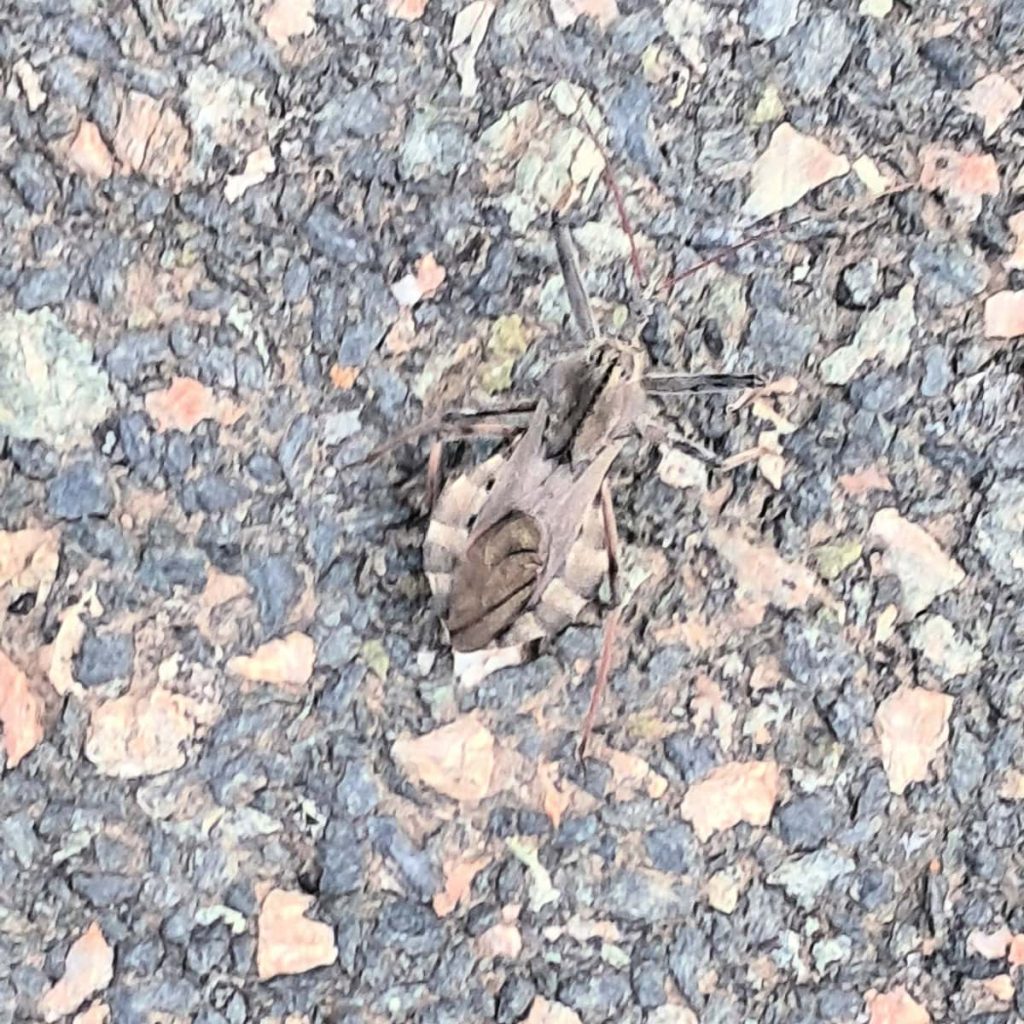
Fortunately for us, this handsome fellow was walking across the road. I bent down to photograph him but kept a clear distance. He is very well camouflaged against the roadway, isn’t he?
How to Recognize an Assassin Bug
Most assassin bugs are between 1/2 to 3/4 of an inch long. Many are like my friend here, a dark gray color. They look as if they have armor plate, and the back may sport a raised ridge. Some call it a ‘cogwheel’ and another name for this bug is a wheel bug.
The most commonly found assassin bugs in Virginia are long, with a pronounced ‘neck.’ They are almost always gray, although brownish gray and black are not uncommon. The nymphs look like smaller adults. Eggs are laid in clusters, on bark, leaves and soil.
One of the most interesting features of the assassin bug is that it’s long-lived. Adults live six to 10 months, sometimes overwintering. That’s a long time for an insect.
Habitat and Food Sources
Assassin bugs live almost anywhere there are plants. They love long, tall grass, and so it makes sense I saw them along the road. At this time of year, before the county comes by with the mowers, our rural lanes produce tall mixed wildflower, poison ivy, and Johnson grass swards worthy of a savannah.
In the garden, you can find these insects among vegetables, flowers, trees, and shrubs. They feed on caterpillars and nymphs of many other insect species. I can only hope, and pray, that they get a taste of spotted lanternfly, because we seem to have an abundance of those pests this year and they are both invasive and harmful to many of my favorite plants.
Leave Assassin Bugs Alone – They’re the Good Guys
The bottom line is that even though this insect looks fierce, it’s one of the ‘good guys.’ They eat other insects, do not harm crops, and may keep some harmful insects in check. Like the cicadas, they look scary but are actually the good guys. Avoid touching them but don’t worry; they’ll avoid you, too. They just want to enjoy life, eat a few bugs, and get on with things.