
I learned how to grow bok choy through trial and error. Last fall, I noticed some beautiful heads of Chinese cabbage (napa cabbage) at our local farmer’s market. When I asked the proprietor where it was grown, I found it was grown not five miles from my house! Well, that means I could grow all sorts of yummy Chinese vegetables. We love adding vitamin-rich greens to stir fries, and bok choy is one that I particularly love. They are expensive to purchase at the supermarket, so learning I could grow my own in zone 7B made me very happy.
Armed with a book on how to grow Chinese vegetables that I bought secondhand (it’s out of print now) and seeds purchased via Amazon, (affiliate link), I set out to grow my own stir fry veggies. And, while the napa cabbage was a complete failure (I’ll write about it another time), the row of bok choy I planted looks and tastes great!
Here’s how to grow bok choy from seed in a raised bed garden.
Key Takeaways
- Bok choy thrives in full sun and prefers rich, loamy, well-drained soil with consistent moisture.
- Plant seeds directly in cool seasons and keep soil moist during germination, usually taking five to ten days.
- Maintain even moisture, apply nitrogen-rich fertilizer, and mulch to support healthy growth.
- Monitor for common pests and diseases like cabbage worms and maintain good airflow and spacing for prevention.
- Harvest when heads are fully formed; enjoy bok choy in stir fries or as a steamed side dish.
Bok Choy Plant Profile
Common name: Bok choy
Alternative spellings and names: Pak choi, pak choy, bok choi, Chinese cabbage (though this term can also refer to napa cabbage)
Botanical name: Brassica rapa subsp. chinensis Light Requirements
Bok choy grows best in full sun, receiving at least six hours of direct light per day. It can tolerate partial shade, and in hot weather shade can help prevent the plant from bolting prematurely.
Soil Requirements
The plant prefers rich, loamy soil with plenty of organic matter. Soil should drain well but remain consistently moist. A slightly acidic to neutral pH between 6.0 and 7.5 is ideal. Adding compost improves both soil structure and nutrient availability.
Watering
Bok choy needs steady moisture throughout its growth. The soil should not be allowed to dry out completely. Deep watering two to three times per week is usually sufficient, depending on temperature and soil type. Mulching helps retain moisture and keeps the root zone cool.
Fertilizer
Bok choy is a heavy feeder. Before planting, incorporate compost or a balanced organic fertilizer such as 5‑5‑5 into the soil. During the growing season, apply a nitrogen‑rich fertilizer like fish emulsion or blood meal every two to three weeks. Avoid excessive nitrogen late in the season to maintain firm, well‑formed heads.
Growing Conditions and Tips
Bok choy thrives in cool weather, generally between 45 and 75 degrees Fahrenheit. It is best planted in early spring or fall. Hot conditions encourage bolting, so shade cloth or bolt‑resistant varieties may be helpful in summer. Baby bok choy can be harvested in 30 to 45 days, while full‑size plants typically mature in 45 to 60 days.

How to Grow Bok Choy from Seed
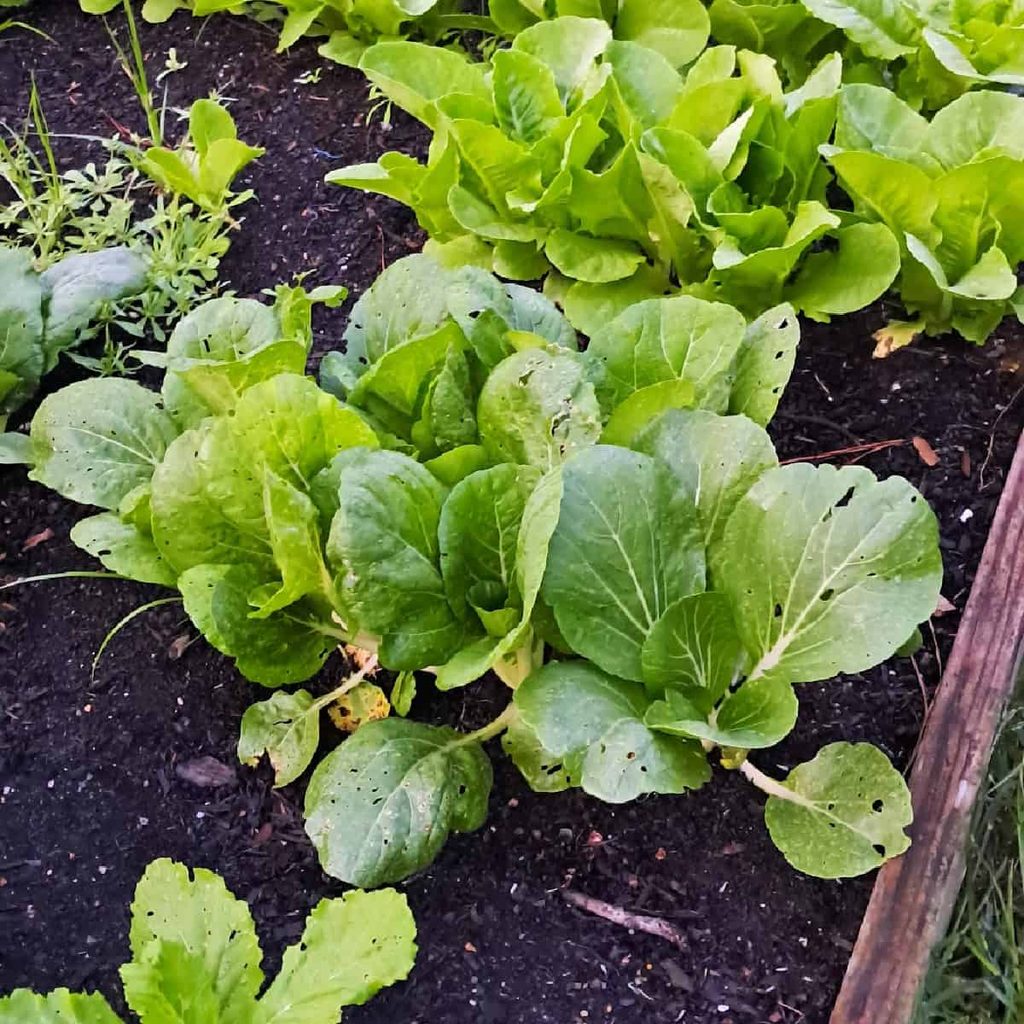
Growing bok choy from seed starts with choosing the right time of year, because this plant thrives in cool weather. In central Virginia where I live, early spring and early fall are the best planting windows. Of course, me being me, I planted it in August. My bad. Still a bit too hot, but we managed, and the crop turned out fine despite the heat.
Plant bok choy from seeds. It’s not worth starting it in pots or containers; it germinated readily and easily from seeds directly sown in my raised beds. The seeds are small, like little grains of pepper, so they only need to be covered with about a quarter inch of soil. Keep the soil consistently moist during germination, which usually takes five to ten days. If you’re like me and planted it in the heat of summer, a shade cloth may help the young seedlings (but it’s not required and I did not use one).
Growing Bok Choy
Once the seedlings emerge, make sure they receive steady light and cool temperatures. If they are outdoors, full sun is ideal in spring, while partial shade helps prevent heat stress in warmer months. Indoors, place trays under bright grow lights and keep them from drying out. When seedlings reach two to three inches tall, thin them or transplant them so each plant has enough space to form a full head. Spacing of six to ten inches works well depending on the variety.
As the plants grow, maintain even moisture and provide nutrient-rich soil. Bok choy is a fast-growing, heavy-feeding green, so incorporating compost before planting and adding a light nitrogen boost during growth helps produce tender leaves and firm stems. Mulching around the plants keeps the soil cool and reduces moisture loss. With steady care, bok choy reaches harvest size in about forty-five to sixty days, and baby varieties mature even sooner.
Pests and Diseases
Bok choy in central Virginia can be affected by a range of pests and diseases, many of which target other members of the brassica family. Common insect pests include cabbage worms, cabbage loopers, diamondback moths, flea beetles, aphids, slugs, snails, and root maggots. These insects are especially active during warm months and can cause damage ranging from small pinholes to large, ragged feeding areas. Diseases such as downy mildew, clubroot, black rot, Alternaria leaf spot, and white rust also occur in Virginia’s humid climate, particularly when plants are crowded or soil stays too wet.
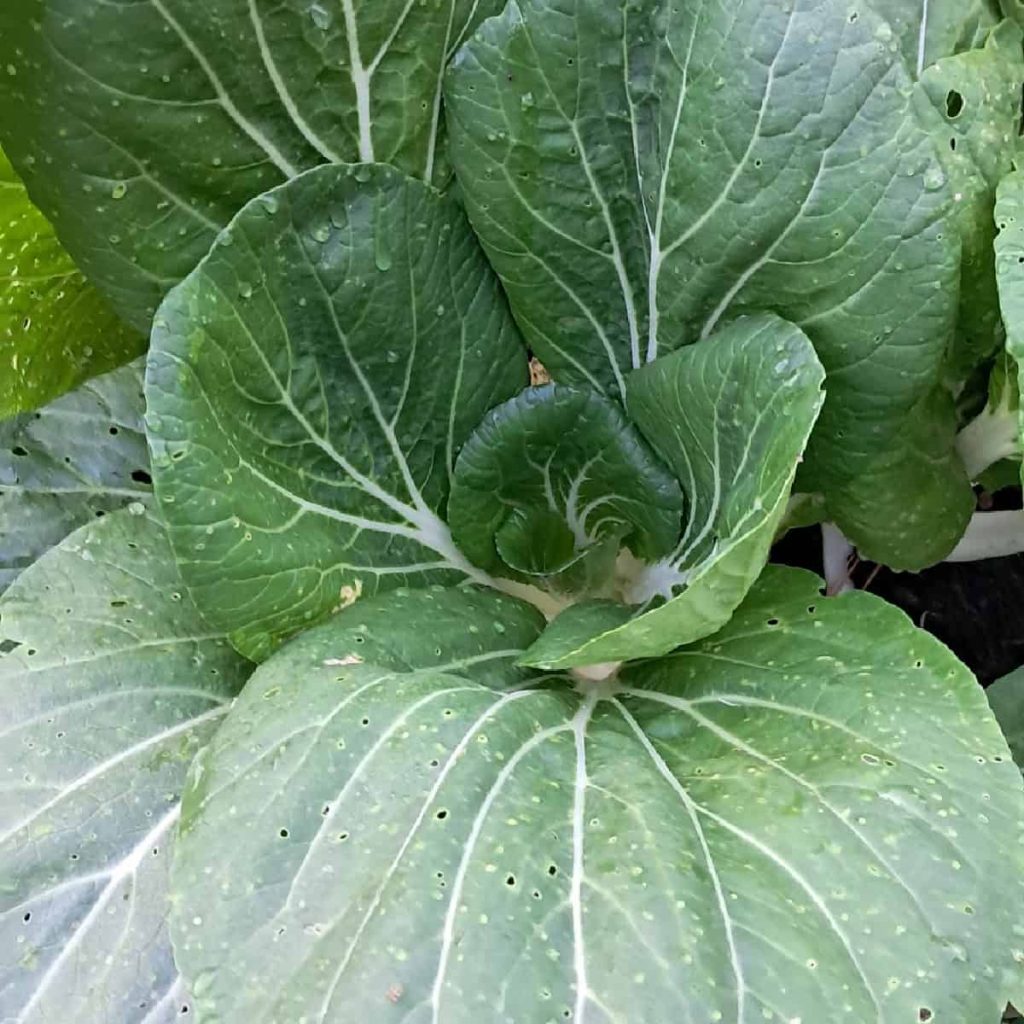
When I harvested my bok choy, I found a small, triangular shaped group of golden-yellow eggs. These eggs, plus the holes in the leaves, are a clue that cabbageworm moths (or butterflies) visited my little patch of bok choy. Imported cabbageworm butterflies lay eggs that start out white and turn yellow, usually on the undersides of leaves. Cabbage looper moths lay pale yellow to green eggs singly or in small, evenly spaced groups. Diamondback moths lay flattened yellow eggs in tiny clusters, often arranged neatly. All three species are common in central Virginia and their larvae feed aggressively on bok choy foliage once they hatch.
Removing the affected leaf or gently scraping off the eggs is an effective first step. To prevent future infestations, lightweight row covers can block adult moths and butterflies from laying eggs. Organic treatments such as Bt (Bacillus thuringiensis) can help control caterpillars after they hatch, and maintaining good airflow, proper spacing, and regular monitoring will reduce the risk of both pests and diseases throughout the growing season. I just scraped off the eggs under running water and that was that — in went the leaves into my stir fry.
Harvesting and Enjoying Your Bok Choi
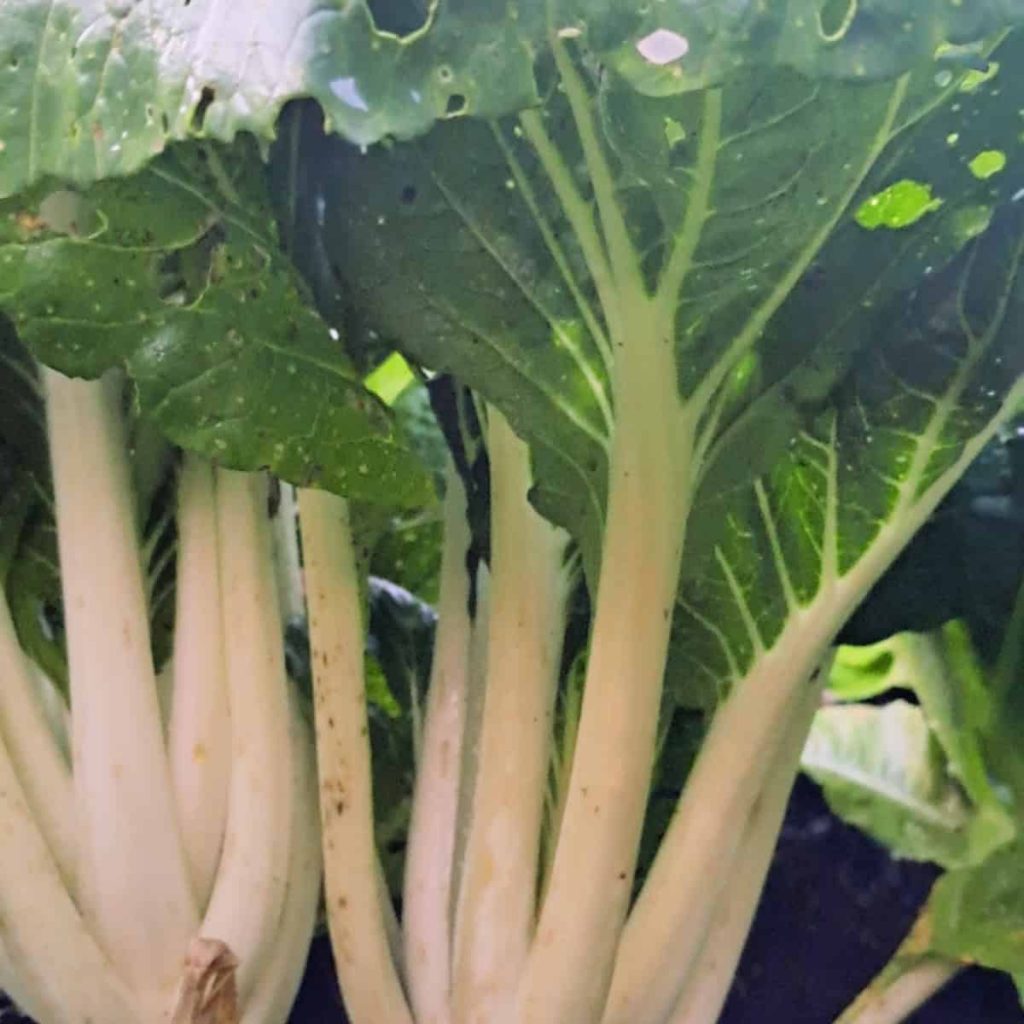
Boy choi or bok choy can be enjoyed in several ways. Harvest it when the heads are fully formed and the stems look like white celery. I pulled the entire plants out, cut off the roots, and then washed the individual leaves before dicing and cooking them in the wok.
I love bok choy in my stir fries, and use the stems and leaves. You can also cook it separately and serve it as a side vegetable. Dice, put in a microwave safe dish, add one tablespoon of water, and microwave it covered on high for about five minutes.
While my research indicates you can freeze bok choy, I haven’t tried it, and I haven’t been successful with freezing veggies. They tend to get mushy on me. I’ll keep harvesting it fresh and enjoying it, and if I have some left by the first frost, I’ll harvest and store it in a bag in the refrigerator. Store bought bok choy lasts one to two weeks like that so it will probably be fine.
Growing Chinese Vegetables at Home
I was surprised to learn that I can grow many Chinese vegetables at home. The supermarket only carries bok choy and napa cabbage (and canned water chestnuts). I am also growing something called tatsoi, or vitamin plant. If the harvest is good on the tatsoi, I’ll share growing information on that one, too. It will be fun to try so many new and interesting varieties, and I especially love growing things that I cannot buy at the store.

Leave a Reply Cancel reply
You must be logged in to post a comment.