
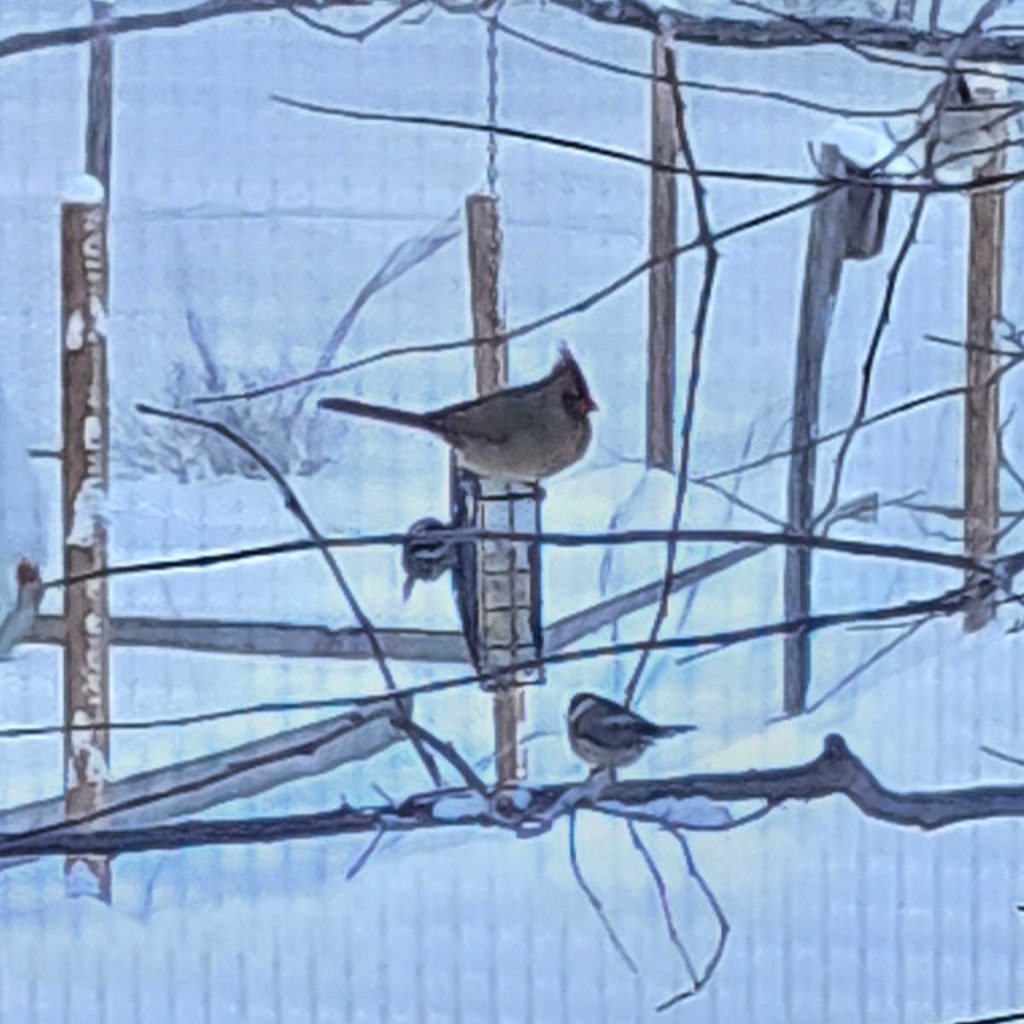
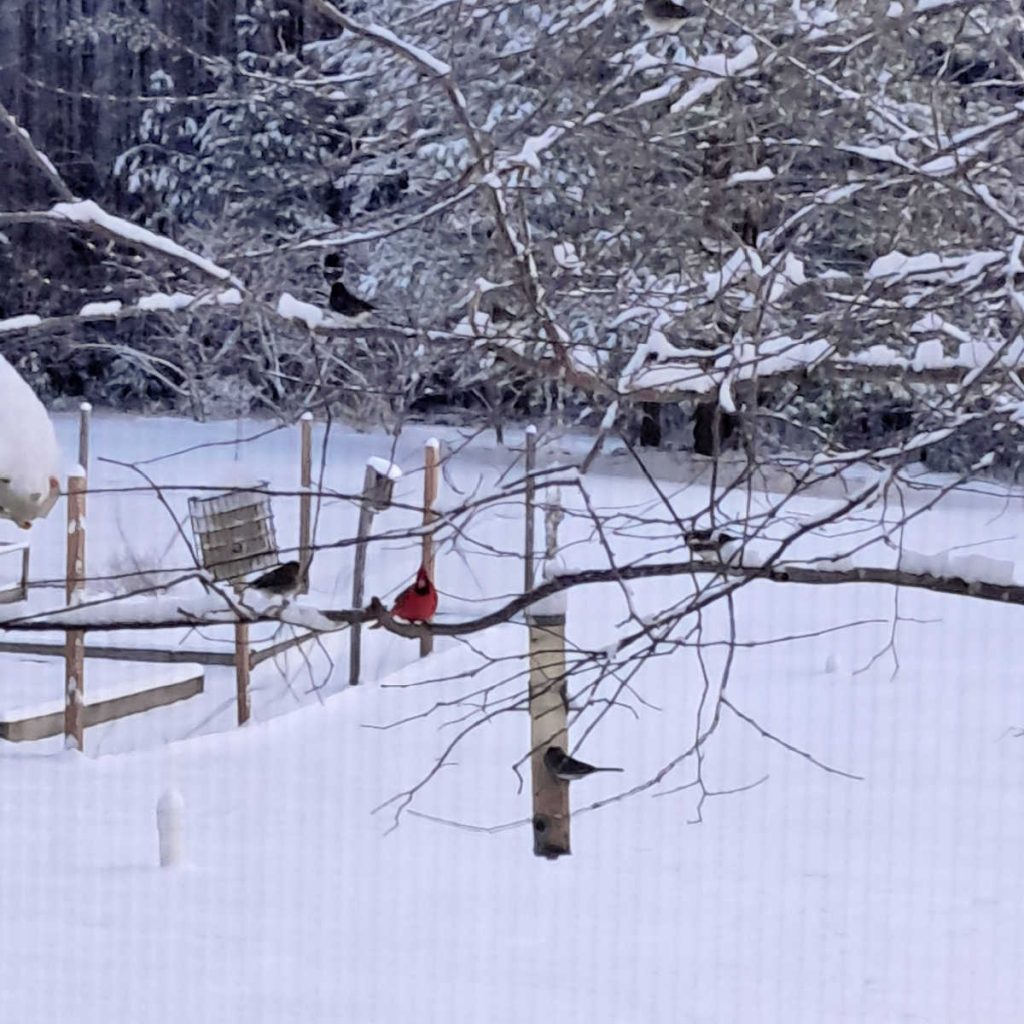
Gardening for the birds in the winter means sometimes breaking your own rules. The picture above shows my garden this morning after a lovely eight-inch snowfall last night. The ground was covered with powdery snow, and the poor birds had trouble feeding on grass and weed seeds in the fields. But because I had forgotten to deadhead (trim) the perennials in my flower garden, the little chickadees, juncos and sparrows found plenty to eat. They were devouring the seeds; I’m glad for a change that I didn’t go crazy cutting back the perennials this winter.
Now is the time to put out your bird feeders if you haven’t done so already. Part of gardening for the birds is creating a happy habitat that welcomes birds of all sorts to your yard. Various seed feeders in different shapes provide appealing feeding stations for many bird species; suet feeders attract flickers, woodpeckers and others. And although some bird experts recommend purchasing containers of mealy worms at the pet shop or bait store and placing them in a tray for bluebirds to snack on, I draw the line at that.
If you’re tired of being stuck indoors this winter, and you want to liven up your garden, hang some bird feeders today.
Attracting Birds to the Garden: Creating a Welcoming Haven for Wildlife
Attracting birds is one of the most rewarding things a gardener can do, and it asks surprisingly little in return. Birds bring color to a green space, song to the early morning, and constant, graceful movement to even the stillest afternoon. They also quietly go to work, eating insects, spreading seeds, and keeping the whole garden in better balance than we could ever manage with a spray bottle.
In this guide, we’ll walk through everything you need to turn your garden into a welcoming haven: what birds actually need, how to choose feeders and plants, how to offer water and nesting spots, what to do each season, and which mistakes are easiest to avoid. Whether you have a sprawling yard or a few pots on a balcony, there’s something here for you.
Why Birds Matter in the Garden
Birds are far more than pretty visitors. They are working members of your garden’s ecosystem, and the more you understand what they do, the more fulfilling it becomes to invite them in.
Natural pest control. Most songbirds feed insects to their young, even species that eat mostly seeds as adults. Raising a single brood of chickadees can take thousands of caterpillars, and a busy nest near your vegetable beds means that many fewer chewing insects on your leaves. Wrens, warblers, nuthatches, and bluebirds are tireless hunters of beetles, aphids, grubs, and moths. A garden full of birds is a garden with a built-in cleanup crew.
Seed dispersal. Many birds eat berries and fruit, then carry the seeds away and deposit them elsewhere, often with a little fertilizer attached. Robins, waxwings, thrushes, and catbirds all help native shrubs and trees spread across the landscape. Jays and woodpeckers cache nuts and seeds, and some of those forgotten stashes sprout into new trees.
Biodiversity. A garden that supports birds also supports the insects, plants, and soil life they depend on. Birds are often called an “indicator species,” meaning that when they thrive, it’s a sign the surrounding habitat is healthy. When you improve conditions for birds, you tend to improve them for pollinators, beneficial insects, and other wildlife, too.
A healthier ecosystem. North America has lost nearly three billion breeding birds since 1970, according to research from the Cornell Lab of Ornithology and partners. That number can feel overwhelming, but there’s a hopeful flip side: millions of small backyards and gardens, each offering a little food, water, and shelter, add up to meaningful habitat. Your garden is part of a much larger patchwork, and every patch counts.
Understanding What Birds Need
Every bird, from the tiniest hummingbird to the largest hawk, needs the same four things: food, water, shelter, and safety. Get these right, and the birds will find you.
Food
Birds need reliable food through every season, not just in the cold months. In spring and summer, much of that food is insects, which is why a pesticide-free, plant-rich garden matters so much. In autumn and winter, seeds, berries, and nuts take over.
Different species have different preferences. Finches and chickadees love small seeds, woodpeckers crave suet and insects, thrushes and waxwings go for berries, and hummingbirds sip nectar. The more varieties of food you offer, through both feeders and plantings, the more species you’re likely to see.
Water
If you could offer birds only one thing, many experienced birders would say it should be water. Birds need it daily for drinking, and just as importantly for bathing, which keeps their feathers clean and properly insulated. Water also draws in species that would never visit a seed feeder, such as warblers, thrushes, and tanagers, especially during migration.
Keep in mind that drinking and bathing are different needs. A shallow dish will serve a thirsty finch, but a bird that wants a good splash needs a little more room and a gently sloping surface.
Shelter
Birds need places to hide from storms and predators, to rest between feeding trips, to roost safely at night, and to raise their young. Dense shrubs, evergreens, tall grasses, brush piles, and mature trees all do this job beautifully. If your garden is mostly lawn and a few isolated plants, adding layers of vegetation at different heights is the most powerful change you can make.
Safety
A welcoming garden is a safe garden. Two hazards deserve special attention:
- Window collisions. Scientists estimate that up to a billion birds die from window strikes in the United States each year, and many that fly away stunned do not survive. Birds see reflections of sky and vegetation, not glass. If you have feeders or baths near a window, treat the glass with tape, dots, or decals spaced closely enough that a bird can’t try to squeeze between them (a pattern with gaps no larger than about 2 by 4 inches is a commonly recommended guide). Hawk silhouettes alone don’t work well. Moving feeders either very close to the glass (within about three feet) or far away also helps.
- Cats and other pets. Free-roaming cats are one of the largest human-related causes of bird deaths. Keeping cats indoors, or giving them a secure “catio,” protects both your cat and your garden’s wildlife. If you have dogs, simply keeping feeding areas and nest boxes out of their favorite zones can make a big difference.
Choosing the Right Bird Feeders
There’s no single perfect feeder. Each style attracts different birds, so a small mix of feeder types is the easiest way to broaden your visitor list.
Seed Feeders
Tube feeders and hopper feeders are the classic choice, and they’re wonderful for finches, sparrows, chickadees, titmice, and nuthatches. Black oil sunflower seed is the most universally loved option, with a high fat content, a thin shell, and wide appeal. Nyjer (thistle) seed in a fine-mesh feeder is a favorite of goldfinches and siskins. Choose fresh, good-quality seed, and avoid cheap mixes packed with filler grains like milo, which many birds simply toss aside.
Suet Feeders
Suet, a high-energy block of rendered fat, often mixed with seeds, nuts, or dried fruit, is a magnet for woodpeckers, nuthatches, chickadees, wrens, and other insect-eating birds. It’s especially valuable in cold weather when insects are scarce. In hot weather, choose rendered, no-melt suet cakes so the fat doesn’t turn rancid.
Ground Feeding Areas
Many birds, including juncos, sparrows, doves, towhees, and thrashers, prefer to eat on or near the ground. You can scatter a little seed on a clean patch of earth or a platform tray close to cover. Keep the area tidy and clear away old seed regularly, since damp, moldy seed on the ground is a common source of illness.
Nectar Feeders
In areas where hummingbirds live, a nectar feeder can be a delightful addition. Use a simple mix of one part plain white sugar to four parts water. Skip red dye, honey, and artificial sweeteners, all of which can harm birds. Change the nectar every few days in warm weather, since it spoils quickly. A feeder is only a supplement: planting tubular, nectar-rich flowers gives hummingbirds a more natural food source.
Feeder Maintenance
This is the part of bird feeding that matters most, and it’s easy to overlook. Dirty feeders can spread diseases such as salmonellosis, avian pox, and conjunctivitis among birds that gather close together.
- Seed and suet feeders: Take them apart and scrub away debris about every two weeks, or more often in damp weather. Then soak them for 10 minutes or so in a solution of nine parts water to one part bleach, rinse very well, and let them dry completely before refilling. Wear gloves.
- Hummingbird feeders: Skip the bleach. Wash with hot water and a bottle brush, or soak in a half-water, half-white-vinegar solution for a deeper clean, then rinse thoroughly.
- Tidy the ground beneath feeders to remove hulls, droppings, and spoiled seed.
- If you see a sick bird (fluffed up, lethargic, with crusty or swollen eyes), clean your feeders right away and consider taking them down for a week or two so birds disperse. Don’t handle sick or dead birds with bare hands.
The Best Plants for Attracting Birds
Feeders are fun, but plants are the foundation. A well-planted garden feeds birds, shelters them, and gives them nesting places, all while looking beautiful.
Native Trees
Native trees are the backbone of a bird-friendly garden. Oaks, for example, support hundreds of species of caterpillars, a critical food for nesting songbirds, and produce acorns for jays and woodpeckers. Dogwoods, serviceberries, birches, maples, and pines all offer some combination of food, nesting spots, and shelter. If you have room for even one native tree, it will pay off for decades.
Shrubs and Hedges
Dense shrubs are birds’ safe rooms: places to dart into when a hawk appears, to roost on cold nights, and to build a hidden nest. Berry-producing varieties such as elderberry, viburnum, winterberry holly, native roses, and chokeberry provide food at different times of year. A mixed hedge of several species will offer more variety, and more months of fruit, than a single-species line.
Flowering Plants
Flowers feed birds indirectly by supporting the insects they eat, and directly by offering nectar. Coneflower, bee balm, salvia, columbine, trumpet honeysuckle, and native milkweeds attract pollinators and the small insects that insect-eating birds hunt, while tubular red and orange blooms are especially beloved by hummingbirds.
Seed-Producing Plants
Sunflowers, coneflowers, black-eyed Susans, asters, coreopsis, and native grasses all produce seed that finches, sparrows, and juncos relish. The trick is to resist the urge to tidy up too soon. Leave seed heads standing through autumn and winter. They’re free, natural bird feeders, and they add beautiful structure and frost-dusted texture to the garden.
Providing Water Features
Bird Baths
A bird bath doesn’t need to be fancy, but a few details help. Birds prefer shallow water, about one to two inches deep at the deepest point, with a rough or gently sloping surface they can grip. If your bath is too deep, add a flat stone or two as perches. Place it where birds can see predators coming, ideally near shrubs or trees they can flee to, but not so close that a cat can hide within pouncing distance. Refresh the water daily and scrub the basin every week or two to keep algae and bacteria in check.
Moving Water
Birds are drawn to the sound and sparkle of moving water. A small fountain, solar bubbler, or a simple dripper that lets water fall into the basin can attract species that ignore still water. As a bonus, moving water is less likely to breed mosquitoes.
Winter Water Sources
In cold climates, open water can be harder for birds to find than food. A heated bird bath or a thermostatically controlled bath heater designed for outdoor use keeps water liquid all winter. Without a heater, you can swap out a frozen dish for fresh water each morning. Don’t add antifreeze or other chemicals, and place the bath in a spot that catches the winter sun.
Creating Nesting Opportunities
Natural Nesting Sites
The best nesting sites are the ones nature provides: trees with branching limbs, dense shrubs, vines, tall grasses, and dead trees (called snags) left standing where it’s safe to do so. Different species choose different spots. Robins like a sturdy fork in a tree, cardinals tuck nests deep into thick shrubs, and woodpeckers excavate holes in dead wood that later become homes for chickadees, nuthatches, and wrens.
Nest Boxes
Nest boxes can help cavity-nesting birds, which have fewer natural holes available than they once did. The most important detail is the entrance hole size, which determines who can move in. Rough guidelines include:
- Chickadees and house wrens: about 1⅛ inch
- Nuthatches and Carolina wrens: about 1¼ inch
- Eastern bluebirds and tree swallows: about 1½ inch
Be sure to check recommendations for your region, as bird species and dimensions vary. Cornell’s NestWatch program is an excellent source of species-specific plans and placement advice.

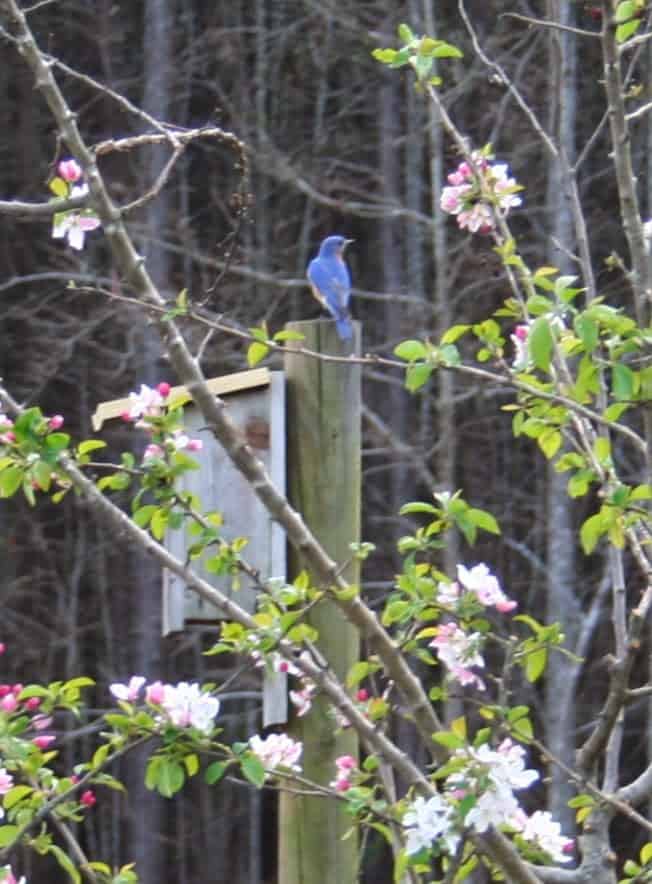
For placement, mount boxes on a pole or post (ideally with a predator guard) rather than on a tree trunk where climbing predators have easy access. Bluebirds prefer open areas with scattered trees, while chickadees and wrens like to be closer to shrubs and woods. Face the entrance away from prevailing winds, ideally toward open space where fledglings can land.
Clean out boxes after each nesting season, removing old nesting material so it doesn’t harbor parasites, and don’t peek too often during active nesting. Skip perches near the hole, which can help predators and non-native birds like house sparrows. Plain, untreated wood with ventilation and drainage holes works best.
Materials Birds Can Use
You can give birds a helping hand by leaving natural building materials around. Small twigs, dry grasses, leaf litter, pine needles, moss, and plant fibers like dried stems all get recycled into nests. Leave a small pile of clean, natural material in a corner of the garden. Avoid offering dryer lint, yarn, string, or synthetic fibers, which can tangle or harm birds and chicks.
Seasonal Tips for Attracting Birds
Spring
Spring is nesting season preparation. Put up new nest boxes early, clean out old ones, and get your bird bath running. Offer extra protein through suet and mealworms to help parents get into breeding condition, and leave out nesting materials. Hold off on heavy pruning and hedge trimming, because nests may already be hidden inside.
Summer
Summer is all about families. Parents are working around the clock to feed hungry chicks, and young birds are fledging and learning to fend for themselves. Keep water fresh and abundant, especially in heat waves. Clean feeders more frequently, because warm, humid weather speeds mold and bacteria. Keep cats indoors, since fledglings spend a few vulnerable days on the ground.
Autumn
Autumn is the season of migration. Birds are fueling up for long journeys, so keep feeders stocked and leave berries and seed heads in place. Keep hummingbird feeders up for a few weeks after you see your last visitor, since late travelers may still need them. This is also peak season for window collisions, so double-check your window treatments.
Winter
Winter is the hardest season, and your garden can be a true lifeline. Offer high-fat foods like suet and black oil sunflower seed, keep water from freezing, and leave dense evergreens and brush piles for shelter. Birds often feed most heavily in the afternoon to build reserves for the long night, so try to refill feeders by then. Keep snow cleared from ground feeding areas if you can.
Common Mistakes to Avoid
Every bird gardener makes a few missteps, and most are easily fixed. Here are the ones to watch for:
- Overcrowding feeders. Too many birds packed around one feeder increases stress and disease spread. Spread several feeders around the garden instead.
- Neglecting cleaning. This is the single biggest risk of backyard feeding. A regular feeder cleaning routine keeps your visitors healthy.
- Using pesticides excessively. Insecticides remove the very food birds feed their young, and can poison birds directly or through their prey. Embrace a little imperfection, and let birds do the pest control.
- Removing all fallen leaves and natural debris. Leaf litter shelters insects, spiders, and the foraging grounds of thrushes, towhees, and wrens. Leave some leaves under shrubs and beds.
- Pruning shrubs during nesting season. Wait until late summer or autumn for major trimming, and check for active nests before cutting anything in spring or summer. In many places, disturbing active nests of native birds is also illegal.
Birds You May Encounter
Here are a few friendly faces common across much of North America. Swap in the species that visit your own garden.
Black-capped Chickadee (and its relatives). Tiny, curious, and bold, chickadees are often the first birds to find a new feeder. They love black oil sunflower seed and suet, and often grab a seed and dash away to hide it. They live in woodlands and shrubby gardens, nest in cavities and nest boxes, and are famous for their “chick-a-dee-dee-dee” call, which actually carries information about nearby threats.
Northern Cardinal. A flash of crimson against winter snow, the male cardinal is hard to miss, and the female’s warm tan and red tones are just as lovely. Cardinals favor sunflower seed and safflower, and they prefer dense shrubs and thickets for nesting and cover. They sing from high perches, and unlike many songbirds, females sing too.

American Goldfinch. These cheerful birds turn bright yellow in summer and a quiet olive-brown in winter. They adore nyjer seed and the seed heads of coneflowers and sunflowers. Goldfinches nest late in the summer, timing it to when thistle and other seeds are abundant, and they flit across the garden in a bouncy, undulating flight.
Downy Woodpecker. The smallest woodpecker in North America is a frequent suet-feeder visitor. It forages along branches and trunks, tapping out insects and larvae, and loves mature trees and dead limbs. Watch for the male’s small red patch on the back of his head.
Dark-eyed Junco. Often called “snowbirds,” juncos arrive in many gardens as winter sets in. They hop along the ground beneath feeders and under shrubs, picking at fallen seed. They like open ground with nearby cover, and you’ll see their white outer tail feathers flash when they take off.
Ruby-throated Hummingbird (eastern North America). A jewel in motion, this tiny flier visits tubular flowers and nectar feeders, and also catches small insects mid-air. Hummingbirds beat their wings dozens of times each second, can hover and fly backward, and makes a remarkable migration each year, including a long crossing over the Gulf of Mexico.
Lessons From My Own Garden
If there’s one thing I hope you take from this guide, it’s that you don’t have to do everything at once. Start small. Put out a single feeder, add a shallow bird bath, or leave the seed heads on your coneflowers this autumn. Then sit back and watch who shows up.
Patience is the most important tool in a bird gardener’s kit. It can take days or even weeks for birds to discover a new feeder, and a whole season or two for a nest box to find its tenants. Birds are cautious by nature, and trust takes time. Keep your offerings clean, consistent, and safe, and they will come.
And you don’t need acres to make a difference. A modest garden with a few native shrubs, a splash of water, and a patch of unmown corner can become a real refuge, one stepping stone in a vast network of green spaces that migrating and resident birds rely on. Every small garden counts.
Most of all, enjoy it. There’s a special joy in sharing your space with creatures who owe you nothing, who simply show up because you made a place for them. Pour your coffee, open the window, and listen. It’s the most beautiful sound in the world.
More Bird Watching Resources
A few great websites to help you learn more about bird watching and attracting birds to your garden include:
- Birds & Blooms – I like this article on the Dos and Don’ts of Bird Watching in the Field
- Some ideas from Rodale press to make a simple bird habitat in any sized yard.
- National Geographic’s Song Bird Identification
- The wonderful Cornell Lab of Ornithology, for bird identification, bird song and more.
This post was originally written in February 2015. It was heavily updated November 2026 with new text and images.

[…] your backyard garden into a wild bird sanctuary. Learn what to plant and add to your garden to make it a natural bird […]