
The easiest way that I know of to save seeds is to allow them to dry naturally on the flowers themselves. Sometimes the birds eat a few, but for the most part, the seed heads still contain quite a bit of seed.
When the pods turn brown and crisp, I collect them by hand. I typically use my Felco pruners and prune off the seed heads, letting the pods fall into a clean bucket. Then I sit on the porch and separate the seeds from the pods by shaking them or picking the seeds out. I place a clean white paper towel on the table while I work. As the seeds fall onto the paper towel, they are easy to seed. I can then pick up the paper towel and gently roll it into a funnel shape and tap the towel so that the seeds fall into the storage container.
Easy to Collect Seeds
Saving seeds is one of my favorite fall activities. I save flower seeds from annuals that are easy to collect seeds – marigolds, zinnias, sunflowers.
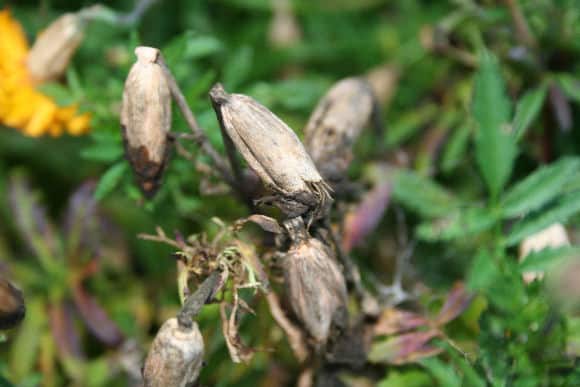 |
| Wait until the seeds are dry on the plant. |
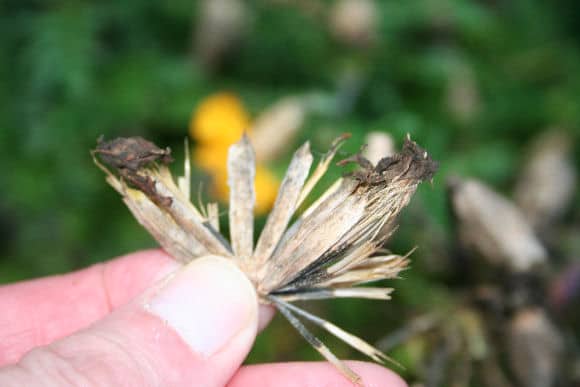 |
| They shake off easily when dry, or you can remove by hand. |
Storing Saved Seeds
For storage containers, I’ve used everything from clean, used glass jars such as Mason or Ball jars to old salt and pepper shakers. I’ve used clean plastic containers too, such as the small containers that bouillon cubes come in; I clean them and remove the labels, and they’re fine.
As long as everything, from the seeds themselves to the containers, are clean and dry, you should be fine. Dry is the key here. Any moisture will either cause the seeds to rot, develop mold, or germinate prematurely. They should be bone dry when saved and kept dry and cool throughout the storage period.
Seed saving envelopes provide the best method of keeping seeds dry. They aren’t expensive, and you can order them online.
Use Old Silica Gel Packets
One thing I like to do is to reuse those silica gel packets that are included when you purchase shoes. Those are the little paper packets with warning stickers on them. They are poisonous and harmful if ingested, so keep out of reach of children and pets! I use them when saving seeds by placing the entire packet in the jar with the seeds. Don’t open up the packet; just slip the little paper packet right in. It absorbs any extra moisture in the container.
I buy plain white labels at the stationery store and use my computer printer to create labels for my seed jars. I include the date since seeds kept for more than a year are less likely to germinate. I store my seeds in the basement; some people store them in the refrigerator, garage, or another cool spot.
Saving Seeds – the Economical Way to Garden
These are fairly easy seeds to save. I’ve saved pansy, Echinacea, Gaillardia, “money plant” and Rose of Sharon seeds, too. Saving seeds is economical, and if you have a lot of garden area to plant, a great idea to save money. Now’s the time to save seeds as you’re pulling up the spent annuals in the garden, so take a few moments to try seed saving today.
[…] 2. Save seeds! Some plants produce an abundance of seeds that can be saved, stored and planted again next year. Why purchase seeds when saving them is both thrifty and fun? Marigold and sunflower seeds are easy to save, but you can also save morning glory, Echinacea, and Gaillardia seeds. For more information, see my article on Seed Saving. […]