• Skip to primary navigation
  • Skip to main content
  • Skip to footer
Home Garden Joy
  • Home
  • How to Garden
    • Garden Pests
    • Plant Diseases
    • Raised Bed Gardening
    • Seed Starting
    • Tools & Equipment
  • Plants
    • Plant Profiles
    • Vegetables
    • Fruit
    • Herbs
  • Recipes
    • Canning and Food Preservation
  • Books & Classes
    • Books by Jeanne Grunert
    • Books for Christian Herbalists
    • Herbalism Classes
  • About
    • Privacy Policy

African Violets

August 6, 2008 by Jeanne

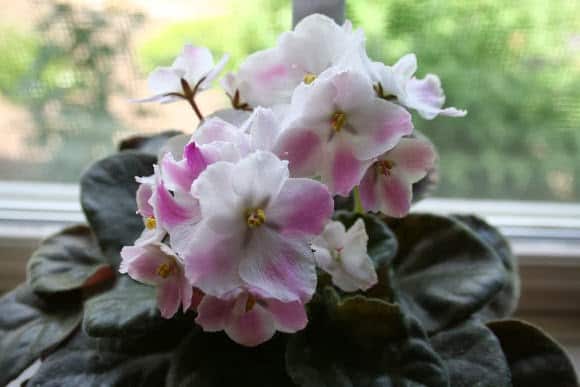
So at noon it was time to take a break, but I can’t bear to look at more housework, other than Mount Washmore the laundry pile which must be tackled today. I took out the beautiful yellow cachepots Anna Polina sent me. I really like how they set off the green walls in our Florida room, and my African Violets needed repotting, so off I went to repot them.
These African Violets are special. My sister Mary gave me leaf cuttings at Christmastime and I grew them from leaves from her plants. She gave me six leaves, two of each of three colors she had in her living room, and one died. I have no idea which surived. Imagine my surprise today when I saw a white bud on one!
I seem to have a knack for raising African Violets. The one in my office blooms profusely, and the ones in the Florida room are thick, green and healthy, and now budding.
I transplanted them into larger pots and got a surprise bonus; a tiny little offshoot plant! It went into a third pot. A little water, and now I have three gorgeous cachepots on the windowsill filled with African Violets, waiting for Pierre to knock them all down.
A few tips on raising great African Violets:
  • East or West light is best…think diffuse, bright light
  • Let them get pot bound. This means let them get too big for their pots. They bloom more that way.
  • Let them dry out between waterings. More African Violets die from overwatering than anything else.
Filed Under: House Plants

Previous Post: « Coyotes
Next Post: Building the Farm »

Footer

a wheelbarrow with bag of soil, trowel, pots and plants

Understanding Fertilizer: A Complete Guide for Home Gardeners

Understanding fertilizer is an important skill for beginning gardeners. In this guide, I’ll walk you through the basics. By the end of this article, you’ll understand fertilizer, what it is and what it does, and how to use it appropriately in the garden. Introduction: Why We Use Fertilizer in the Garden . Plants absorb nutrients…

Read More

red lettuce, mexican tarragon, and chard

The Best Organic Fertilizers

If you’ve been looking for ways to help your garden truly thrive — not just survive — organic fertilizers might just become your new best friend. They’ve become a cornerstone of sustainable gardening and farming, and for good reason: they don’t just feed your plants, they actually improve the health of your soil over time….

Read More

water droplets in sunbeams over a raised bed vegetable garden

Irrigation Tips for Home Gardens: Drip vs. Soaker Hose

Watering is one of the most essential tasks in maintaining a healthy home garden, yet it is also one of the most misunderstood. Many gardeners rely on overhead sprinklers or hand-watering, both of which can waste water and fail to deliver moisture efficiently to plant roots. Two of the most effective alternatives are drip irrigation…

Read More

chive plants in bloom with lettuce

The 10 Easiest Herbs to Grow

Grow them in pots, containers, window boxes, raised beds, or tucked among your flowers. These are the 10 easiest herbs to grow in almost any temperate garden. They take up little space, are generally unfussy, and are used in lots of recipes. What Do I Need to Start an Herb Garden? You don’t need a…

Read More

  • About
  • Plant a Row for the Hungry
  • Awards
  • Privacy Policy

Let’s Connect!

  • Facebook
  • Instagram
  • Pinterest
  • Substack
  • YouTube

Copyright © 2026 Home Garden Joy on the Foodie Pro Theme