Homegrown lettuce isn’t just easy to grow. It’s delicious. And beautiful.
Here’s what’s growing in my vegetable garden this week…
Homegrown Lettuce
I think I shared with you how my homegrown lettuce this year includes some heirloom varieties. An heirloom variety is one in which the seeds have been passed down for generations. They are usually, although not always, open-pollinated and non hybrid. Most of the time, they offer a certain quality that comes with age. For example, some older varieties of tomatoes demonstrate greater disease-resistance because in times past, before pesticides were used, only those plants that were hardy enough to survive bugs and plant diseases survived.
Among the many homegrown lettuce varieties you can choose from, there are plenty of heirlooms. There are also some great hybrids, too. There’s nothing wrong with growing hybrids. My own garden is a mix of modern varieties, a few hybrids that stand up better to the Virginia climate, and my new favorite, an heirloom called Rouge d’Hiver.
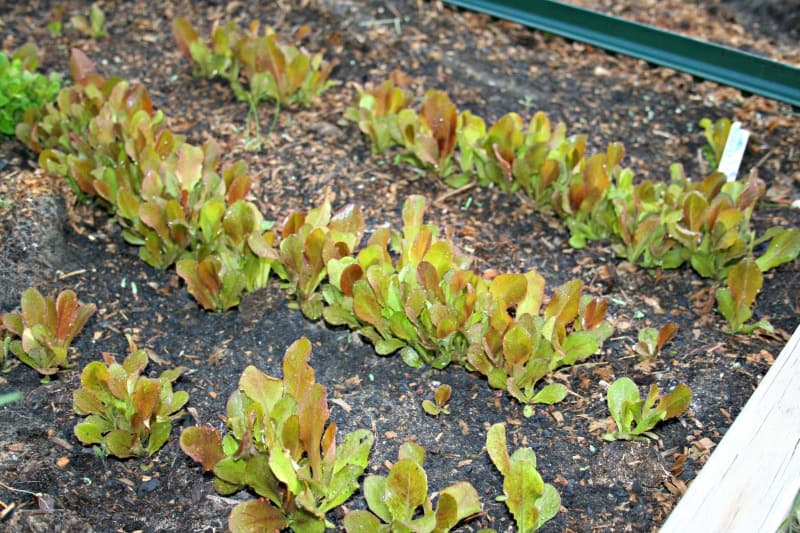
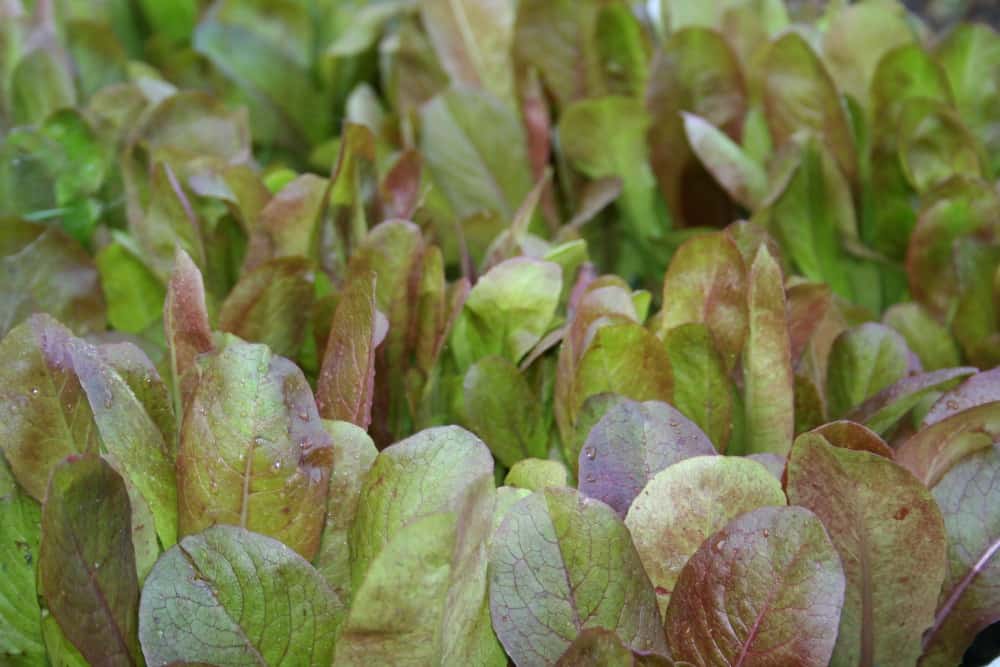
Here’s Rouge d’Hiver. The seeds are descended from plants first mentioned around 1865. The leaves are a gorgeous red-tipped green. The taste is a mellow crunch that’s perfect in salads. It is a loose leaf lettuce, which means it forms bunches, rather than heads like an iceberg. So far it has proven to be exceptionally hardy in my garden.
Here it is:

I purchased my seeds for this variety from Baker Creek Heirloom seeds. They were inexpensive, the company’s service was good, and the seed quality is excellent.
In addition to this beautiful lettuce, my garden contains a mixture of bitter greens and leaf lettuce that is slow to bolt. Bolting means going to seed. When lettuce matures, it sends up a big, thick stalk in the middle of the plant. The end of the stalk contains the flowers, which if pollinated, makes seeds. Okay, got it. But when the plant bolts, the leaves turn very bitter. The lettuce becomes inedible. So you need a ‘slow to bolt’ variety in hot climates, because heat tends to make lettuce think oh my gosh, the world is ending, I have to set seeds NOW.
[Tweet “Learn more about growing lettuce in the home garden. Beautiful pictures, expert tips.”]
“Red Oak” and “Green Sails” are two of my favorites. Here they are. Look at the ruby-red color of that lettuce. You can barely see it, it is such a dark burgundy color all throughout the leaf! It’s beautiful in a salad bowl with the bright almost neon green of “Green Sails” next to it.
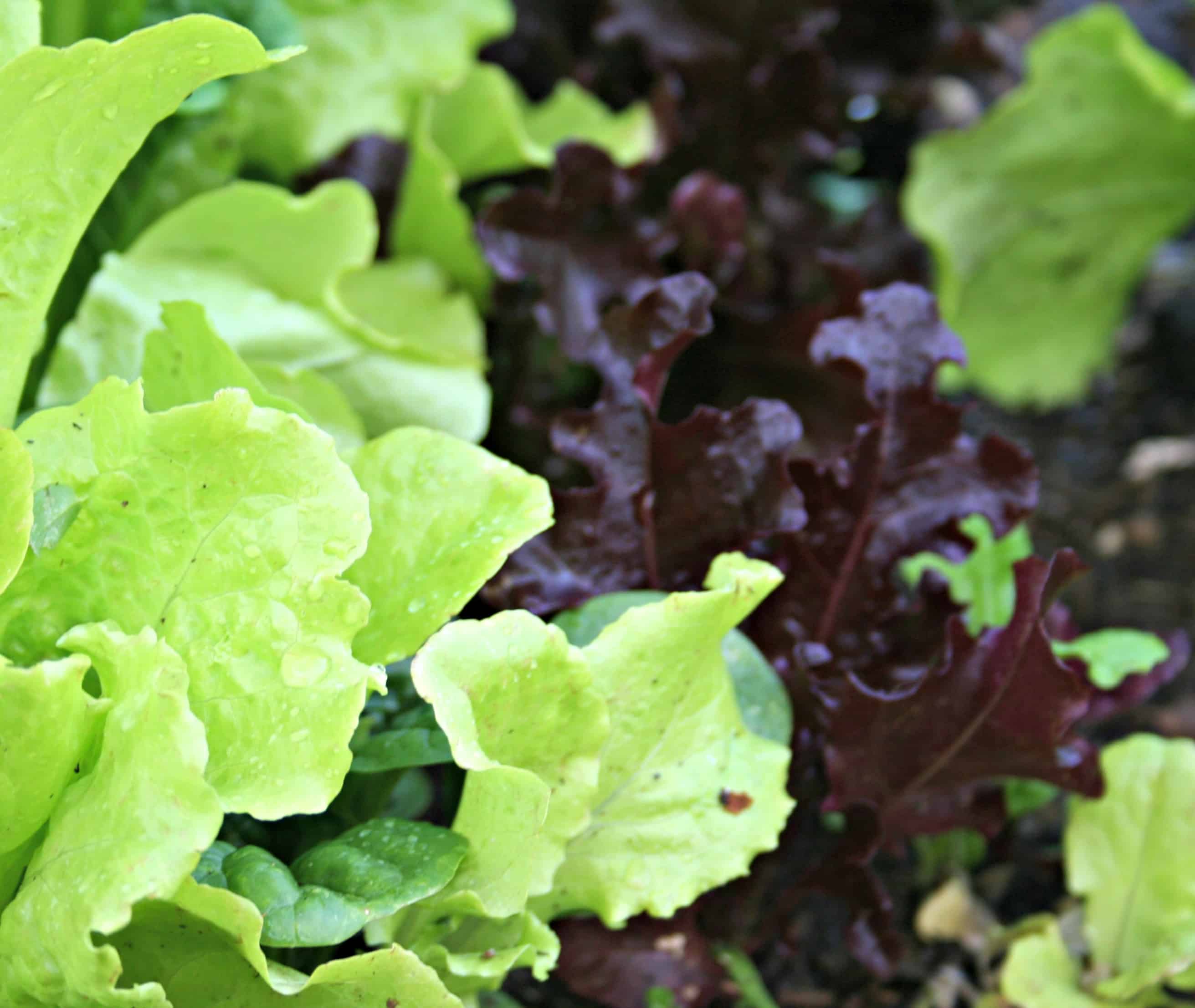
Red Oak and Green Sails taste something like a Romaine type, but without the crunch. The leaf texture is nice, but you have to wash it carefully because the little folds hold dirt and yes, insects. I found a few ‘friends’ hiding in my leaves after harvest – an earwig, a stink bug, and a few ants. You can rinse lettuce off in the garden to remove any stowaway so you don’t bring them into the house.
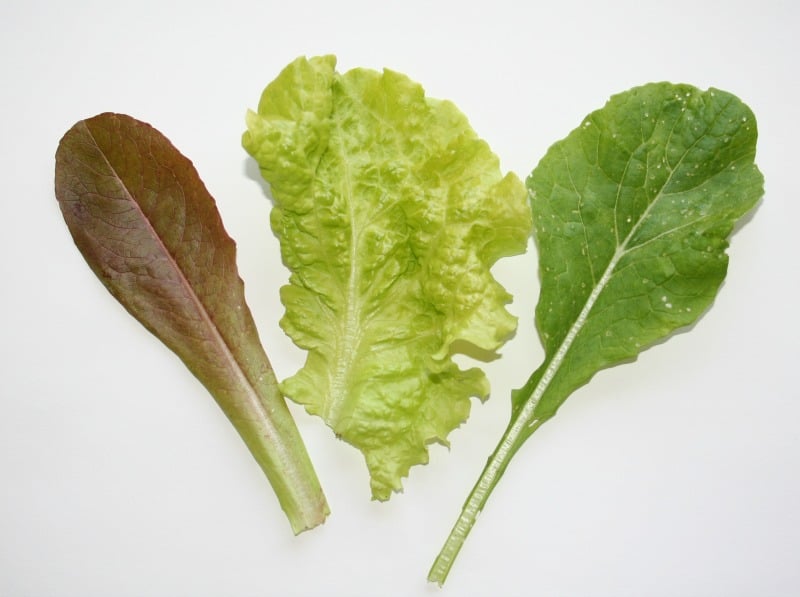
This picture shows you several homegrown lettuce types from my garden.
- “Rouge d’Hiver” is on the left.
- “Green Sails” is in the middle.
- An unknown bitter leaf type, which has a nice peppery flavor, is on the right. It was from a mixed salad greens package I planted.
There are several tricks and tips I can share with you to grow great lettuce:
- Choose varieties for your climate. Look at your state cooperative extension website for variety names.
- Don’t expect it to be the same as store-bought lettuce. Homegrown lettuce tastes fresher, greener somehow. It is difficult to grow iceberg heads of lettuce, so loose leaf is preferred in the home garden.
- Stagger your seed planting times, planting a row each week or two, so you don’t get a flood of lettuce in at once. It’s had to store it for more than a week or two.
- Snip leaves off the plants in the garden but leave the roots and core intact. It will regrow the outer leaves if it doesn’t get too hot.
- Discard and compost any lettuce that sets seed, or bolts.
- Water, water, water! Lettuce needs a lot of water. It also prefers cool temperatures and can tolerate a light frost overnight. If the temperatures drop below 30, drape a cloth blanket, sheets or old newspapers over you plants.
Let me know what kinds of lettuce you a growing. It’s inexpensive, economical, delicious and beautiful. Who wants a plain salad after seeing these homegrown lettuce types? Not me!
Happy gardening. KEEP GROWING!