If you’ve ever stepped into your garden and noticed strange brown spots or sunken blemishes on your cucumbers, you might be facing a common but troublesome fungal disease known as anthracnose. Caused by Colletotrichum orbiculare, anthracnose thrives in warm, humid conditions and can quickly spread across your crop if not addressed early.
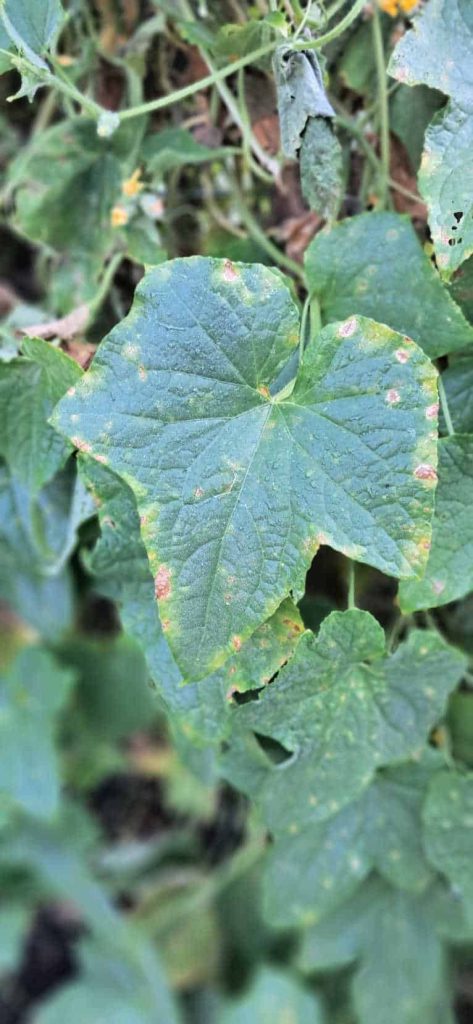
This year in central Virginia, we had very unusual weather. The spring was dry, then it wasn’t – with an inch (or more) of rain per week. The moist, humid conditions in the vegetable garden made it likely that we would eventually see fungal diseases attacking our plants, and indeed, we saw it first on the cucumbers.
You can see the telltale circular spots on my cucumber, left. Once they develop, ‘shot holes’ form, and the leaves die. Eventually, the entire plant dies.
What Does Anthracnose Look Like on Cucumbers?
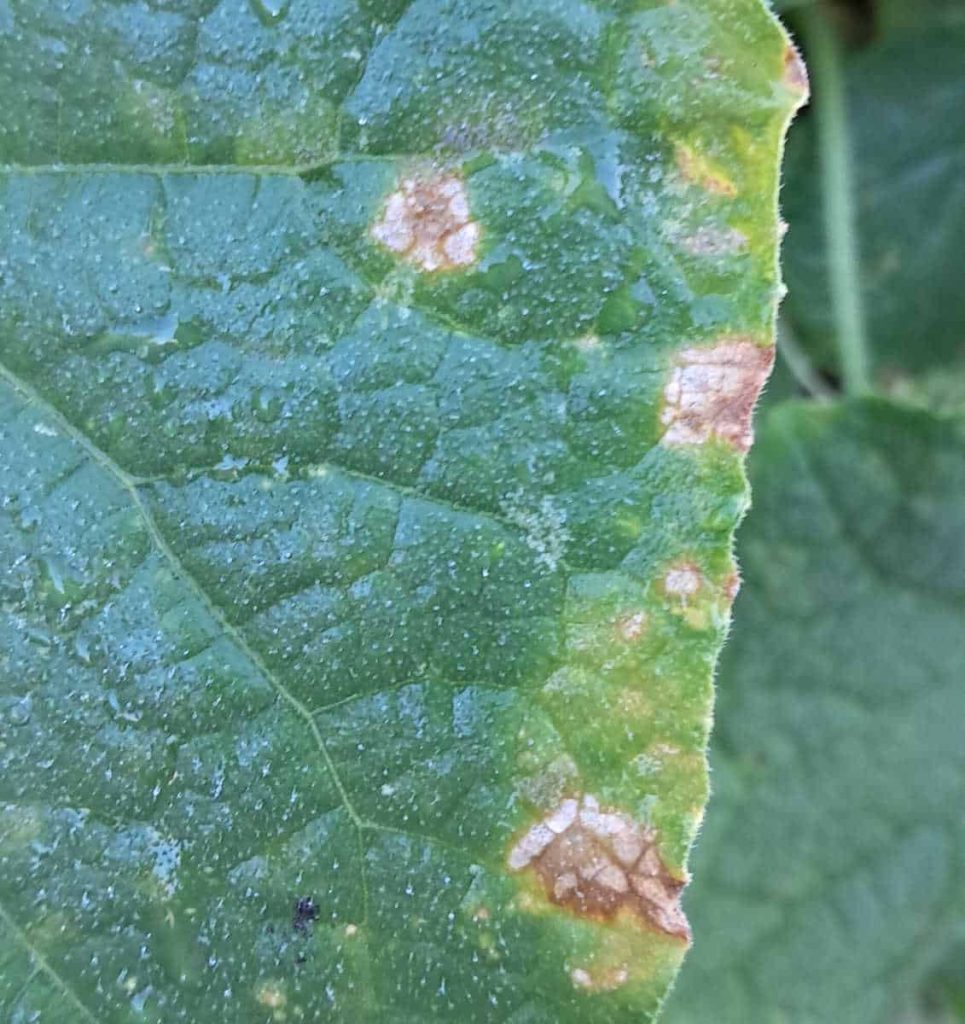
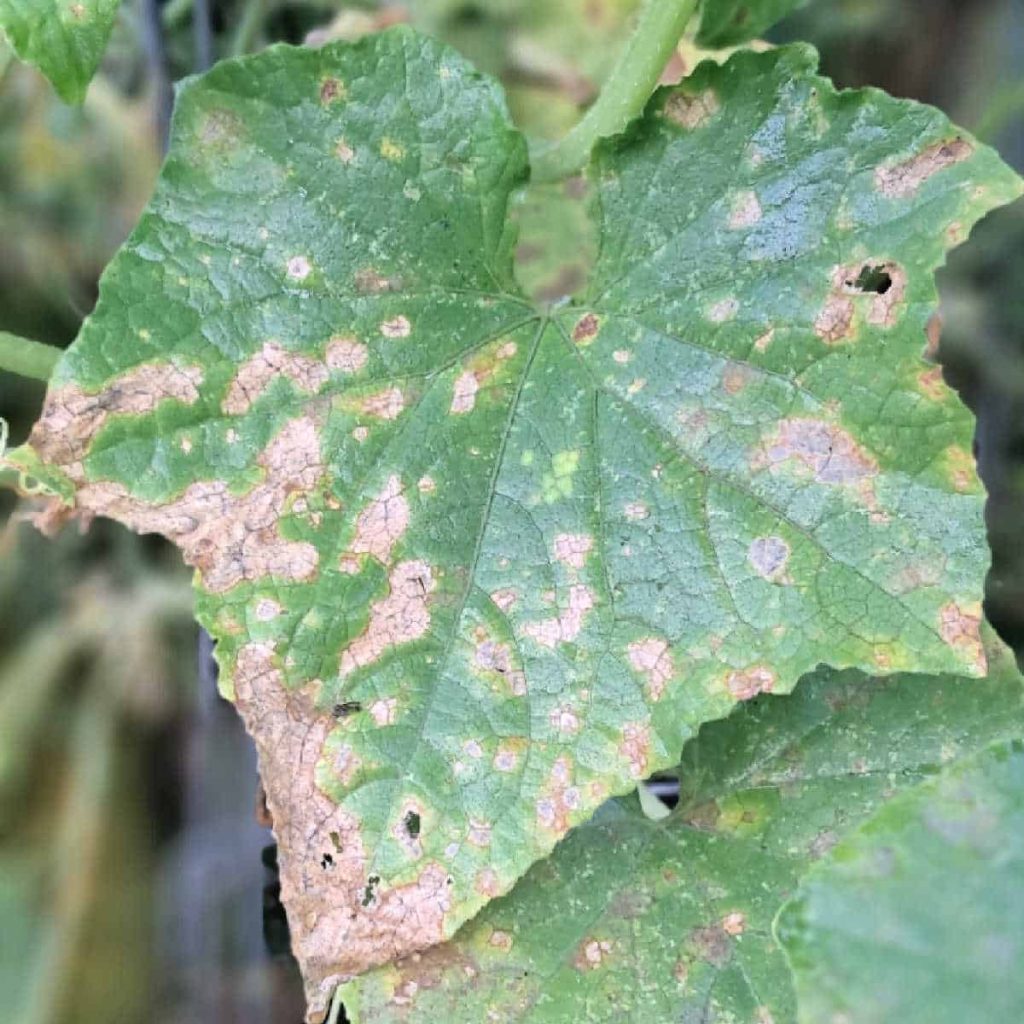
Anthracnose affects all above-ground parts of the cucumber plant. On leaves, it begins as small, water-soaked spots that gradually turn yellow and then brown. As the disease progresses, the centers of these lesions may fall out, creating a shot-hole appearance. Stems are not spared either; they often develop elongated, pale brown cankers that may ooze a pinkish substance in humid weather—this is actually a mass of fungal spores. The fruit itself can show sunken, circular brown lesions, and in wet conditions, these may exude a salmon-colored ooze, which is another clear sign of active fungal growth.
How Do Fungal Diseases Get Into the Garden?
The fungus responsible for anthracnose is remarkably resilient. It can overwinter in infected plant debris, contaminated seeds, and even in wild relatives of cucurbits. Once the growing season begins and moisture levels rise, the spores spread easily through rain splash, irrigation water, gardening tools, and even human contact. The ideal environment for this disease is one with temperatures between 70°F and 80°F and high humidity—conditions that are all too common in many gardens and especially here in central Virginia this summer.
Combatting Fungal Diseases in Plants
Fortunately, several effective strategies are available for managing anthracnose. One of the best defenses is choosing cucumber varieties that show resistance to the disease. Cultivars such as ‘Marketmore’, ‘Dasher II’, and ‘Eureka’ have demonstrated better tolerance and can significantly reduce your risk. In addition to selecting resistant varieties, practicing good garden hygiene is essential. Using certified disease-free seeds, avoiding overhead watering, rotating crops every three years with non-cucurbit plants, and removing infected plant debris at the end of the season can all help limit the spread of the fungus.
If anthracnose has already taken hold, fungicides may be necessary. Conventional options include chlorothalonil, mancozeb, and copper-based sprays, while organic growers might consider products containing Bacillus subtilis. Regardless of the choice, it’s important to follow label instructions carefully and rotate fungicides to prevent the development of resistance.
Anthracnose may be persistent, but with vigilance and smart practices, you can protect your cucumbers and enjoy a healthy harvest. Whether you’re growing for market or for your own kitchen, early detection and proactive care are your best allies in keeping this fungal foe at bay.