Holy basil, also called tulsi, can be grown from seeds. That, at least, is what everyone told me. I’d read about tulsi (holy basil) in several books about herbal medicine and seen it cited as a good adaptogenic herb. I was excited to grow it, so I ordered seeds. Several years in a row. Each time, I’d plant the seeds, the little seedlings would emerge, and then… they’d all fade away.
This year, I successfully grew tulsi from seed. Here’s what I did differently and how I managed to grow this big, beautiful herb in my zone 7b Central Virginia area in a small container on my deck.
What Is Tulsi or Holy Basil?
Tuli, also called Holy Basil (Ocimum tenuiflorum or Ocimum sanctum), is a basil species commonly grown in India. It is grown for its medicinal properties in traditional Ayurvedic medicine. Cited as an adaptogenic herb, it is said to help the body heal from physical or emotional stress. In other words, to adapts to the environment. It also has plentiful antioxidants and supports the immune system.
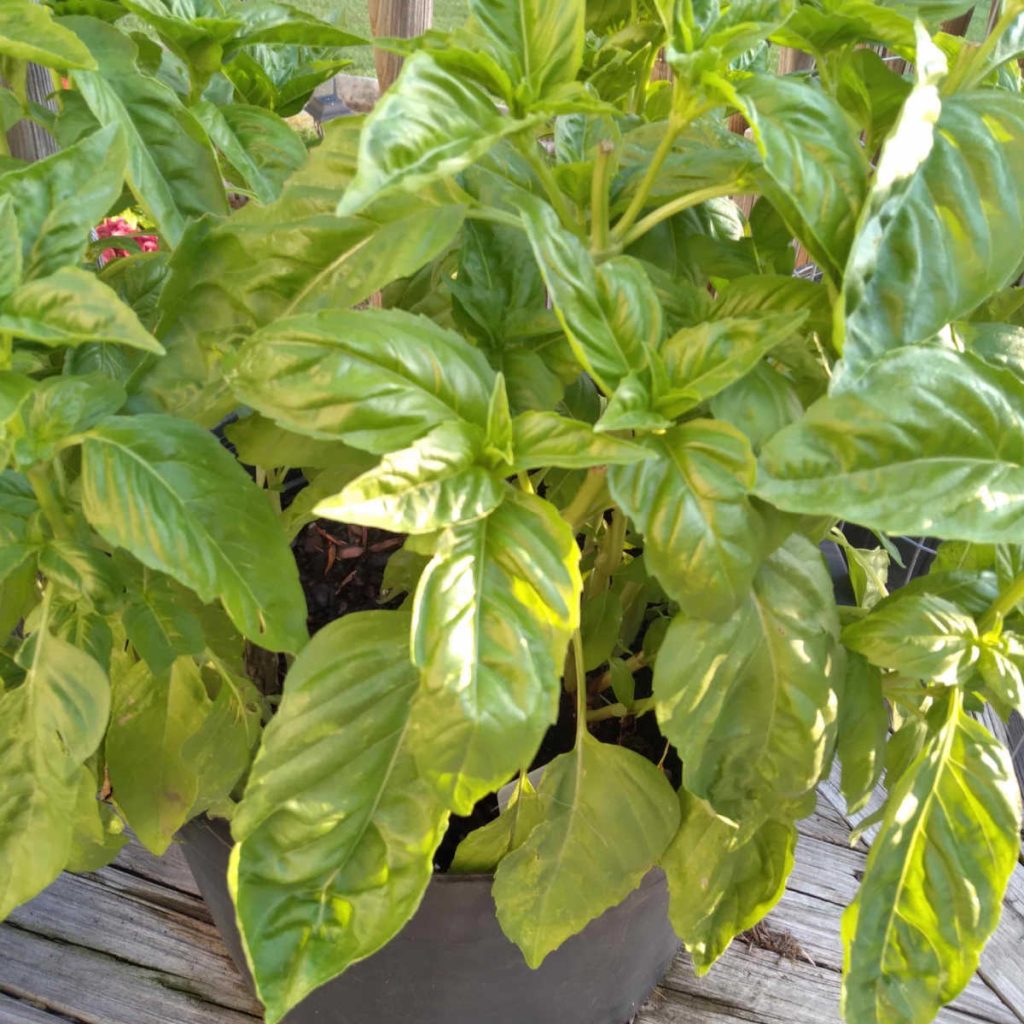
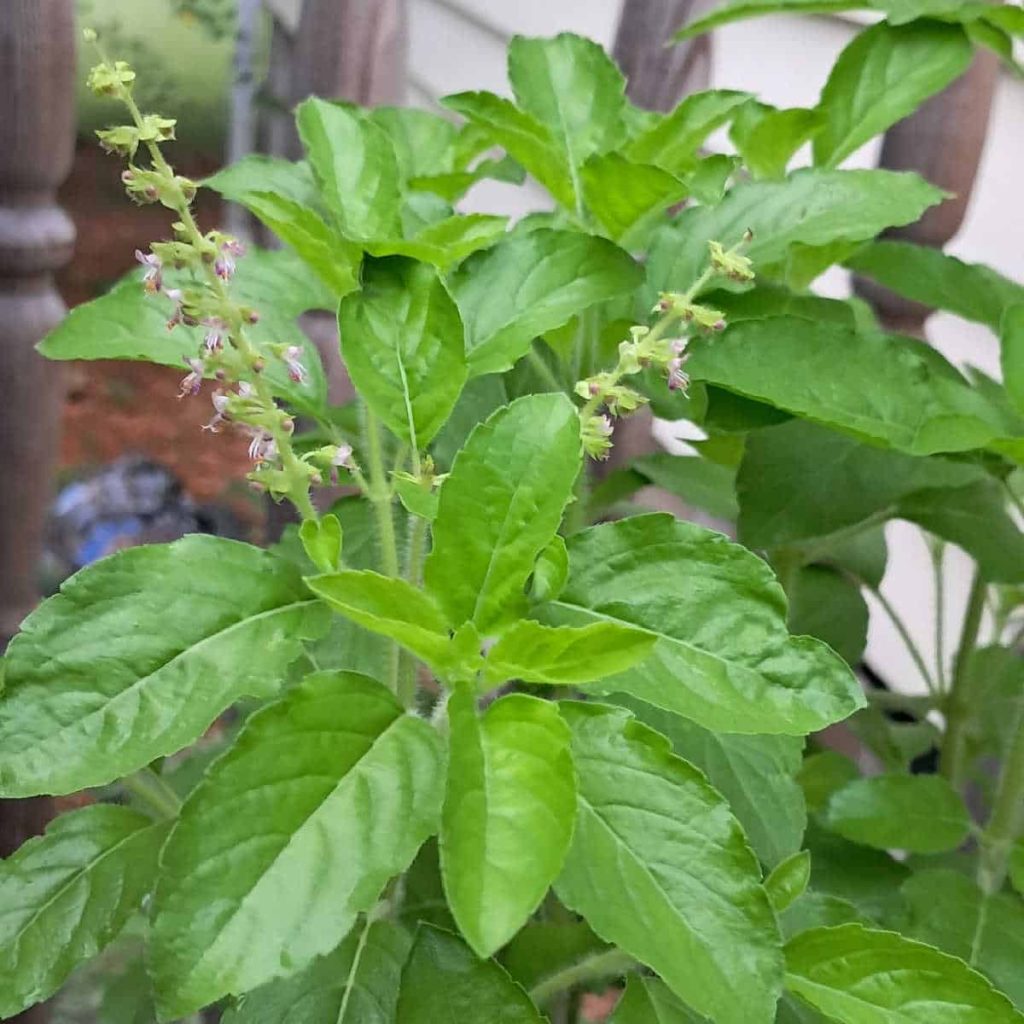
The plant looks something like traditional Genovese (sweet) basil, and I’ve placed side-by-side photos below, showing the leaves. The flower stalks are similar to Genovese basil, but purple rather than white. And while it looks similar, I am told it tastes quite different. I’ll know this weekend as I plan to harvest my holy basil and make my first cup of tea with it (more on that in a bit).
Hey! We are an Amazon affiliate and will include a few product links in this post. If you make a purchase using these links, we make a small commission. This does not affect your price in any way. Thank you for supporting Home Garden Joy!
Tulsi (Holy Basil) Plant Profile
Plant Profile
Botanical Name: Ocimum tenuiflorum (also known as Ocimum sanctum)
Light Requirements
Tulsi grows best in full sun, requiring 6 to 8 hours of direct light each day. It can survive in light partial shade, but reduced sunlight leads to slower growth and less aromatic foliage.
Water Requirements
Tulsi prefers evenly moist soil. Water when the top inch of soil becomes dry. In hot or dry climates, more frequent watering is needed. Avoid oversaturation, as tulsi is sensitive to waterlogged conditions and root rot.
Soil Requirements
Tulsi thrives in well‑draining soil with a loamy or sandy loam texture. A pH between 6.0 and 7.5, slightly acidic to neutral, is ideal. Organic matter, such as compost, improves soil structure and supports vigorous growth. Heavy clay soils should be amended to improve drainage.
Temperature and Climate
Tulsi is a warm‑season perennial in tropical regions and behaves as an annual in cooler climates. Optimal temperatures range from 70 to 95°F (21 to 35°C). Growth slows significantly below 60°F, and the plant cannot tolerate frost. Indoors, keep it away from cold drafts.
Air Circulation
Good airflow helps prevent fungal issues. Space plants 12 to 18 inches apart to reduce humidity around the foliage.
Humidity
Tulsi tolerates a wide range of humidity levels but grows best in moderate humidity. Indoors, extremely dry air may slow growth; occasional misting is acceptable but not required.
Fertilization
Tulsi is not a heavy feeder. A balanced organic fertilizer applied monthly during active growth is sufficient. Compost top‑dressing provides steady nutrients. Excess nitrogen can reduce essential oil concentration and diminish aroma.
Pruning and Harvesting
Regular pruning encourages branching and leaf production. Pinch back growing tips once plants reach 6 to 8 inches tall. Removing flower buds helps maintain leaf yield, as flowering shifts the plant’s energy away from vegetative growth.
Container Growing
Tulsi adapts well to containers. Use a pot at least 8 to 10 inches wide with good drainage. A well‑draining potting mix is essential. Container plants may need more frequent watering than those grown in the ground.
Pests and Problems
Tulsi is generally resilient but may encounter aphids, spider mites, whiteflies, or fungal leaf spots. Most issues arise from poor airflow or overwatering. Neem oil or insecticidal soap can manage common pests.
Why Is It Called Holy Basil?
Tulsi is considered one of the most sacred plants in Hinduism. It is associated with the goddess Tulsi (Vrinda), who is regarded as an earthly manifestation of devotion and purity. Because of this divine connection, the plant is treated with reverence and often grown near homes and temples. It is found throughout Southeast Asia.
How to Grow Tulsi from Seed – and My Experience
So, given all of this, it seemed to me that growing tulsli from seed should be easy, right? I started my first flat of tulsi seeds just as the plant company’s website instructed. Sterile potting mix? Check. Clean tray? Check. I sprinkled the seeds on top, watered them, and slid a plastic bag over them to retain humidity.
I waited. And waited.
Nothing.
I tried again, this time without the bag. Still no plants.
The next time I tried it a week later, a few seedlings emerged. Hurray! I had holy basil plants. Unfortunately, they “dampened off.” Damping off is when seedlings either fail to emerge or emerge and disappear a few days later. It’s usually caused by soil pathogens. I had a sneaking suspicion my seed tray wasn’t sterilized properly, but now I was out of seeds. I thought to myself, “Well, this one’s not for me.”
The following year, determined to grow this wondrous plant I had heard so much about, I purchased seeds from Amazon. And I got busy with work. So busy, in fact, that it was late May, almost June, when I planted them. And, lucky for me, we experienced several days of almost nonstop rain.
Finally, Success with Tulsi Seeds!
The tulsi seeds not only germinated, but they also thrived! Between the warmth and humidity, they probably thought they were in Southeast Asia.
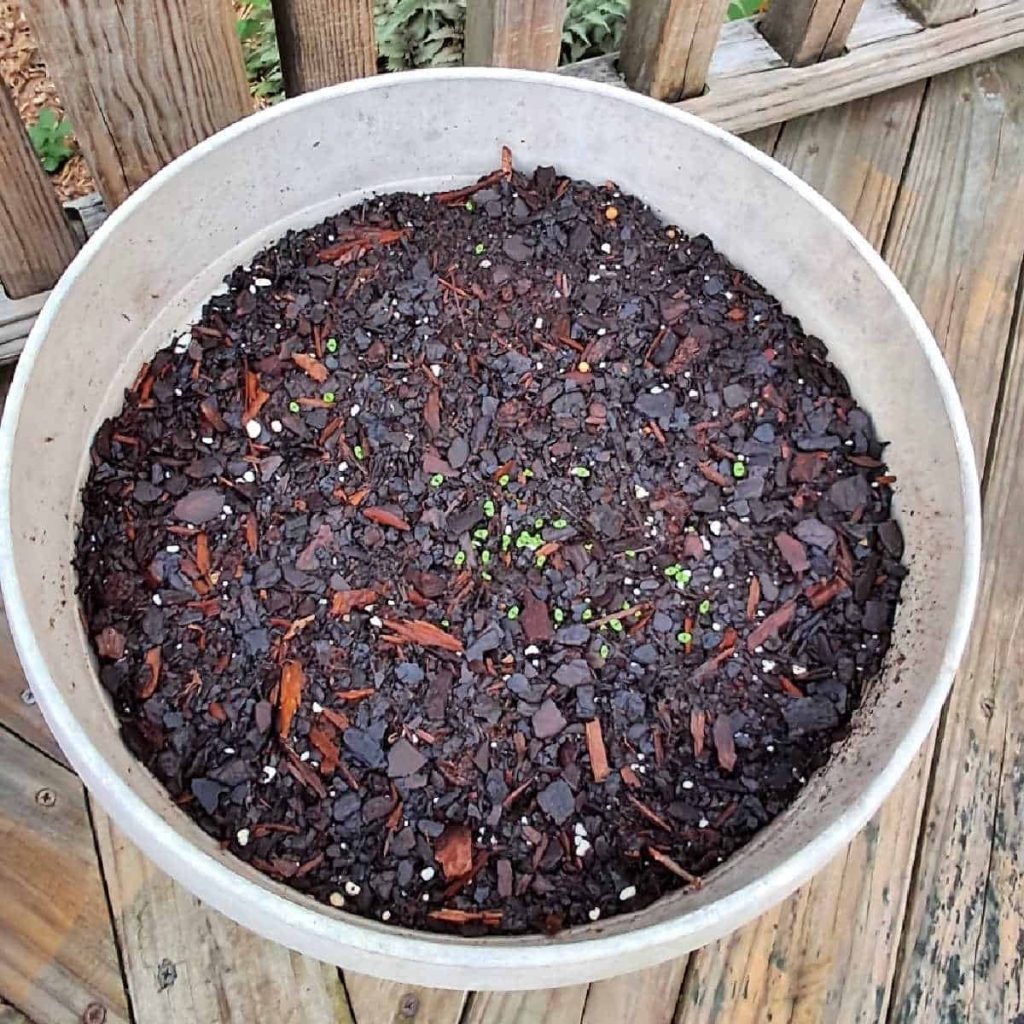
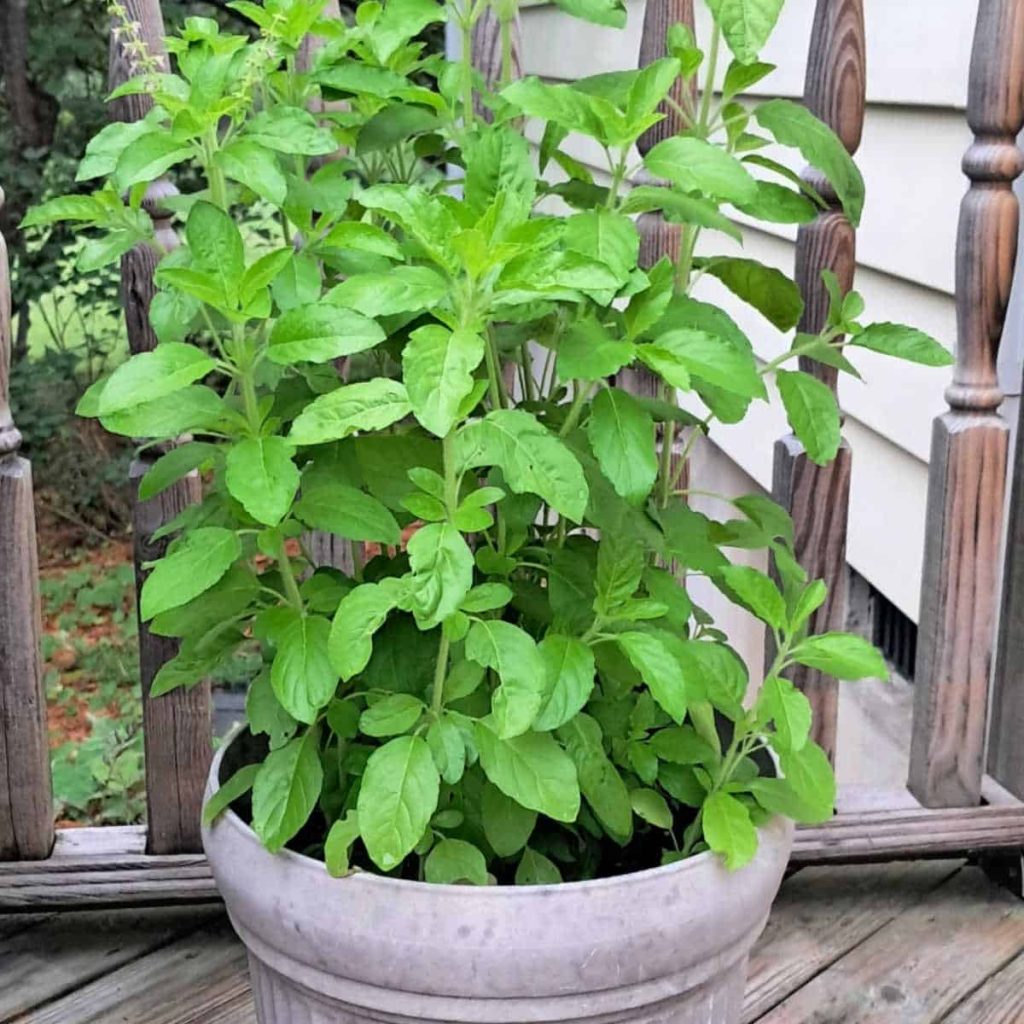
Therein lies the secret: I have found from failing several times, then succeeding in growing holy basil from seed, that you have to have warmth and moisture to really get this plant growing. Warmth, it seems, was the missing ingredient in my previous experiments. While the calendar said May and “you’re past the frost-free date for your region,” my Tulsi plants said, “No way, we’re not doing this, it’s too cold!” and died.
Start Seeds Late Spring
Start seeds in late spring, the latest for your region that you possibly can, probably two weeks past the frost-free date. This ensures that if you are planting Tulsi seeds outdoors, it is very warm outside. Keep the seed moist. I would not use a plastic bag again, but water them several times a day to ensure moisture.
I don’t fertilize my Tulsi plants, nor do I worry about pests. Like the Genovese basil I grow in my raised bed gardens, Japanese beetles on basil don’t worry me. I simply use organic methods to control Japanese beetles or wait. They usually leave enough of the plant behind so that it can recover.
Using Holy Basil
The fresh leaves from this plant may be picked and brewed into a nourishing tea. The Cleveland Clinic states you should use two to three teaspoons of fresh holy basil leaves per cup of water. Place the leaves in a cup, pour boiling water over them, then place a light cover over the top of the cup, such as its saucer, to retain the oils; as steam rises from the cup, some of the essential oils and flavors rise with it. The saucer atop the cup retains the team and flavors. Remove the leaves and sip the tea for a refreshing, supportive beverage.
Leaves may also be added to stir-fries and other dishes to add flavoring. Holy basil does not make a good substitute for Genovese basil in dishes. Many people think they taste too bitter to use fresh, the way you might use Genovese basil in a tomato sandwich, for example.
Drying Holy Basil Leaves
As with many herbs used to make tea, drying the leaves is a fine way to preserve them for use later on. Harvest clean, blemish-free leaves. Pat dry. Dry it using a solar-drying method, like hanging it from a rack with a paper bag covering the herbs to keep them dust-free. Or, use a dehydrator for fast drying. I use my Presto dehydrator to dry all types of herbs and will use it to dry my holy basil harvest this weekend. Store the dried herbs in a glass container with a cover. Mark the container with the name of the herb and the date when it was stored. You’d be surprised at how many herbs look alike once they are dried, and it is easy to mix them up in the pantry.
I finally figured out how to grow holy basil from seed, and I’m excited to try this wonderful herb this weekend. Let me know if you’ve been successful growing it from seed and if you have any tips for our readers.