When it comes to garden design, the best laid plans often go astray. I’ve found that it’s more important to admit when I’m wrong, dig up the mess, and start again.
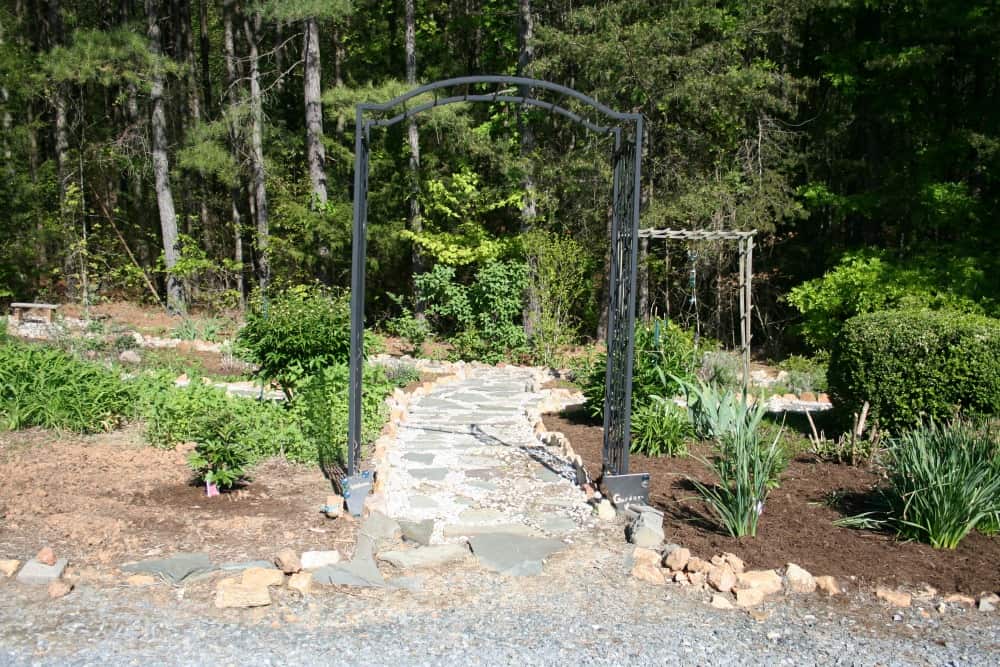
Garden Design: The Weedy Perennial Garden Is Out of Control
Longtime readers of Home Garden Joy know that I jokingly refer to a portion of the flower garden as the ‘weedy perennial garden’ for obvious reasons. No matter what I do, no matter how often I weed, the weeds come back – with a vengeance.
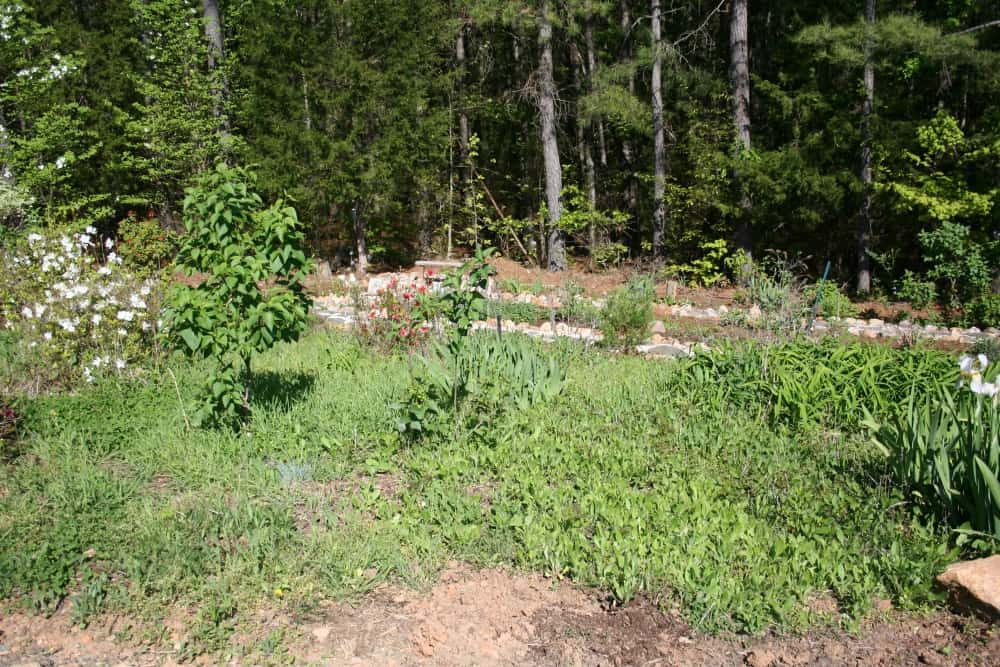
No matter how hard I try, I can’t see a garden design left in this patch of the perennial garden. Time to start fresh.
I’ve tried hand weeding. I’ve tried digging up the worst spots. I have tried weeding and applying thick layers of mulch, using ground cover plants to smother the weeds, and pretty much all organic gardening techniques in my gardener’s bag of tricks.
The weeds come back – with a vengeance. It’s as if what doesn’t kill them (or in my case, remove them completely) just makes them stronger.
My husband and I were outside this weekend finishing up the annual weed and mulch on all our garden beds. There are 22 areas to weed, and we were down to the last six, all of them segments of one large bed in the perennial garden.
He saw me trying to hand-weed an enormous patch of wire and crabgrass and said in disgust, “I hate this area of the garden. It doesn’t do anything.”
I knew exactly what he meant. The herb garden has form and purpose. The rose garden has a shape created by the anchoring pink Fairy roses and the edging of lavender. We split the catmint and salvia in the butterfly garden to add balance, symmetry and proportion to that area. Through the borders, we have a nice, natural balance.
This area is a random conglomeration of plants.
What happened is simple. We began with a kit of perennial plants from a catalog and a nice little map that showed us where to plant them. Joan, a neighbor, gifted us with lovely iris, so we set these randomly wherever we could find room. I added a few plants. Before long….chaos.
No form, shape or plan. Plants spread, others died, and soon we simply have a mat of dandelion, crabgrass, and various weeds mixed with black eyed Susan, sprawling monarda, randomly self-seeding Echinacea, and a few shrubs such as azalea and red twig dogwood that were the original backbones of the garden.
Starting Fresh with Garden Design
Many of you have moved into a home with an existing garden. You’re in a similar situation; you may have some plants you like but areas you want to change.
The first step to garden design is to map out what you have, identifying what you want to keep and what you wish to remove.
My Plan: What’s Next in the Garden
I am keeping the large shrubs (azalea, red twig dogwood, lilac), several perennials (peonies, foxglove, iris and daylilies) and removing or moving everything else (black eyed susan, echinacea, monarda, gaillardia, coreopsis). Many of these plants can be moved to other areas of the garden. The Echinacea, for instance, is already thriving in another large bed where it fits nicely into the garden design. The monarda can be easily moved to the butterfly garden, and the black eyed susan and yarrow will find homes with friends.
We pulled up two dead heathers and planted new peonies. The peony hedge will grace the entrance, with e existing shrubs as anchoring points or focal points in the garden design.
Will it work? I don’t know. I can’t keep weeding this area, year after year. All of the other garden areas took me about 1-2 hours to weed before Hubby applied mulch. They’ll look fine for weeks with only minor weeding touch ups. This section of the garden never seems to get finished because the weeds are just so thick. Digging them up entirely, clearing out the plants, moving them to new homes, and starting from scratch is the best course of action.