Wondering how to grow onions? I’ve grown onions here at Seven Oaks Farm in several ways: from “sets” or starter plants and from store-bought onions that sprouted in the bag! Onions don’t require much space, and you can grow a lot for the money you spend on starter plants. Let’s take a look at how to grow onions organically in your backyard.
Plant Profile: Onions
Botanical Name: Allium cepa
Light Requirements: Onions thrive in full sun, needing at least six to eight hours of direct sunlight daily.
Soil Requirements: They prefer well-drained, loose soil rich in organic matter. A sandy loam with a pH between 6.0 and 7.0 is ideal for preventing rot and encouraging healthy bulb development.
Fertilizer Requirements: Apply a balanced fertilizer (such as 10-10-10) before planting. Once established, onions benefit from high-nitrogen feedings every few weeks to support leaf growth, which directly impacts bulb size.
Water Requirements: Keep the soil consistently moist but not waterlogged. Onions need about 1 inch of water per week, adjusting based on rainfall and soil drainage.
When to Plant Onions
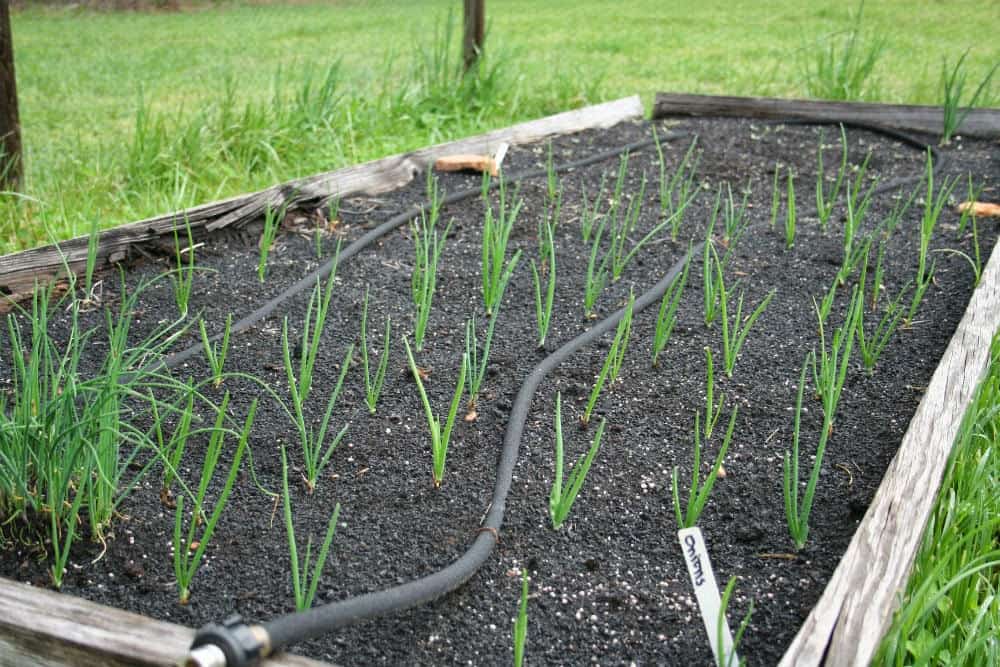
Plant onions when the weather is cool. They prefer daytime temperatures of 45 to 60 degrees F during the growing season, and as the weather turns warmer, around 70 to 75 to cure or dry out before you store them. Adequate moisture is important (note the soaker hose, above) but they hate to be waterlogged. Too much water and you get rotted onions, which trust me, are NO fun to pick out from the garden. They stink to high heaven and squish into a delightful (sarcasm intended) smelly brown pulp.
Onion Varieties
So you think all onions are the same? Walk into any grocery store and you’ll find bags of white onions, red onions, Vidalia onions, and maybe, if you’re lucky, shallots. But there are many, many more varieties to choose from and explore. Here’s a small – and I mean small! – list of varieties to consider.
Keep in mind that not all varieties will grow in every location in the United States. Consult your local Cooperative Extension office for a list of varieties that will grow well in your USDA Hardiness Zone.
Yellow Onions
- Spanish Onion – Mild and slightly sweet, great for cooking.
- Vidalia Onion – Exceptionally sweet, ideal for raw use.
- Walla Walla Onion – Large and juicy, perfect for grilling.
Red Onions
- Red Wing Onion – Deep red color, crisp texture, great for salads.
- Tropea Lunga Onion – Italian variety, elongated shape, mild flavor.
- Burgundy Onion – Sweet and mild, excellent for roasting.
White Onions
- Crystal White Wax Onion – Small and mild, often used for pickling.
- White Sweet Spanish Onion – Large and slightly sweet, good for fresh use.
- White Bermuda Onion – Flat and mild, great for sandwiches.
Specialty & Bunching Onions
- Cipollini Onion – Small and sweet, caramelizes beautifully.
- Pearl Onion – Tiny and mild, often used in stews.
- Egyptian Onion – Unique top-setting variety, grows in clusters.
- Welsh Onion – Non-bulbing, similar to scallions.
Problems Growing Onions
The only problems I’ve had growing onions is with rot. Stem and bulb rot occur with excessive water. Sometimes, you can control the amount of water by simply adjusting your watering schedule, but a particularly rainy spring can wreak havoc on onions. Thrips and onion root maggots can attack them, but I have not had this problem. If you suspect insect issues, talk to someone at your local County Cooperative Extension Office.
Harvesting Onions
Onions are ready to harvest when their tops naturally fall over and turn brown. This typically happens 100 to 120 days after planting, depending on the variety.
For storage onions, wait until at least 50–80% of the foliage has dried and toppled over. The neck of the onion should be dry and tight, which helps prevent rot during storage.
Harvesting is best done in dry weather to avoid excess moisture, which can lead to disease. If the soil is loose, you can pull them up by hand; however, if necessary, use a garden fork to gently loosen the soil.

Storing Onions
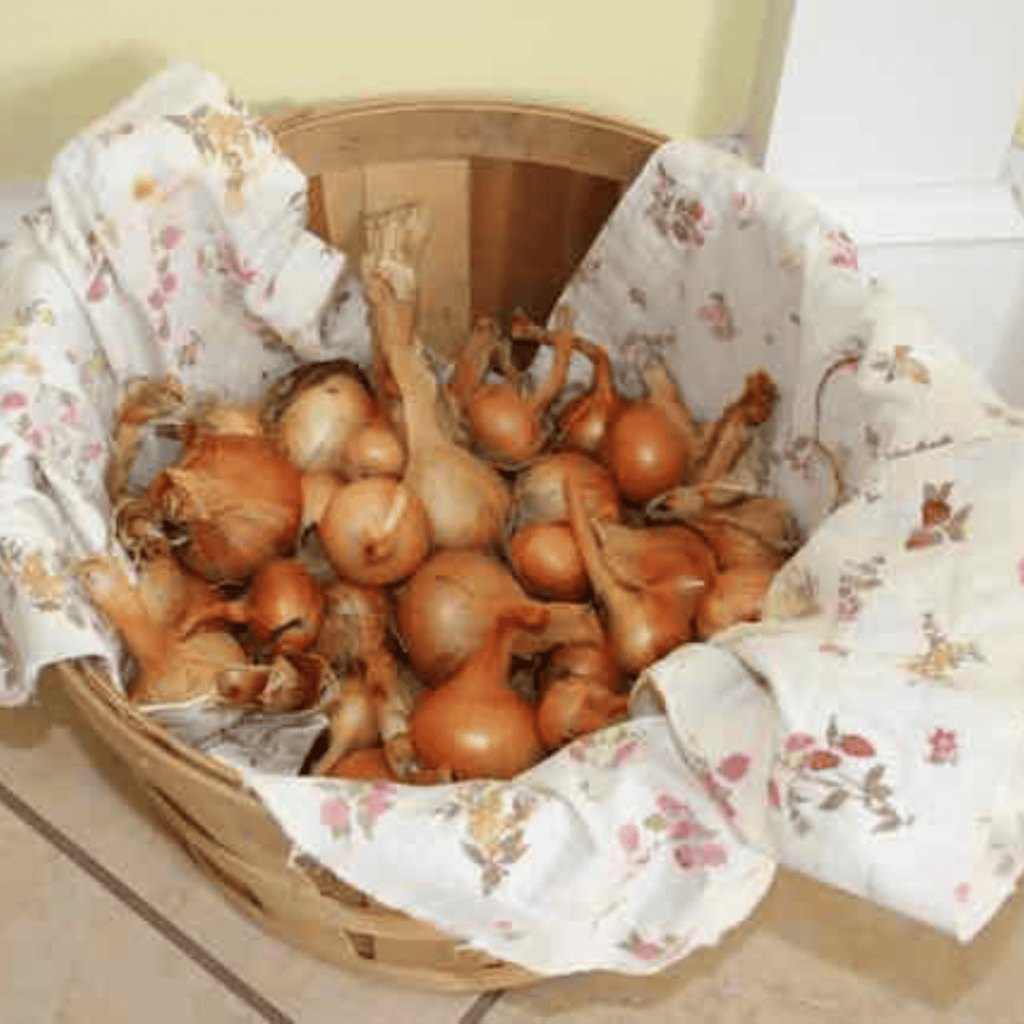
To store harvested onions properly, begin by curing them in a dry, well-ventilated area for two to three weeks. During this time, the skins will become papery and the necks will dry completely. Once cured, trim and clean the onions by cutting off the dried tops and roots, then brush away any loose dirt. It’s important to avoid washing them, as moisture can lead to rot.
When selecting a storage method, consider options that promote good airflow. Mesh bags or baskets work well because they allow air to circulate, preventing mold. You can also create onion strings by tying the onions together and hanging them in a cool, dry place. Wooden racks or crates are another excellent choice, provided they ensure good air circulation around the onions.
The storage environment is crucial for maintaining onion quality. Store them in a cool location between 32°F and 40°F that remains dry and dark, such as a basement, pantry, or garage. Be careful not to store onions near potatoes, as potatoes release moisture that can cause the onions to spoil more quickly.
Regular monitoring is essential for successful long-term storage. Check your stored onions periodically and remove any that show signs of rot or sprouting. This prevents the spread of spoilage to healthy onions, helping to maintain the quality of your entire harvest.
This post was originally published in 2014. It was updated in 2025 with new text and photos.
I’ve decided sets are best for me too. This year, my onions are getting a better start than anything else I’ve planted so far. I have gone to buying my sets where I can pick out the bulbs individually. I’ve had too many bags where some are moldy or squishy or sprouted. They don’t do well.