
Homegrown asparagus is a treat, and if you have enough room to grow it, adding an asparagus bed to the garden offers rewards for years to come. Asparagus is a perennial vegetable. Each year, it sends up new shoots from the crown. The young shoots are harvested while other shoots are left on the plant to produce enough food through photosynthesis for the plants to survive. Once the asparagus bed is established, it produces spears for many years with little intervention or assistance on your part.
Key Takeaways
- Asparagus is a perennial vegetable that produces shoots for years with minimal care.
- Choose male asparagus crowns for higher yields and plant them 12-18 inches apart in well-drained, moist soil.
- Provide at least 8 hours of direct sunlight and maintain a soil pH of 6.5 to 7.5 for optimal growth.
- Water frequently, especially during establishment, and mulch to suppress weeds and retain moisture.
- Harvest asparagus when shoots are about 6 inches tall, leaving some shoots to ensure continued growth next year.
Plant Profile: Asparagus
Common and Botanical Names
- Common Name: Asparagus
- Botanical Name: Asparagus officinalis
Light Requirements: Asparagus requires at least 8 hours of direct sunlight daily.
Soil Requirements: Loose, deep, sandy or loamy soil is ideal. Well-drained soil is critical; standing water can rot the roots. Incorporate compost, manure, or green manure crops before planting. Optimal soil pH is 6.5–6.8
Water Requirements: Keep soil consistently moist, especially during the establishment phase. Excess water can lead to root rot. Once established, it’s fairly drought-resistant, but always produces best with consistent moisture.
Planting Requirements
- Planting Material: Most gardeners plant crowns (one-year-old roots) rather than seeds, as crowns establish faster and reduce the waiting period for harvest.
- Timing: Plant crowns in early spring, as soon as the soil can be worked.
- Depth and Spacing:
- Dig trenches about 12 inches deep.
- Place crowns 12–18 inches apart in rows spaced 3–5 feet apart.
- Cover crowns with 2–3 inches of soil initially, then gradually fill in the trench as shoots grow.
Growing and Harvesting Asparagus
Asparagus is ideal to grow as an organic vegetable in most circumstances. As long as you have good soil or amend it, fertilize and water it during droughts, and make sure it gets plenty of full, direct sunshine, you can have success growing asparagus.

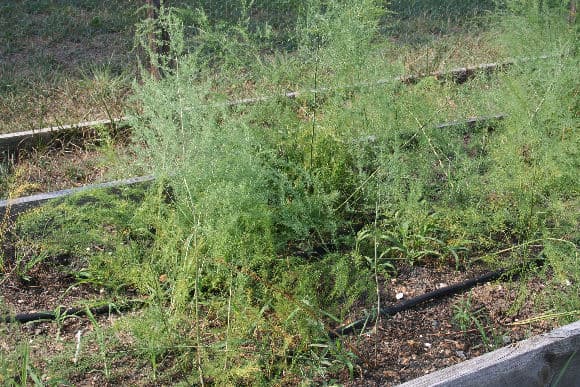
How to Grow Asparagus
Asparagus can be grown in nearly any climate except the very hot, humid climates of southern Florida. Choose asparagus varieties suited for your region. If you’re not sure which ones to grow, you can:
- Talk to your local County Cooperative Extension office for recommendations. The agents or Master Gardener volunteers are familiar with what varieties grow well in your part of the country and can guide you to select hardy varieties.
- Ask at your local nursery and garden center. Local stores typically stock the varieties that grow well in your area. They want you to be happy with your garden, and will help you pick ones that are likely to grow well in your region.
Some common asparagus varieties in the United States are:
- Jersey Knight
- Jersey Giant
- Purple Passion
- Mary Washington
Look for older crowns, 1 year or older. These will produce more quickly than younger crowns. The package should be labeled with the age of the plants.
Asparagus Has Male and Female Plants
One thing to note with asparagus. There are male and female asparagus plants. Male plants tend to be more productive with the edible portions of the plant, so try to choose packages of asparagus crowns marked “all male.” Mixed packages should include mostly male plants.
You can’t peek under the soil to tell the difference…it’s only when they get growing that you can tell. Female plants produce berry-like seeds and put more of their energy into reproduction, so produce fewer edible shoots. But no worries; no matter what you get, you’ll get some edible asparagus.
Site Selection and Soil Preparation
Site selection and soil preparation are perhaps the two most important aspects of growing tender, healthy asparagus. Because asparagus can produce for 20 years, you want to take your time preparing the garden bed.
Soil pH
Have the soil tested. Make sure the soil pH is between 6.5 and 7.5 – slightly alkaline. You can take a soil sample to your local Cooperative Extension office, and for a small fee, they will provide you not only with a pH analysis but with a comprehensive analysis and recommendations of which nutrients to add to your asparagus bed for optimal productivity.
Fertilizer
Asparagus grow in almost any soil, but they don’t like heavy clay soil that retains water. Add plenty of compost or well-rotted manure to the soil and till the soil or turn it over before planting to break up heavy clods. Fertilize the soil and mature asparagus beds with compost for organic vegetable gardening or for conventional gardening methods, a commercial fertilizer marked 10-20-10.
Light Requirements
Asparagus need full sunlight. Make sure the garden area where you plant your asparagus bed receives at least six or more hours a day of bright, direct sunshine.
Water
Asparagus do need regular watering. I have a soaker hose in my asparagus bed, which provides drip irrigation during times of drought. We have a rain gauge attached to the vegetable garden fence, and during weeks that receive less than an inch of rain, I use the soaker hoses to provide additional water.
Planting
Plant the asparagus crowns about 5 to 6 inches deep and at least 1 foot apart. They’ll quickly fill the space. The Ohio Cooperative Extension office recommends adding a phosphorous-based fertilizer during planting.
Care
Weed the asparagus bed frequently. I find that weeds are the biggest pest, and they sap much-needed nutrients and water from the soil. I hand weed the garden bed but you can also use a hoe. Mulch helps the soil retain water and can suppress weeds.
Harvesting Asparagus
Harvesting asparagus takes very little time. The trick is not to over-harvest it the first year. To harvest asparagus, wait until the shoots are about 6 inches tall. Make sure the top of the shoot is still tightly closed. Snap it off with your hand near the base. You can also use garden scissors, but they snap fairly easily. Leave at least several other shoots on each crown. In other words, don’t take all the shoots off of a crown at one time. Leave at least a few to help the plant produce its food through photosynthesis and grow more shoots for you next year.
After the first year, the Ohio Cooperative Extension site recommends harvesting the shoots to the ground during the growing season, then allowing the crowns to produce shoots that fern out for the remainder of the year.
Asparagus do not regrow shoots from the same spot, so once you snap off a shoot, the crown produces a new shoot from a separate location. The shoots form when the soil temperature reaches about 50 degrees F. Once you start to see shoots, get ready to harvest! It’s best to pick asparagus once every 2 to 3 days. Store the shoots in the refrigerator until you’re ready to enjoy them, but don’t store them for too long – they keep, at best, for about a week.
Larger spears start to develop a tough, fibrous stem, and are not as enjoyable, so make sure to stay on top of harvesting and pick the shoots while they are tender. Steam them for best taste. Fresh asparagus is a treat not to be missed. Asparagus is also rich in many vitamins, including B, C, iron, and calcium, so enjoy it with pleasure. You’re not only saving money by growing your own asparagus, but you’re eating the healthiest, freshest vegetables around!
My mom used to grow asparagus when I was a little girl. I eat it all the time, but haven’t tried to grow it myself, but I was planning to try it in a big raised planter box designed for growing vegetables. My hope is that if we move (possible this year or next) that we can just take the box with us, after we get it hoisted onto a trailer 🙂
Enjoyed having a look through blog. Nice work!