• Skip to primary navigation
  • Skip to main content
  • Skip to footer
Home Garden Joy
  • Home
  • Gardening
    • Raised Bed Gardening
    • Home Garden Tips
    • Seed Starting
    • Compost and Fertilizer
    • Tools & Equipment
    • Butterfly Gardens
    • Pests & Problems
    • Birds and Wildlife
  • Plants
    • Plant Profiles
    • House Plants
    • Vegetables
    • Fruit
    • Herbs
    • Growing Flowers
  • Recipes
    • Easy Recipes
    • Canning and Food Preservation
  • Books & Classes
    • Books for Christian Herbalists
    • Herbalism Classes
    • Books by Jeanne Grunert
  • About
    • Privacy Policy

Solitary Ground Bee, Pollinating Insects

May 8, 2015 by Jeanne

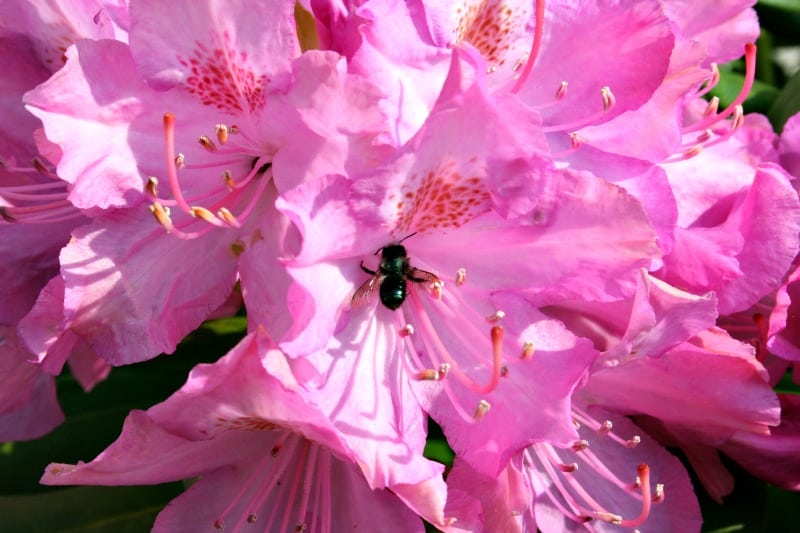
bee on rhododendron 1The other day, my husband call me outside to witness something unusual. He’s been working on a new garden area in the back yard, almost on the edge of the woods, and he had transplanted some perennials and lilac bushes. He went out to water them and found a huge swarm of bees.

At first, we thought they were honey bees. It was hard to identify them; there were so many it was as if my backyard was buzzing! We watched them alight on the hard-packed clay soil, and they were definitely bees, not wasps, and the right size and shape for a honey bee. I assumed they were honey bees and we returned to the house, delighted to welcome the newcomers to the yard.

The next day, the swarm continued! Now Hubby noticed a series of hills, like ant hills, but bigger. There seemed to be hundreds of them scattered around on the soil in the backyard:
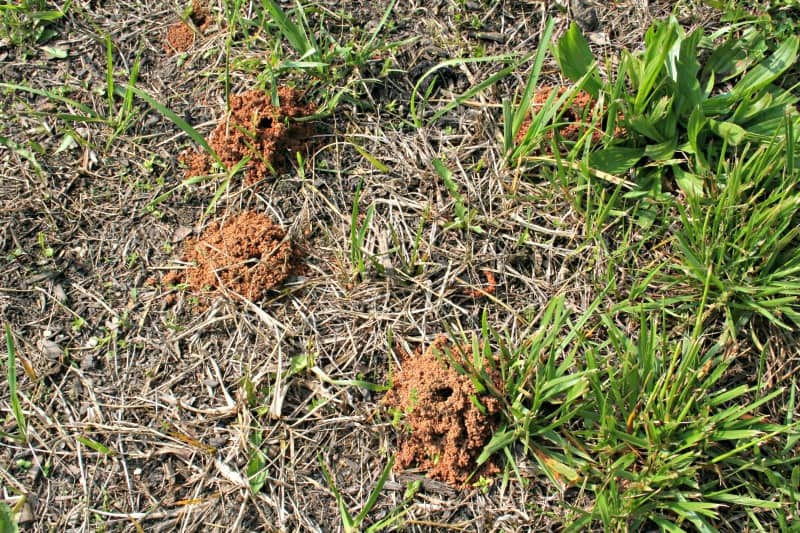
ground bee nest

Just three of the hundreds of ground bee nests we found.

As we watched, a single bee shot out of a hole and flew away. What in the world was happening?
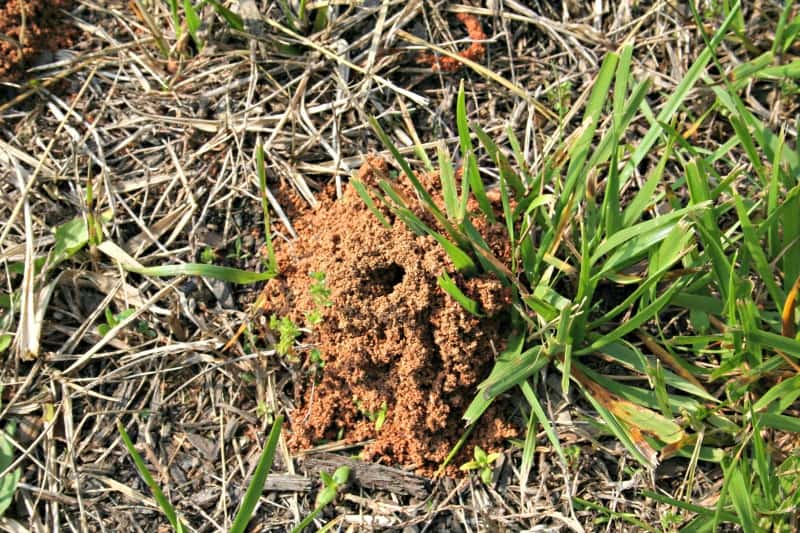
ground bee nest

Close up of a ground nesting bee hole. It’s bigger than an ant hill but looks similar.

Thankfully, a few weeks ago I attended a lecture called, “Trees, Bees and Clean Waterways” so at least I knew that bees don’t always form hives. Some bees are indeed solitary, and some nest in the ground. A quick internet search revealed our new farm visitors as Solitary Ground Bees.

A few facts on solitary ground nesting bees:

  • They build individual tunnels in the ground. The female lays her eggs inside the ground tunnel, and prepares a nutritious package of nectar to accompany her eggs.
  • The new crop of bees emerges the following year – so I should expect a swarm again next March or April. Hurray! That’s when our fruit trees bloom, and….
  • Solitary bees are great pollinators!
  • They don’t sting, or at least they aren’t aggressive. Hive-based bees sting to protect the hive and their young, as well as the nectar/honey/food supply for the young. Ground-nesting bees, on the other hand, are gentle. You can mow or walk around them and they won’t sting. So it’s best to leave them alone.

Well, I hung up mason bee houses around the yard and didn’t get a single mason bee that I can see as a tenant, but my yard itself appears to be a welcoming place for ground nesting bees. If they pollinate my apple and peach trees next year, I’m all for it!

Here’s to pollinating insects and the wonderful ground nesting bee/
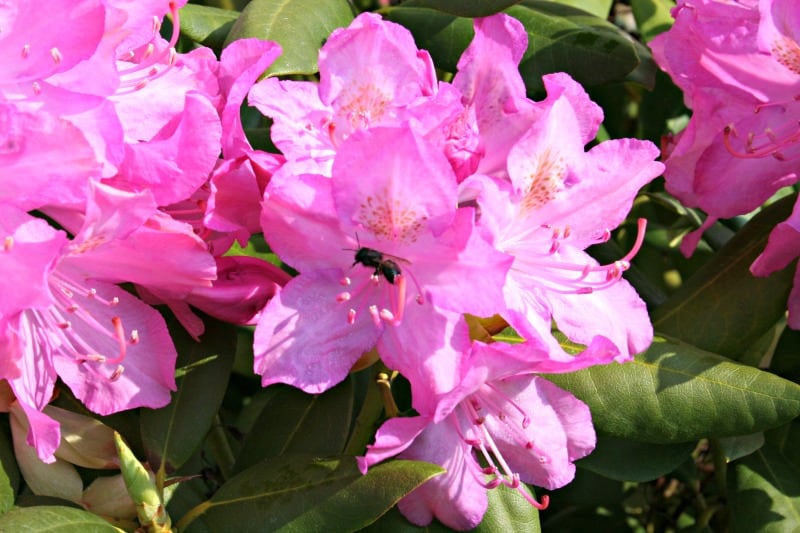
ground bee on rhododendron 2


Filed Under: Home Garden Tips

Previous Post: « Falling in Love with Weeds: Rattlesnake Weed
Next Post: How to Make Compost, Worm Composting and More »

Reader Interactions

Comments

  1. Stephanie Volkert

    May 8, 2015 at

    How cool! I’m always happy when I see a bee in my yard. They’re tough little buggers to get a good photo of though!

  2. Kristen from The Road to Domestication

    May 10, 2015 at

    I’ve never heard of these kinds of bees! I’ll bet your flowers will look better then ever!

Trackbacks

  1. What's New at Home Garden Joy - Home and Garden Joy says:
    February 22, 2016 at

    […] Last year, we added mason bee houses to the farm and more herbs and flowers to the gardens that pollinators love. This year, I’m planting some meadow areas for the bees and pollinators. Learn more […]

Footer

a red knockout rose

June Gardening Tips: Everything You Need to Do in Your Garden This Month

I’m sharing these June gardening tips for gardening zone 7B. However, you can easily adapt them to your gardening zone. June is one of those months that feels like there’s so much to do in the garden you don’t know where to start. Fortunately, nature gives you extra-long days and plenty of sunshine! Whether you…

Read More

watering can with plants

Growing Ginger in the Home Garden

Growing ginger is fun. I was surprised to learn that I could grow ginger in Zone 7B, central Virginia. I attended a lecture by Ann Codrington of Nisani Farms several years ago. She discussed growing both ginger and turmeric. Her farm is in Maryland, but I discovered that both plants can be grown in both…

Read More

borage flower

Companion Planting with Herbs: Your Secret Weapon for a Healthier, Happier Garden

Every summer, without fail, I plant basil at the end of the raised beds. These are the beds filled with Roma tomatoes, the ones we harvest by the bushel to make our salt-free organic tomato sauce. My tomatoes thrive. “Did you know that basil repels aphids?” an organic gardener friend mentioned to me casually one…

Read More

chive plants in bloom with lettuce

Growing vs. Wild Foraging Medicinal Herbs: My Perspective

Growing vs. wild foraging medicinal herbs is a real concern among newbie herbalists. The other day, I shared pictures of my herb seedlings (mallow, parsley, and savory) on Facebook. A nervous nellie immediately wrote, “I would be so AFRAID to do that! How can you know they are safe?” Well, first of all, parsley and…

Read More

  • About
  • Plant a Row for the Hungry
  • Awards
  • Privacy Policy

Let’s Connect!

  • Facebook
  • Instagram
  • Pinterest
  • Substack
  • YouTube

Copyright © 2026 Home Garden Joy on the Foodie Pro Theme