
Raised bed garden maintenance includes adding more soil and replacing the raised bed when the wood is broken or rotten.
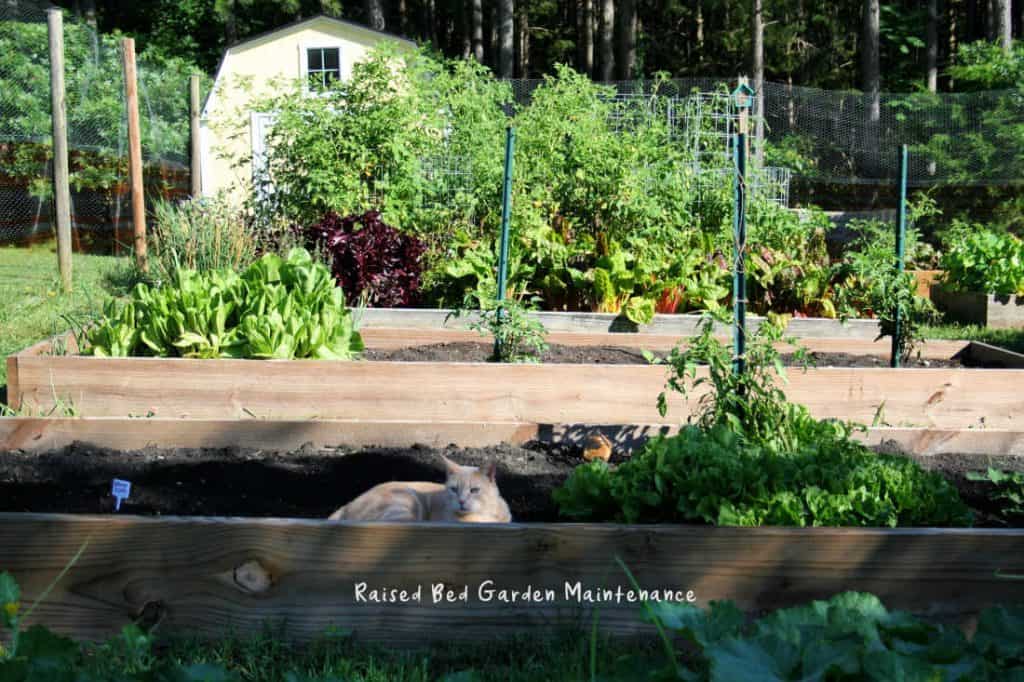
While my flower garden is planted directly into the hillside next to the driveway, the vegetable garden consists of 12 raised beds. Ten of the beds are 4 feet x 10 feet, and two beds are 10 x 8 feet. We used pressure-treated lumber. Each is filled with 100% compost we had trucked in; it’s the by-product of the local paper mills. We fenced the whole garden area off and put an underground water line from the house spigot down to the garden area for emergency irrigation.
A List of Raised Bed Maintenance Chores
So what kind of chores do you do with raised garden beds?
- Refill the beds with soil: I’m not sure whether it’s the composition of the soil itself – nearly 100% organic compost – or just the action of hungry plants breaking it down for food, but each bed was down to about half of its soil level since we build the raised bed garden in 2008. We moved about a dozen wheelbarrows of compost from the pile where the truck driver left it on the lawn before we were too tired to move anymore. It’s a surprisingly long distance, and although downhill from the compost pile – you still have to walk uphill to return to the pile and start again! We also add new soil to enhance and fill the beds.
- Repair broken wood: The next raised bed garden maintenance chore was to repair the wooden sides of the bed. Several of the longer pieces of wood split where we had nailed or drilled screws in to hold the pieces together. Several of the boards split, and require a few nails to hold them together.
- Weeding: Weeding regularly keeps the weeds from spreading. Weeds aren’t just unsightly – they can use up many of the nutrients and water in the soil.
- Rake the beds: We rake the top of the soil smooth to make an even surface.
- Mow: Mowing the pathways in the raised bed garden also helps keep the weeds down.
These are some of our regular chores in the vegetable garden. Raised bed garden maintenance is an ongoing project and one that we stagger throughout the year so it doesn’t overwhelm us.
I wrote the book – literally – on raised bed gardens. Maintenance is only one part. Learn more – get the book on Amazon (Affiliate link, below).





It’ll be a while before we’re “topping off” our raised vegetable beds.
I always figure everything we harvest from the beds and the plants themselves take some of the soil away. It’s always good to work new compost into the soil too. Nice to do that on a cool day so you don’t get over heated!
I plan to do an underground line to my vegetable garden too. Any hints as to what worked and what doesn’t?
Tina, I’ll have to blog that at some point. Our vegetable garden is at the base of a hill, and we had a spigot from the house on that side. We dig a trench about 1 foot deep and ran PVC pipe through the trench. Then we snaked a garden hose through it to the vegetable garden, where it comes up and then we can attach either the hose or the sprinkler head to it. I’m not sure how “right” this is, but that is what we did. We buried it deep enough so that hopefully any water left in it wouldn’t freeze. Maybe that would work for you?