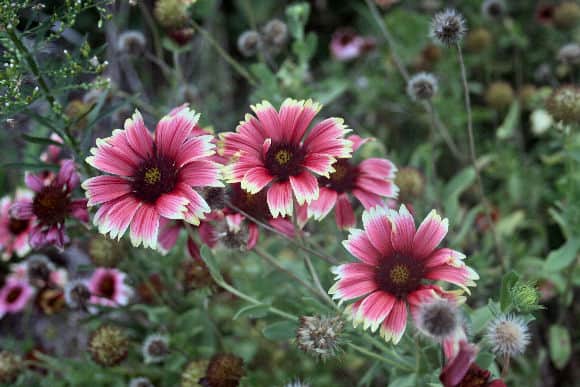
I learned how to grow gaillardia after finding it tucked among a set of plants I purchased for our new garden. Ever since, I’be been hooked on these bright, attractive flowers.
Growing gaillardia offers even people with “brown thumbs” the chance to enjoy beautiful, easy-care flowers in the garden. It reproduces freely, tolerates heat and drought, and offers almost non-stop blooms from spring to fall. What more could you want from a perennial flower? Learning how to grow gaillardia is easy and offers a colorful flower for the garden.
How to Grow Gaillardia or Blanket Flower
Among the many drought-tolerant perennial flowers to choose for the garden, gaillardia, or Blanket Flower, is a popular choice. With its cheerful blossoms in shades of orange, yellow, pink, or burgundy and its tolerance of the toughest gardening conditions, gaillardia provides a show starting in early spring and lasting well throughout late summer. It’s easily started from seeds with a little bit of TLC or transplanted from nursery stock.
Gaillardia is actually related to the sunflower and is part of the family of plants called Asteraceae. It gets its common name or nickname Blanket Flower from its brightly colored petals. The flowers reminded many people of the brightly colored blankets of the Native Americans, and it began to be called Blanket Flower.
Conditions Necessary to Grow Gaillardia
Gaillardia is a tough plant. It can thrive in poor, rocky soils. My own patch of gaillardia regularly reseeds itself in the gravel driveway, growing in hot, baked clay soil. It doesn’t seem to care. Most gaillardia can tolerate a wide range of soil types and conditions. Many gardening books even cite gaillardia as a seaside plant, or a plant that can tolerate the sandy soils and other unique conditions in seaside gardens.
Climate and Gardening Zone
Gaillardia can be grown throughout the United States in gardening zones 4 through 9. It does not require any special care over the winter.
Light Requirements, Soil and Fertilizer
Blanket flower, or gaillardia, requires full sun, and can tolerate the hottest, sunniest spots in the garden. It generally thrives in poor soils, including sandy or rocky soils, and does not require fertilizer. Mulching may be helpful but is not necessary for this tough plant.
Pests and Diseases
Among its many wonderful attributes, gaillardia is virtually pest-free. Very few insects or diseases bother it. It is even “deer resistant,” meaning that deer generally leave it alone. Although no plant is truly “deer proof.”
Height and Planting Information
Gaillardia grows to a height of about 1-2 feet tall and will spread out if left unchecked. It produces many seeds and will reseed in the garden freely. You can either dig up the plants and move them to a location of your choice or allow the plants to naturalize your garden.
When transplanting Gaillardia, be sure to keep it well-watered after transplanting. It will droop for several days until the roots re-establish in the new location. Keeping the plant watered helps it through transplant shock and helps it get established in the new location.
Special Seed Starting Requirements
A discussion of how to grow gaillardia would not be complete without sharing how to grow it from seeds.The seeds require a period of chilling or cold in order to germinate. You may need to place the seeds with some seed starting mixture and water in a bag and keep it in the refrigerator for up to 6 weeks in order to help the seeds germinate.
Unlike many perennials which take one or more years to grow before producing flowers, gaillardia often blooms during its first year. Your patience will be amply rewarded by the abundant flowers these cheerful plants produce.
Landscaping Uses for Gaillardia
Gaillardia can be grown on its own merits and enjoyed as a beautiful perennial flower in the garden. Many people like to use it as a border plant, growing it along the edges of a walkway. It doesn’t respect the edging, however, and is likely to spread out beyond the edging or section in which you’ve planted it. You may need to be vigilant and remove any unwanted plants or seedlings each year.
Because Blanket Flower can thrive under very tough conditions, it is often used as a rock garden plant or in hot, sunny areas of the garden.
Gaillardia, a Great Plant for Beginners
Given its tough nature, beautiful flowers, and easy-care habits,gGaillardia or Blanket Flower is an excellent plant for beginning gardeners. It requires no special fertilizers, watering, or care. It’s a “plant it and enjoy it” kind of flower.
It’s a perennial, meaning that it will return year after year, and its ability to self-sow means it will spread out of its own accord, creating great patches and swatches of color in the garden. If you have a brown thumb, or you feel like you can’t grow flowers, try gaillardia. As long as you have full, bright sunshine, your gaillardia plants should be happy!
In your article you say blanket flowers grow well in zones 4-9. I live on the west coast of Florida which is closer to being zone 10. Last year I planted blanket flowers and they seemed to succumb to the heat. Do you have any advice on keeping them alive where I live. I’d like to try to grow them again as I really like them. Thank you.
Hi Nancy,
Zone 10 may be too much for them. Could you try growing them as an annual? I don’t know if there are any hybrids suitable for zone 10, so you may want to call your local County Cooperative Extension Office and ask. As far as I know,they only survive zones 4-9 and like dry hot (rather than humid hot, like Florida.) Good luck!
Jeanne