• Skip to primary navigation
  • Skip to main content
  • Skip to footer
Home Garden Joy
  • Home
  • Gardening
    • Raised Bed Gardening
    • Home Garden Tips
    • Seed Starting
    • Compost and Fertilizer
    • Tools & Equipment
    • Butterfly Gardens
    • Pests & Problems
    • Birds and Wildlife
  • Plants
    • Plant Profiles
    • House Plants
    • Vegetables
    • Fruit
    • Herbs
    • Growing Flowers
  • Recipes
    • Easy Recipes
    • Canning and Food Preservation
  • Books & Classes
    • Books for Christian Herbalists
    • Herbalism Classes
    • Books by Jeanne Grunert
  • About
    • Privacy Policy

African Violet Problems

February 20, 2014 by Jeanne

African violet problems include over or under watering, insects and other diseases. Here, I share African violet problems I’ve encountered…and give advice on how not to kill your violets!
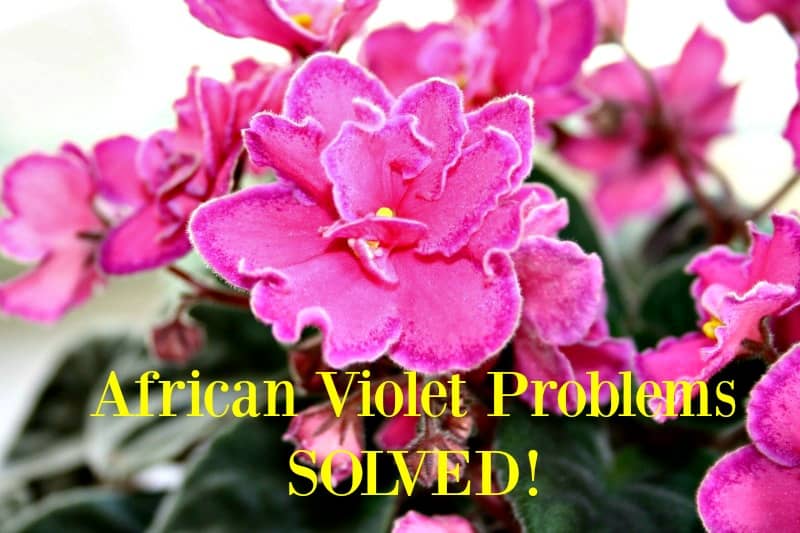
African violet problems


African Violet Problems

For the first time in many, many years, I had to throw away an African violet plant. I couldn’t rescue it. Now I know what my readers feel like when they write to me and say they feel like “plant murderers” when they kill their plants. Yes, folks – I’ve managed to kill a violet. And thanks to the Auburn Cooperative Extension site’s African violet diagnostic page, I think I know the culprit.


The History of this Particular African Violet

Most of my violets were either purchased from Lowe’s or B & M Greenhouses in Farmville, Virginia, except for a small collection that came from my sister, Mary. Mary also sent me a plant collection for my birthday last year. This particular African violet was among those in the plant collection.
First of all, it was dry as a bone when it arrived in the mail. Among the three plants in the collection, it seemed to fare the worst through shipping. I dutifully watered it, but I neglected to read the instructions that came with the kid. Hey, why read instructions, right? Wrong. Turns out the plants were shipped in a special mixture and they all needed repotting. Bah, humbug. The miniature rose was transplanted into my outdoor rose bed, the kalanchoe is thriving, but the violet never took off after I repotted it.

African Violet Symptoms

At first, I thought the violet was reaching for the light. But I had it on the windowsill next to two other violets that I’ve owned for seven years, and neither of those plants grew into the twisted, elongated crown that this one did. The crown grew up straight on a thick, heavy stem, then split into two crowns. I meant to separate the crown, but suddenly, the leaves began dying. They seemed to wilt and grow mushy at the same time, curling under. The only leaves that were healthy were the new leaves near the crown. The soil was very dry, so I tried more water. Nothing. I tried more humidity. Nothing. More leaves died until I finally gave up, blew an imaginary “Taps” on my imaginary trumpet, and relegated the now completely mushy, wilted plant to the compost pile.

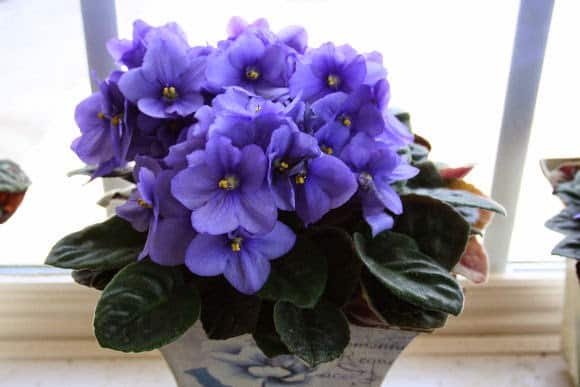
Healthy African violet

The Optimara site lists cold as one possibility, and while that’s plausible, it’s in a room with other violets, none of which are exhibiting similar symptoms. However, the Auburn University Cooperative Extension website lists a closer description to my plant’s symptoms as crown and root rot. It’s caused by a fungus, and transmitted by poorly sterilized pots. The growth habit could just have been the plant, but the mushy brown leaves? It does sound like the fungal disease described on the extension site.

Preventing Fungal Problems in African Violets
Here’s why I think it is the latter issue rather than cold: I’m lazy as can be about sterilizing my plant pots. My dad taught me to use a 10% bleach solution in cold water to wash and clean pots between plants, and that’s a good rule of thumb. My father in law at least rinsed the pots out, but me? I am so lazy I just chuck them into the shed, then grab a dirty pot when I need one. (Ugh; this feels like confession time!)
So I probably transmitted a fungal disease to my poor violet by reusing a dirty pot. I do use sterile potting soil, but what good is it if the pot itself harbors the disease?
It’s time for me to revisit the simple solution of using bleach to clean pots. I lost a plant, and I don’t like throwing away good plants, especially when I’m at fault for killing them.
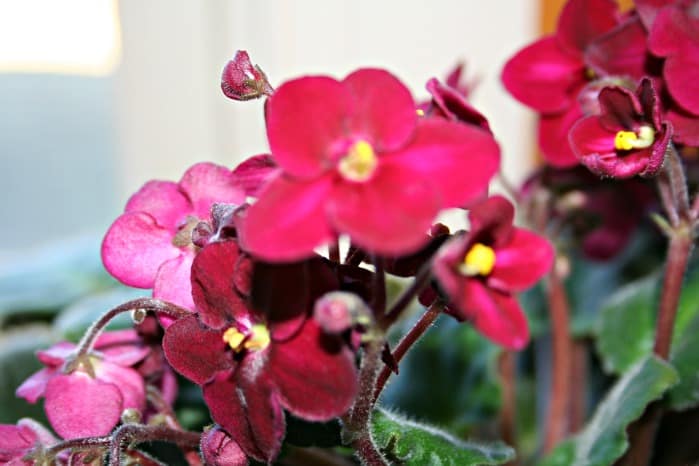
At least I don't kill all my African violets....

Filed Under: House Plants

Previous Post: « Garden Planning
Next Post: Time to Start Vegetable Seeds »

Reader Interactions

Comments

  1. Donna

    March 23, 2016 at

    Well I just lost one also maybe fungus is the answer goes back to dirty pot.

  2. Dora L. David

    April 11, 2018 at

    I have a plant that is growing a very heavy steam. What do I do? help please. Thanks

    • Jeanne

      April 11, 2018 at

      Hi Dora, when you say that the plant is growing a heavy stem, do you mean that the center stem is getting thick and growing very high above the soil so that the plant is starting to look pointy at the top? What may be happening is that the lower leaves have gradually fallen off over the years so that the plant develops a heavy “neck”. It may look like the stem is thickening but it’s probably just normal growth with age minus the lower leaves. Here is a link to an African violet site that shows you how to replant your violet to address the problem. I hope this helps, let me know if it is something else.

  3. Grace Voorheis

    April 4, 2019 at

    The outer leaves are changing color or losing color. This is a new plant and I forgot to cover it at night. I leave a light on all night for my benefit. Did it get too much light with no rest? It is in a Western side plant tree so does not get much pure sun. A pothos plant is also in the plant holder tree. I now cover it loosely with a black plastic that allows it to breathe.

    • Jeanne

      April 4, 2019 at

      If the pothos is doing well, the african violet should be fine. Pothos like low light. It sounds like too much water.

  4. Grace Voorheis

    April 4, 2019 at

    Do I need to repeat my concern? My African violet leaves are losing color (outer leaves) It was in filtered sun day and night at first. I leave lights on all night for my benefit. I finally thought to cover it loosely with a black plastic bag at night. I haven’t fed it yet although I bought special plant food for it.

    • Jeanne

      April 4, 2019 at

      Hi Grace, you don’t say where you live, but if you are in the USA, African violets are treated like house plants. They should be kept indoors. Usually yellowing leaves indicates either too much water or too much light. You may want to move it back inside.

Footer

a red knockout rose

June Gardening Tips: Everything You Need to Do in Your Garden This Month

I’m sharing these June gardening tips for gardening zone 7B. However, you can easily adapt them to your gardening zone. June is one of those months that feels like there’s so much to do in the garden you don’t know where to start. Fortunately, nature gives you extra-long days and plenty of sunshine! Whether you…

Read More

watering can with plants

Growing Ginger in the Home Garden

Growing ginger is fun. I was surprised to learn that I could grow ginger in Zone 7B, central Virginia. I attended a lecture by Ann Codrington of Nisani Farms several years ago. She discussed growing both ginger and turmeric. Her farm is in Maryland, but I discovered that both plants can be grown in both…

Read More

borage flower

Companion Planting with Herbs: Your Secret Weapon for a Healthier, Happier Garden

Every summer, without fail, I plant basil at the end of the raised beds. These are the beds filled with Roma tomatoes, the ones we harvest by the bushel to make our salt-free organic tomato sauce. My tomatoes thrive. “Did you know that basil repels aphids?” an organic gardener friend mentioned to me casually one…

Read More

chive plants in bloom with lettuce

Growing vs. Wild Foraging Medicinal Herbs: My Perspective

Growing vs. wild foraging medicinal herbs is a real concern among newbie herbalists. The other day, I shared pictures of my herb seedlings (mallow, parsley, and savory) on Facebook. A nervous nellie immediately wrote, “I would be so AFRAID to do that! How can you know they are safe?” Well, first of all, parsley and…

Read More

  • About
  • Plant a Row for the Hungry
  • Awards
  • Privacy Policy

Let’s Connect!

  • Facebook
  • Instagram
  • Pinterest
  • Substack
  • YouTube

Copyright © 2026 Home Garden Joy on the Foodie Pro Theme