Now we get to the question in this container gardening series that so many people ask: What size pots are good for container gardens?
What Size Pots Are Good for Container Gardens?
Pots and containers have three dimensions: height, width, and depth. The soil volume refers to how much soil (dirt) the container can hold.
Soil contains nutrients, minerals, and spaces between the grains of soil that allows water and air to move within the soil. The roots of your plant reach down and out into the soil, growing and searching for water and nutrients.
Shallow Containers Dry Out Quickly
If your container isn’t deep enough, it will dry out quickly. Unless you plant to water your containers several times a day, dry soil on a hot summer’s day can quickly weaken or kill your container vegetable garden.
Root Vegetables Need Deep Containers
Root crops also need deep containers. A root crop is a vegetable that produces its edible portion underground. Carrots are a common root crop. Other root crops include beets, turnips, potatoes, onions, garlic, parsnips, and sweet potatoes.
Tall Vegetables May Need Deep and Wide Containers
A tall vegetable plant can act like a sail in the wind. The branches and leaves catch the wind on a breezy day and the entire plant tumbles over, container and all. This can break or damage branches and vegetables.
Tomatoes, peppers, and eggplant should be planted in containers broad and deep enough so that the soil acts as a weight. You can also brace your container and plant against a wall, deck railing, or another object to keep it from tipping over.
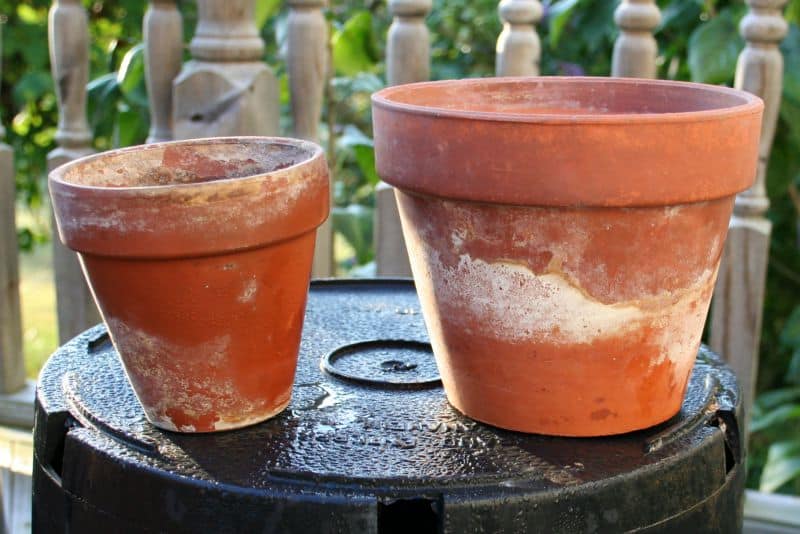
These pots are too small for most vegetables but fine for herbs.
Shallow Containers Can Be Used!
Let’s say you only have a few cut-down milk containers that you are recycling into vegetable garden containers. Or perhaps you have a window box or two. What can you plant in a shallow container?
- Strawberries can be planted in window boxes, repurposed food containers and similar shallow pots. Their roots grow near the surface and they send out runners to make new plants. These runners can easily tumble over the side of the container without harming the plant.
- Lettuce and leafy green vegetables don’t mind shallow containers.
- Many herb plants grow just find in a shallow container! You can use common houseplant sized containers for an herb garden.
- “Bush” type green beans can also be grown in a shallow container.
Find a Happy Medium
What size pots are good for container gardens varies according to the type of vegetables you are planting, the variety, and much more.
The following resources also provide charts that tell you how big of a container you need to grow specific vegetables:
- Iowa State University – Container Vegetable Gardens
- Vegetable Gardening in Containers
Happy gardening! Keep growing!
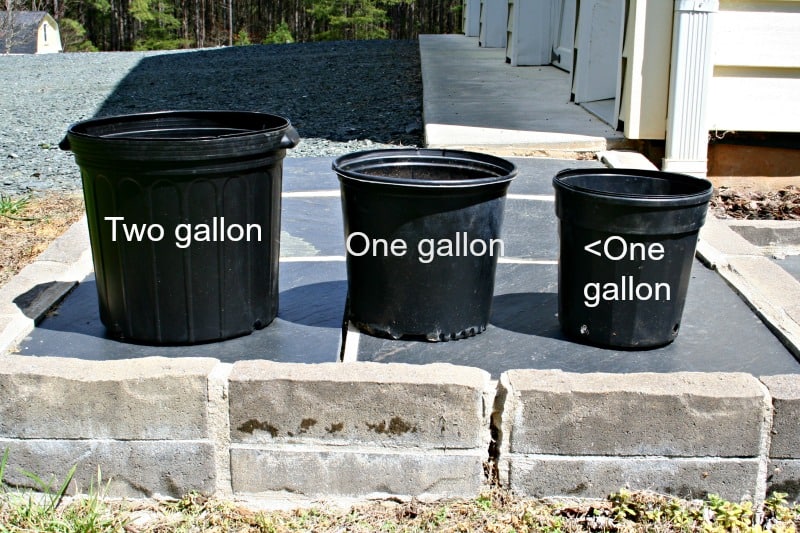
I’d like to start a container garden this spring… where would I find some of the black containers like you have pictured?
Hi Ashley, you can find them at Home Depot, Lowes, or any garden supply store. You can also ask neighbors and friends to save them for you. Many of my pots originally came here when I bought plants. I planted the shrubs and saved the pots.