Clary sage is a beautiful biennial flower. Have you ever heard the saying, “Good things come to he who waits?” That’s clary sage. It took me two years to grow the plants from seed to flowering. It was worth the wait.
About Clary Sage
Clary sage (Salvia sclarea) is also known as ‘clear eye’. You probably know it from the essential oils community where the scented oil is quite popular.
Like many sage varieties, including our common culinary sage, it is native to the Mediterranean basin, including North Africa, as well as to parts of Asia. It is an herb with a long history of use, with mentions in the herbal and medical literature dating back to the 4th century B.C.
Clary Sage Plant Profile
Botanical Name: Salvia sclarea
Clary sage (Salvia sclarea) is an aromatic herb known for its striking foliage, tall spikes of colorful flowers, and a sweet, herbal fragrance. Belonging to the mint family (Lamiaceae), clary sage is not only valued for its ornamental qualities but also for its essential oil, which has various applications.
Light Requirements: Clary sage thrives in full sun to partial shade. It performs best when exposed to at least 6 hours of sunlight per day. In regions with intense heat, some afternoon shade can be beneficial to prevent stress on the plant.
Soil Requirements: Clary sage prefers well-draining soil to prevent waterlogged conditions, which can lead to root rot.
pH: Slightly acidic to neutral soil, with a pH range of 6.0 to 7.5.
Water Requirements: Clary sage has moderate water requirements. Water the plant consistently, keeping the soil evenly moist but not waterlogged.
Drought Tolerance: Once established, clary sage exhibits some drought tolerance. However, it’s essential to provide regular watering during dry spells to ensure optimal growth and flowering.
Fertilizer: Clary sage generally does well in average to fertile soil. While it doesn’t require heavy feeding, applying a balanced, all-purpose fertilizer in spring can promote healthy growth. Incorporating well-rotted compost into the soil before planting or as a top dressing can enhance soil fertility.
Growing Clary Sage
I grew clary hoping its scent would mimic the oils. It doesn’t, but that does not detract from this lovely garden plant.
Growing clary sage is not for the impatient gardener. It takes a while for the seeds to germinate, and once they do, you must nurture them along inside the house and then transplant them to the garden.
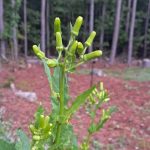
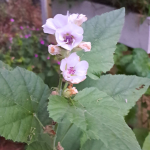
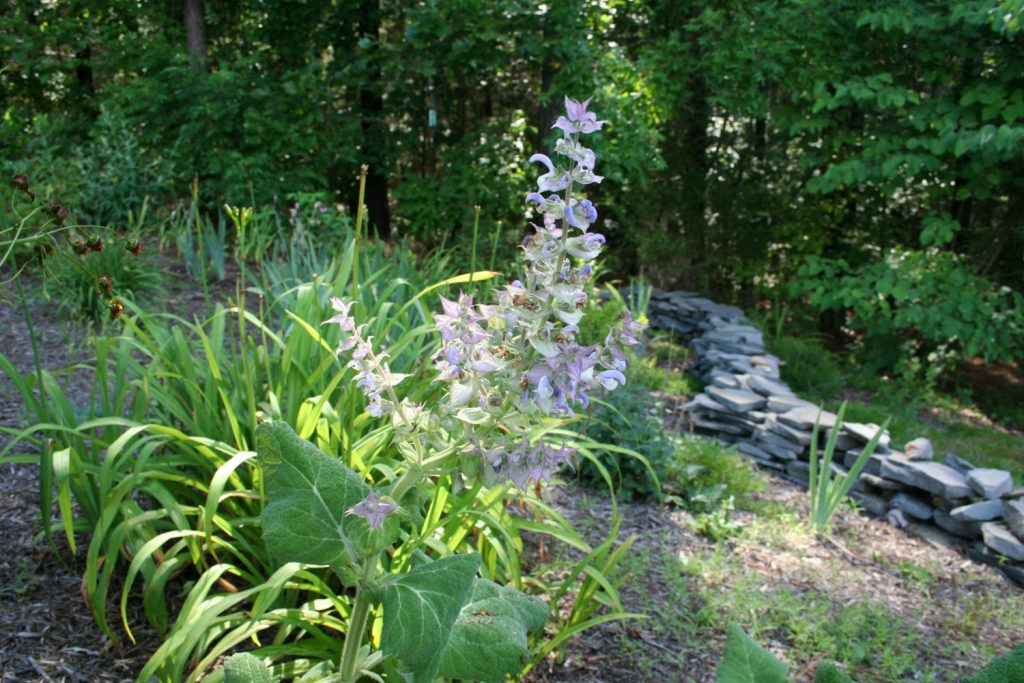
During the first year, the leaves remain close to the ground. They die back over the winter. In the second year, the plant sends up a tall central stem. The stem is square and covered with fine hairs. Finally, the stem unfurls into the lovely lavender and blue flowers you see here.
I planted my seedling in three areas: a sunny, hot spot in the perennial garden near the driveway with very poor soil, a second spot lower in the perennial garden, and a third spot in a garden we planted on top of our septic field.
The flowers that bloomed first were those from the hot sunny spot with poor soil, a clue as to what this plant likes – hot, sun, rocky soil.
Growing Clary Sage
I found growing it quite tricky but rewarding. Clary:
- Grows well in zones 6B through 10.
- Purchase seeds from a good grower or herbal catalog.
- Requires a period of cold/freezing in order to germinate. Pop the package into the freezer for a few weeks before planting.
- Needs total darkness to germinate, so plant them 1/2 inch deep in the soil.
Once the seedlings are a few inches high, transplant to a sunny, well-drained location.
Do not fertilize this plant; it doesn’t want it. It thrives on stony, sandy ground, in places where other plants don’t do well, and it shrugs off challenges as if they were nothing.
It really is a beautiful addition to the garden. I am glad I planted it. Good things do indeed come to the gardener who waits!
Below is a picture of clary sage plants growing in my perennial garden. The site is on a slope, so it is well drained. The soil is clay, amended with compost, and acidic. It gets average rainfall, whatever nature provides. I don’t water the plants in this garden.
BUY CLARY SAGE OIL AND SEEDS
The following are affiliate links. We are a participant in the Amazon Services LLC Associates Program, an affiliate advertising program designed to provide a means for us to earn fees by linking to Amazon.com and affiliated sites. Thanks so much for being a part of Home Garden Joy!
Buy Clary Sage Seeds
Clary Sage – 100 Seeds – Organically Grown – NON-GMO
Clary Sage Seeds – Bluish-White – Packet – Blue/White Flower Seeds
Clary Sage Essential Oil:
Sun Essential Oils 4oz – Clary Sage Essential Oil – 4 Fluid Ounces
Edens Garden Clary Sage Essential Oil, 100% Pure Therapeutic Grade