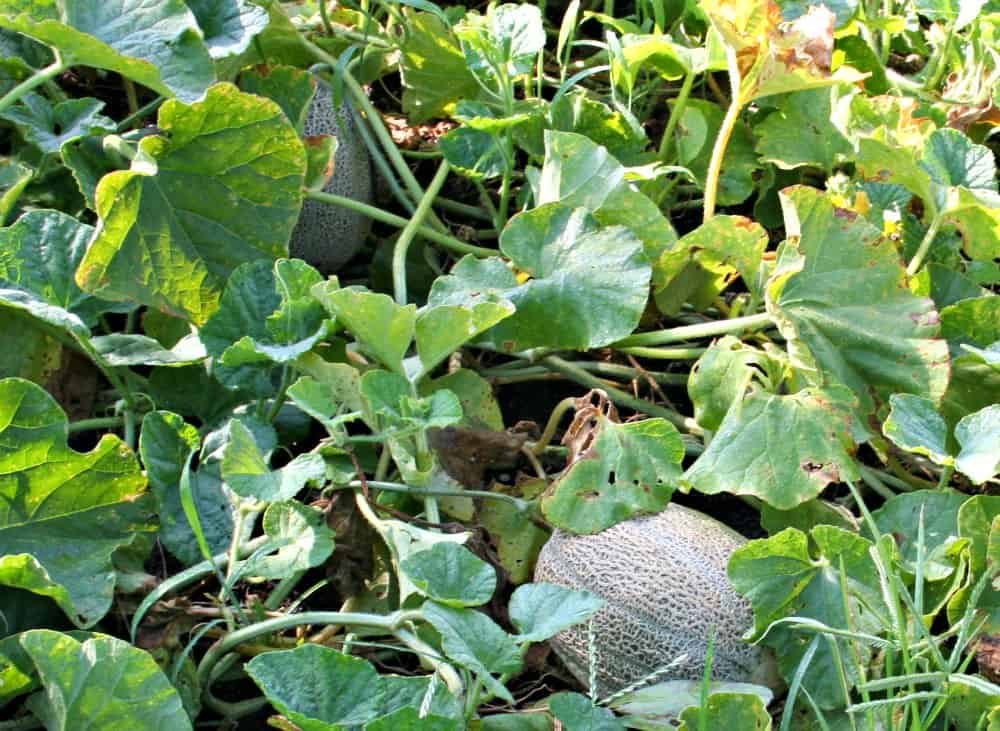
Growing cantaloupe this year brought with it new joys and challenges. I’ve grown cantaloupe in New York in pots on a deck and in Virginia using the same method. This year, I decided on growing cantaloupe in the big raised bed in the vegetable garden.
I thought that was plenty of space for the six or so seeds I dropped into three holes in the garden bed.
“How big can it get?” I wondered.
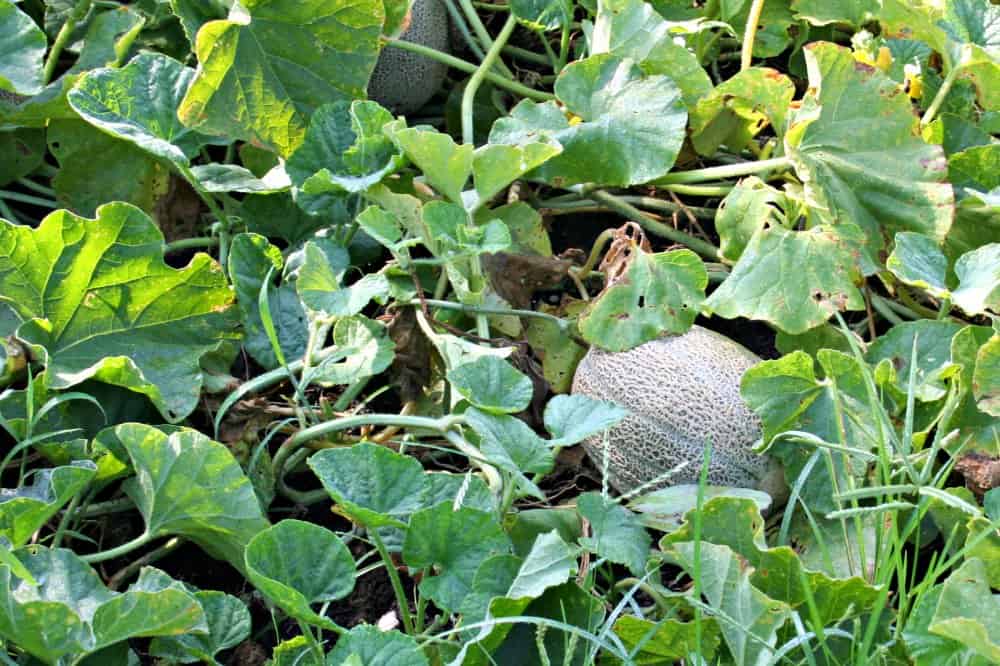
Jack probably wondered the same thing about the beans that sprouted from the magic seeds he traded his cow for in the old story. Because the cantaloupe quickly took over the garden bed and more.
But in the end, it was worth it.
Growing Cantaloupe – for Beginners
Cucumis melo reticulatus (or the common cantaloupe to you and me) is actually a type of muskmelon that originated in Persia. If you’re wondering about cantaloupe vs. muskmelon, it’s a simple concept: all cantaloupe are muskmelons, not all muskmelons are cantaloupes.
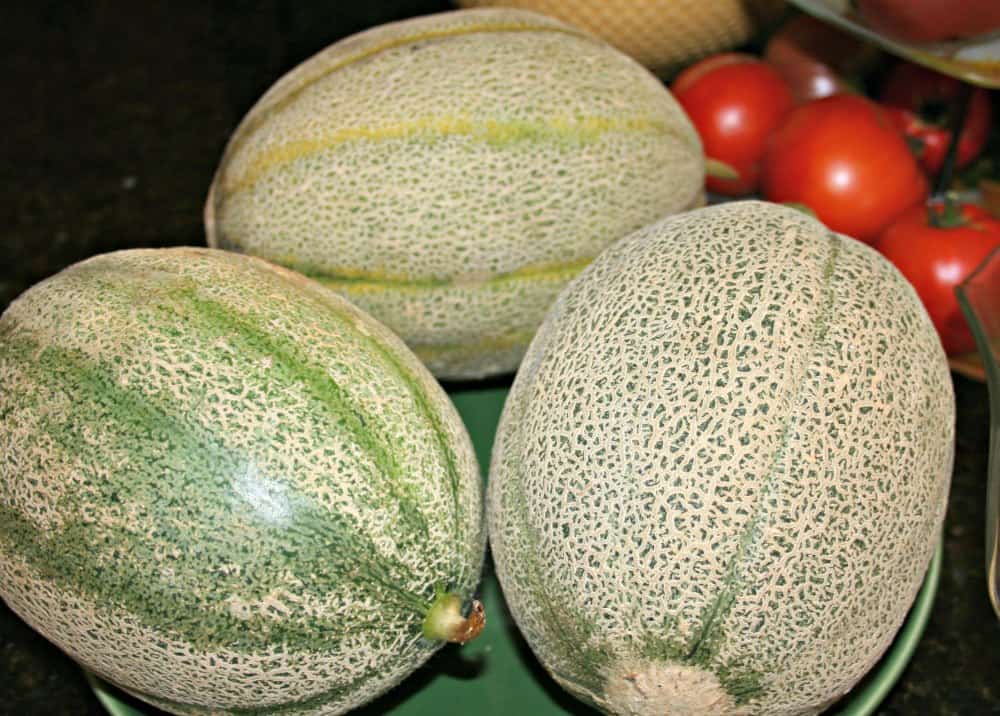
The type of cantaloupe in my pictures from my garden here, and the kind you find in your local supermarket and farmer’s market, are North American cantaloupes. They have reticulated, or ribbed, skin; the internal fruit ranges from light peach to dark peach color.
I read a book called Gardening in Ancient Egypt; the Egyptians grew cantaloupe and muskmelons as far back as 2,400 B.C. (that’s the earliest record we have of the fruit – it probably goes back much further). But our ancestors grew the fruit for its thirst-quenching juice.
We enjoy the low calorie, high vitamin fruit today in abundance. And, if you are growing cantaloupe in your backyard, you’ll have it in abundance!
Growing Conditions for Cantaloupe
Like most fruits and vegetables, cantaloupes require full sunlight, which is defined as bright, direct sunshine for six or more hours a day. The soil should be rich and loamy. A raised bed is ideal.
The variety grown here at Seven Oaks Farm this year is Hale’s Best muskmelon. Introduced in 1924 in California, this heirloom variety offers good disease resistance and larger fruits.
I planted seeds directly in the garden in May after the last frost date for my region had passed. You can start seeds indoors but they grow just as easily outside from direct sow methods.
Keep them well watered up until the fruit sets. Once the fruit appears, drier conditions are ideal as that concentrates the flavor of the melons.
This year I was out of luck as we had an exceptionally rainy summer, somewhat of an anomaly in Virginia. Usually our summers are dry and very hot; this year, we had moderate temperatures and an exceptional amount of rainfall.
I didn’t fertilize my melon patch this year; the soil provided exactly what the plants needed. I didn’t use any pesticides, either. I did see some activity from squash beetles but they were more interested in the butternut squash plants in the next bed and generally left the cantaloupe alone. When I found their eggs, I scraped them off of the leaves with a spoon, piece of tape, or my fingernail. (Sorry if that grosses you out. I am no longer squeamish in the garden.)
.
When to Harvest Cantaloupe
Cantaloupe will ripen somewhat off of the vine. I had a bit of trouble with an opossum again; last year, the possum climbed onto the deck, where I had another melon growing, and gnawed through some of the rind to enjoy my hard-won fruit.
This year, he – or she – got into the raised bed garden through a gap in the gate of the eight foot fence and ate a melon. It was just one melon, but I kept a watchful eye out for more damage. Thankfully, Possum Pete (or Petunia if it’s a girl) didn’t come back and has instead dined on my compost pile scraps instead.
Meanwhile, I pick melons when the rinds develop a telltale yellow spot. The spot is noticeable and usually indicates the melon is ripe. The fruit pulls off easily from the vine.
I store really ripe melons in the fridge but if they need a day or two more, I let them ripen at room temperature on the counter.
Growing cantaloupe is fairly easy, even for beginners. Just make sure you leave plenty of room. Those vines have a mind of their own!
Wait! Don’t go yet – sign up for our newsletter. Monthly gardening tips, recipes, and herbal remedies right to your inbox. Plus, advance notice (and discounts) on new gardening books and courses launching soon.
GET THE GOOD STUFF! SIGN UP HERE.
Thanks for sharing your experiences with growing cantaloupes. I have raised beds too and might try them next year. Thanks for sharing at #HomeMattersParty