• Skip to primary navigation
  • Skip to main content
  • Skip to footer
Home Garden Joy
  • Home
  • Gardening Basics
    • Month-by-Month Gardening Tips
    • Home Garden Tips
    • Raised Bed Gardens
    • Seed Starting
    • Compost and Fertilizer
    • Tools & Equipment
    • Pests, Weed & Problems
      • Plant Diseases
      • Weeds & Invasive Plants
    • Butterfly Gardens
  • Plants
    • Vegetables
    • Herbs
    • Fruit
    • Flowers
    • House Plants
    • Trees and Shrubs
  • Birds and Wildlife
  • Home & Living
    • Thanksgiving & Christmas
    • Canning and Food Preservation
    • Easy Recipes
  • About
    • Herbalism Classes
    • Books for Christian Herbalists
    • Books by Jeanne Grunert
    • Privacy Policy

Best Herbs for Small Gardens

November 14, 2018 by Jeanne

The best herbs for small gardens can be both annual and perennial herbs. The trick is to find herbs that have an upright, compact growing habit.

Best Herbs for Small Gardens

Herbs are useful plants that can be grown for flavor, medicine, or both. Most herbs that are good for small gardens feature a compact and upright growing habit.

Plants are often described as “upright” or “prostrate.” An upright plant grows towards the sky, as the name suggests, without much sprawl. “Prostrate” or “creeping” plants remain low to the ground.

My Little Herb Garden

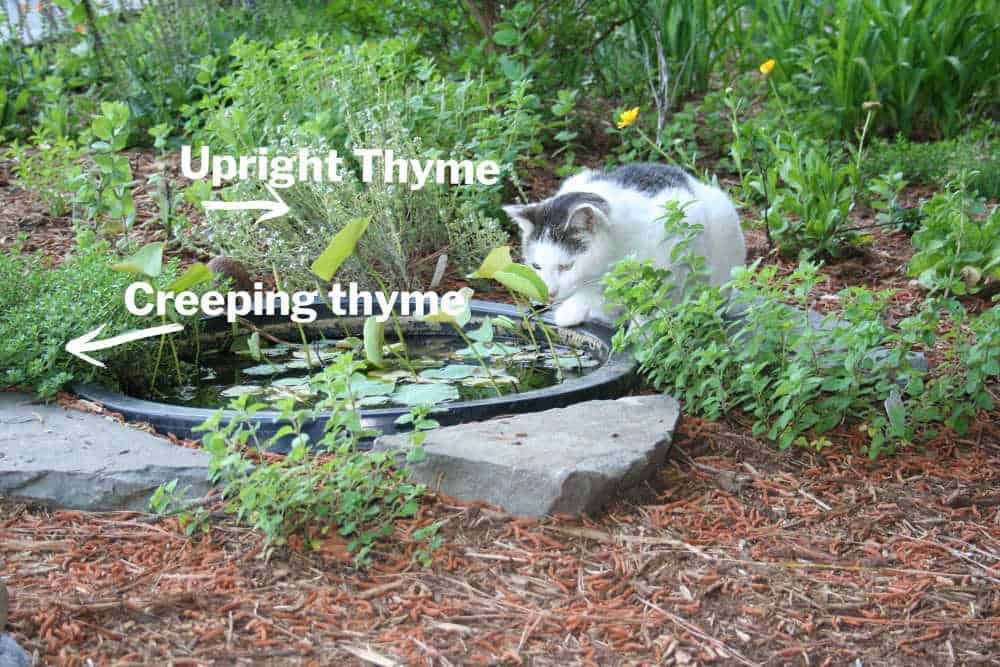
Here’s a picture to illustrate what I mean. This is my herb garden. I have a small, circular pond in it with four paving stones arranged decoratively around the pond. Between the stones, I have planted two types of thyme: creeping and upright.
best herbs for small gardens
The best herbs for small gardens tend to be upright. Cat not included.

These two thyme varieties are both interchangeable in culinary dishes. Sprinkle creeping thyme onto pasta or upright thyme and you can’t tell the difference.

But note the growth habit. The upright thyme (with the white flowers) takes up much less room than the prostrate or creeping thyme. The creeping thyme spreads so vigorously in a thick mat that I have to cut it back several times a year. It’s so aggressive it will even spill over the lip of the pond and set down roots in the mud at the bottom of my shallow pond.

Look for Upright Compact Herbs

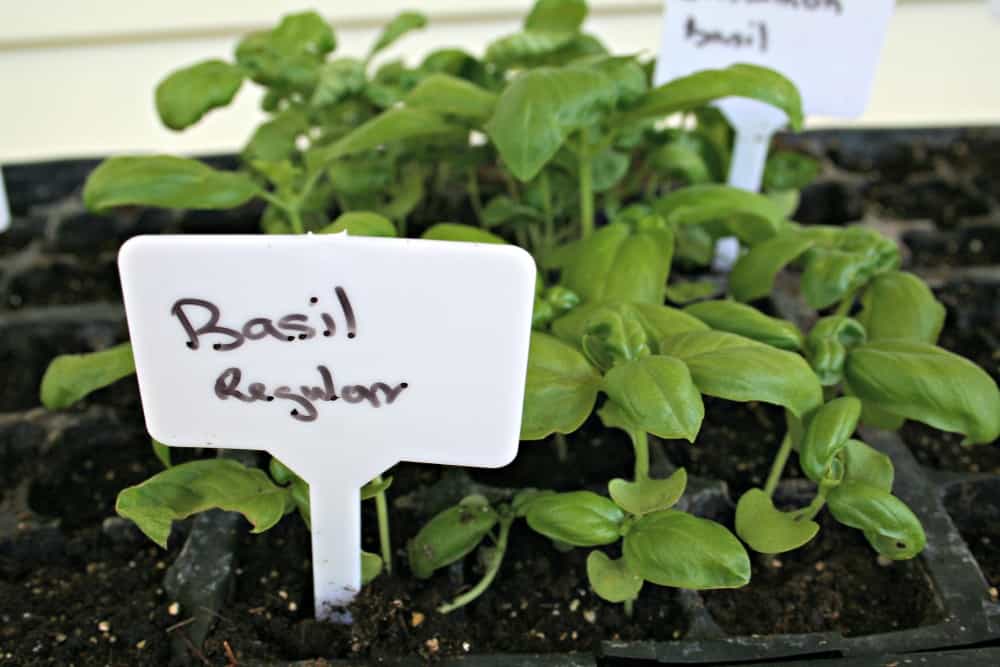
For small herb gardens, you’ll want to find plants that stay small. I happen to love basil and with plenty of pruning, a small basil plant works quite well in a small herb garden. Summer savory is also an excellent plant for small garden.

There are over a dozen varieties of basil, too, so don’t limit yourself to the sweet basil most often found in the garden center. Genovese or sweet basil offers plenty of culinary and medicinal uses, but there are lime basils, lemon basils, and cinnamon basil, which I have grown for teas. All are available to start from seed; you can find seeds from major catalogs such as Parks or Burpee as well as smaller, local growers.

Cinnamon basil
Cinnamon basil tastes like an infusion of the two herbs. Although it grows to about 1-2 feet tall, it retains a compact shape, making it good for small gardens.
Genovese basil for small herb gardens.
Genovese or sweet basil.

When planning your herbs for small gardens, be sure to plan for an area that receives full sunlight. Some herbs, such as oregano and the mints, can withstand shade or partial sun, but they do spread out vigorously and are not well-suited to small gardens.

Other herbs for small gardens include:

  • Basil – all varieties
  • Rosemary
  • Parsley – both curly and flat leaf varieties
  • Chives – onion chives, garlic chives
  • Tarragon
  • Savory

All of these plants make great kitchen window sill herbs, too.

Whether you are growing herbs in pots or containers, a small garden or an area like my little area near the pond, think tall, think upright, and think compact when choosing your herbs for small gardens.

It’s a great way to maximize your space if your backyard is tiny but you love the taste of fresh herbs!
Filed Under: Herb Gardens

Previous Post: « Fall Farm Planning
Next Post: Recipe for Sweet Potato Sushi »

Footer

A person holding a peat pellet with a seedling growing in it.

Indoor Seed Starting Basics

Seed starting basics, especially starting seeds indoors, are important skills gardeners should learn. Starting your garden from seeds is an economical way to grow vegetables and herbs. As an added bonus, it is often easier to find seeds, such as heirloom garden seeds, organic seeds, and native plant seeds, than it is to find mature…

Read More

A hosta plant in the garden

Growing Beautiful Hosta: A Complete Guide

I never thought I’d be the type who gets into growing hosta, but here I am. I’ve often shared stories about Mr. Hoffman, my childhood gardening mentor who lived next door to us. He had a small hosta garden planted next to our driveway. The bluish tint to the leaves, the tall stalks tubular flowers…

Read More

A bird peeking around a bird feeder on a snowy day.

Gardening for the Birds: How to Attract Pretty Songbirds

Gardening for the birds in the winter means sometimes breaking your own rules. The picture above shows my garden this morning after a lovely eight-inch snowfall last night. The ground was covered with powdery snow, and the poor birds had trouble feeding on grass and weed seeds in the fields. But because I had forgotten…

Read More

A dark red Christmas cactus blooming on a windowsill.

How to Get Your Christmas Cactus to Bloom

If you have a Christmas cactus that stays stubbornly green while everyone else’s plants are covered in flowers, take heart. Learning how to get Christmas cactus to bloom is less about secret tricks and more about understanding what the plant is waiting for. Once you give it the right cues, most healthy plants happily put…

Read More

  • About
  • Plant a Row for the Hungry
  • Privacy Policy

Let’s Connect!

  • Facebook
  • Instagram
  • Pinterest
  • Substack
  • YouTube

Copyright © 2026 Home Garden Joy on the Foodie Pro Theme