• Skip to primary navigation
  • Skip to main content
  • Skip to footer
Home Garden Joy
  • Home
  • Gardening Basics
    • Home Garden Tips
    • Month-by-Month Gardening Tips
    • Seed Starting
    • Compost and Fertilizer
    • Butterfly Gardens
    • Tools & Equipment
  • Raised Bed Gardens
  • Plants
    • Plant Profiles
    • Herbs
    • Fruit
    • Vegetables
    • Flowers
    • House Plants
    • Trees and Shrubs
  • Pests, Weed & Problems
    • Plant Diseases
    • Weeds & Invasive Plants
  • Birds and Wildlife
  • About
    • Books & Classes
      • Books for Christian Herbalists
      • Herbalism Classes
      • Books by Jeanne Grunert
    • Privacy Policy

What Is the Tomato Fruitworm and How Can You Tell Tomatoes Have It?

June 3, 2019 by Jeanne

The tomato fruitworm usually affects unripe tomatoes and causes considerable damage. Here’s how to spot these pests, what they are, and organic methods to control them.
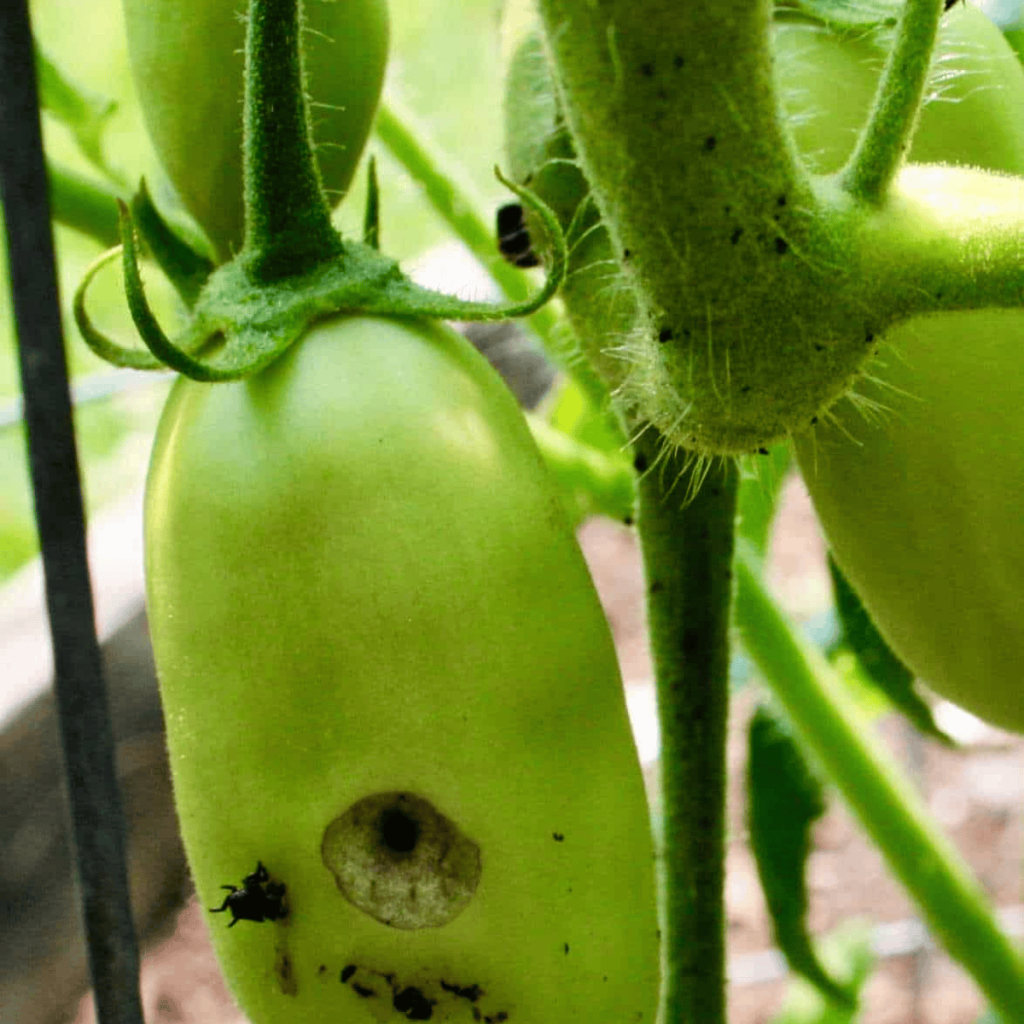
a green tomato with a hole made by a tomato fruitworm
This tomato shows the characteristic hole made by the tomato fruitworm.

What Is the Tomato Fruitworm?

You’re watering the garden, admiring your lovely tomatoes, when suddenly you notice a hole. It looks like a woodpecker started pecking a green tomato, or some crazed gardener took a drill to the tomato. Sometimes the hole has a depression in the middle of it or just looks bruised. Others, like the hole in my Roma tomato in this picture, show that something made its way into the tomato. But what?

Welcome to the world of the tomato fruitworm. It’s also called the corn earworm, Helicoverpa zea. It’s typically a late-summer pest of corn, which is why I was surprised to find it in my garden now, at the start of June. However, we’ve had crazy weather for late spring. Very hot temperatures soaring into the mid-90s and a dry spell probably gave the pest an early start.

The tomato fruitworm isn’t fussy about its host plants, although it does love corn. I stopped growing corn because I had trouble growing sweet corn, and also due to the corn earworm, although I didn’t know it was the same bug at the time. I just knew that every time I pulled back the leaves from a ripe ear of corn, one or two worms fell out.

The larvae are the young of a nondescript brown moth. They take several weeks to mature inside the fruit, then drop back to the ground where they burrow several inches into the soil and overwinter. Next year, they hatch into the mature moth, which then looks for other crops to infect.

What Do Tomato Fruitworms Eat?

Obviously, tomatoes, but they’ll also eat corn, green beans, lettuce, and, according to the Virginia Cooperative Extension, over 300 host plants. Luckily for me, however, the worms are loners; the parents lay one egg, not a clutch of eggs like the potato beetle, which is also attacking my tomato plants this year.

How Do You Get Rid of The Tomato Fruitworm?

You can pick the unripe tomato and discard it in the trash. Unfortunately, you can’t get the worm out and salvage your tomato.

Many beneficial insects, such as parasitic wasps, eat the eggs and larvae, and my garden tends to attract parasitic wasps, so I’m holding out hope that the wasp air force will arrive and come to my rescue, and nature will restore the balance in my garden.

If that fails, Bacillus thuringiensis (Bt), an organic spray made from a natural bacterial predator, can be used. However, for just a few tomatoes and a small garden, no treatment is really necessary.
Filed Under: Vegetable Gardening

Previous Post: « Columbine or Aquilegia, an Easy to Grow Flower
Next Post: Why Apple Mint Will Be Your New Favorite Herb »

Footer

A close up of American burnweed flowers about to bloom.

American Burnweed, the Weed That Signals Fall Is Here

I was walking my dog along the wood’s edge right near where we cleared land to build our greenhouse when I did a double take. There, like Jack’s magical beanstalk, had grown overnight this gem: American burnweed. Also known as fireweed or American burn weed, it grows rapidly – and I mean, rapidly. Like I…

Read More

Summer squash

What Can You Make with Summer Squash?

It’s that time of year when everyon asks, “What can I make with summer squash?”. The time when neighbors sneak bags of summer squash onto porches. When farmer’s markets are brimming with yellow and green squash, zucchini, and all manner of Cucurbitaceae, the plant family that gives, and gives, until it can’t give anymore. If…

Read More

A closeup of marshmallow plant flower.

Growing Marshmallow Plant

Growing marshmallow plant has been on my gardening to-do list for quite some time. I’ve read about it in herbal books and grown its cousins in the Malvaceae family from seed. The dark purple mallow plant I have thrives in my little garden by the shed, so I thought, “Why not grow marshmallow there?” I…

Read More

watering can with plants

August in the Garden: Late Summer Delight

August in the Garden: Tasks, Tips, and a Look Ahead to Fall Here in South Central Virginia, August has always felt like “back to school” season. By mid-month, the local schools are back in session, and with two universities in our small town, the stores fill up with dorm supplies and school gear. What a…

Read More

  • About
  • Plant a Row for the Hungry
  • Awards
  • Privacy Policy

Let’s Connect!

  • Facebook
  • Instagram
  • Pinterest
  • Substack
  • YouTube

Copyright © 2026 Home Garden Joy on the Foodie Pro Theme