Apple mint (Mentha suaveolens) offers all the health benefits of other types of mint but with a refreshingly different taste. It’s easy to grow in sun or shade, in containers or in the garden, and it works well in a wide variety of dishes, mint teas, and more.

Apple Mint – So Easy to Grow Even “Black Thumbs” Will Be Successful!
Apple mint (Mentha suaveolens) offers gardeners so much and asks for so little. Like other plants in the Lamiaceae family, apple mint grows wild throughout the southern and western areas of Europe. In the United States, it grows easily throughout gardening zones 5 through 9.
The plants spread quickly through underground runners so it can be invasive. My own apple mint spread into the gravel driveway and through an old sand pile we buried under mulch. I liked the fact that it grew in the sand pile; it covered an area we couldn’t grow much else in. However, having it peek up from the driveway annoys my husband so I pull it as fast as I can.
Health Benefits of Apple Mint
Apple mint offers a variety of health benefits similar to all members of the mint family. Like its cousin, peppermint, it offers a refreshing feeling when brewed into a cold or hot beverage. Some claim that apple mint helps the body break down fat and thus aids weight loss. I have found that sipping cold apple mint tea satisfies my cravings for sweets, which may be why it aids in weight loss.
The ancient Greeks cleaned their banquet tables with this herb and others added it to the bath water for its scent and cooling properties. Sipping a cup of any mint tea, including this mint, settles an upset stomach and offers relief from nausea.
Peppermint leaf, a close relative, has been rated ‘likely safe’ to use during pregnancy. If you aren’t sure about its safety, consult with your physician.
Nutrition Information
The leaves, when added to salads or processed into mint water, provide iron, potassium, calcium, vitamins A and C, and numerous antioxidants.
Growing Apple Mint
I’ve mentioned how invasive mints can be and this one is no exception. Like other “woolly” mints, it spreads rapidly through underground runners. Each runner produces a new plant or remains connected to the parent plant.
Grow it in sun or shade. It tolerates a wide range of soils My own patch of apple mint grows well in highly acidic soil in my herb garden on the edge of the pine woods. This is my herb garden. Look for the apple mint in the far left bottom corner. The other herbs in the picture include lemon balm, two types of thyme (the upright thyme, planted near the pond, blooms with white flowers), and oregano.

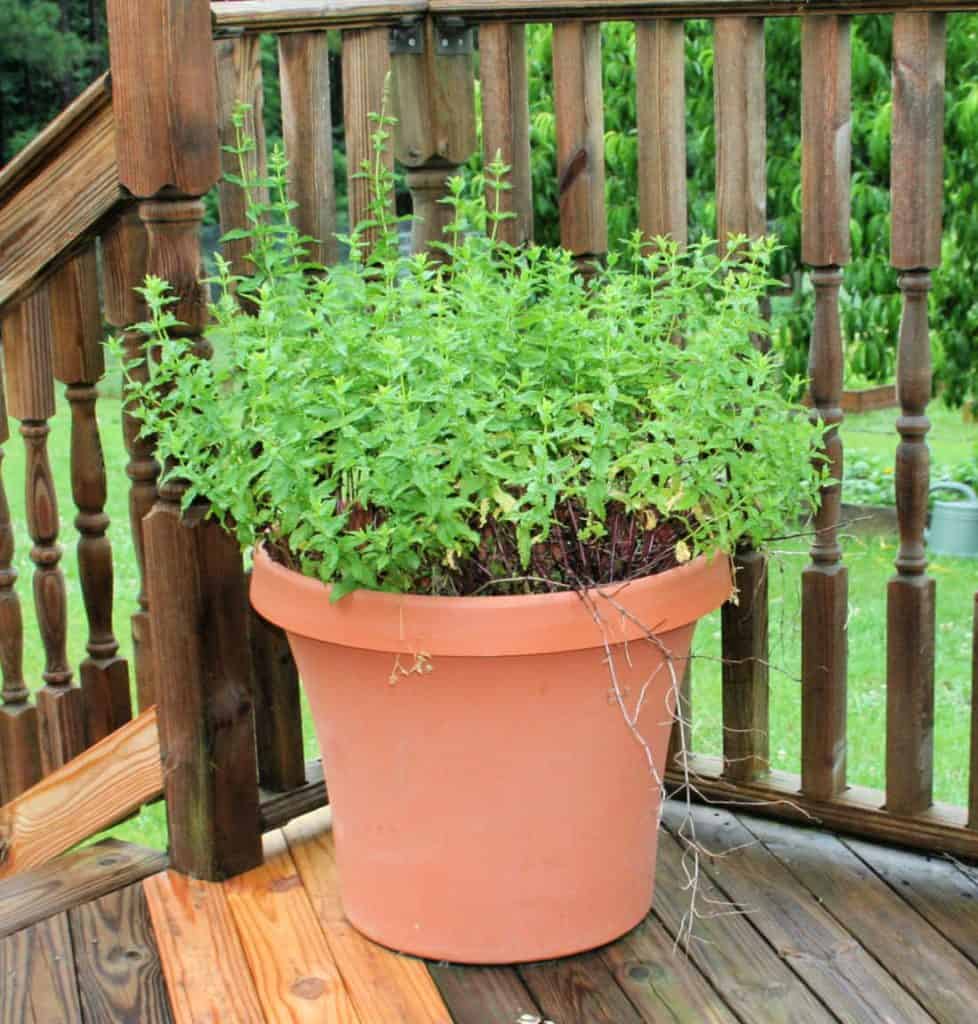
To contain all mints so that they do not overtake the garden, plant them in containers. I’ve corralled my peppermint in a container on the back patio:
It grows well from both seeds or daughter plants dug up from the runners. Start from seed outdoors after all danger of frost is past or start indoors 6-8 weeks before your region’s frost-free date. Keep the transplants well-watered until they seem established in the garden. After they are established, there is no need for any special care except cutting them back when they become unruly.
5 Ideas to Use Apple Mint
This mint variety works well in any dish calling for mint. I’ve used it in a feta and mint bruschetta recipe from the book Recipes from the Herbalist’s Kitchen by Brittany Wood Nickerson and it tastes fantastic.
Traditional use of apple mint is to make mint jelly. Its milder flavor lends itself well to a sweet jelly. Like other herbal jellies, be sure to follow the directions carefully to ensure the jelly sets well.
Mint Waters and Teas
I also brew it into iced tea. Gather one cup of fresh leaves and place in a quart of boiling water. Boil gently for 10 minutes, turn off the heat, cover the pot, and let steep for an hour. Strain the herbs and place in a glass jar with a lid. Chill and sip as desired.
How to Make Mint Water
You can also make mint water. Mint water benefits include zero calories, relief from nausea, and a cooling feeling that feels great when you experience menopausal hot flashes or just a hot summer’s day.
To make mint water, place one cup of freshly gathered and cleaned mint leaves into a blender with two cups of water. (The ratio for mint water is 1:2, or 1 part herbs to 2 part water. Increase or decrease as desired). Puree for 30 seconds to one minute, then strain the herbs using cheesecloth or a fine mesh sieve. Chill the mint water in the fridge and sip as needed.
I mix it with seltzer (soda water) for a “sugar-free pop” type of drink. You can freeze it into ice cubes and add them to drinks as desired.
As you can see, apple mint offers several health benefits, grows easily in almost all conditions, and tastes great. What more could you want from an herb?