• Skip to primary navigation
  • Skip to main content
  • Skip to footer
Home Garden Joy
  • Home
  • Gardening
    • Butterfly Gardens
    • Home Garden Tips
    • Seed Starting
    • Compost and Fertilizer
    • Raised Bed Gardening
    • Tools & Equipment
    • Pests & Problems
  • Plants
    • Plant Profiles
    • House Plants
    • Vegetables
    • Fruit
    • Herbs
    • Growing Flowers
  • Garden to Table
    • Easy Recipes
    • Canning and Food Preservation
  • Seasonal Living
    • Home for the Holidays
    • Birds and Wildlife
    • Vintage Finds
  • Shop
    • Books for Christian Herbalists
    • Herbalism Classes
    • Books by Jeanne Grunert
  • About
    • Privacy Policy

Celebrating the Eastern Tiger Swallow Tail Butterfly

May 8, 2013 by Jeanne

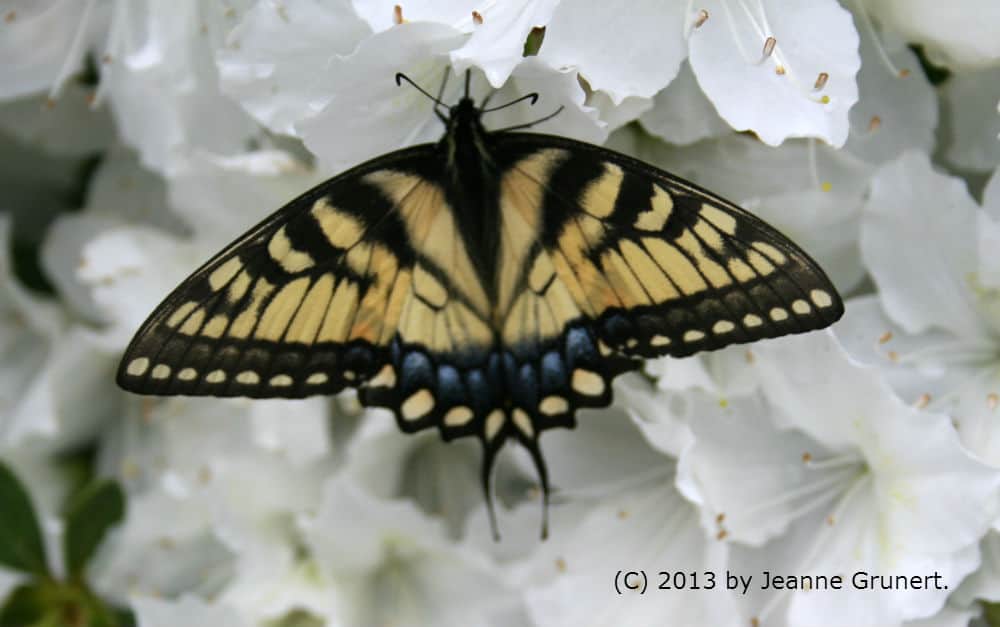
Each year, we seem to have even more Eastern tiger swallow tail butterflies in the garden at Seven Oaks. They’re the predominant butterfly, and no wonder- they are also the Virginia state insect.

The first known record of the Eastern Tiger Swallow Tail comes to us from Sir Walter Raleigh’s third expedition to Virginia. In 1587, a fellow by the name of John White drew a picture of the Eastern Tiger Swallow Tail. It seems I’m in good company; I love to photograph them, and it was the first North American butterfly recorded by a European.

Papilio glaucus, as this butterfly should be properly called, inhabits the United States all along the East coast to the Rocky Mountain areas. It prefers wooded habitats, fields bordering woodlands, and gardens. Like mine. It really is plentiful here!

The caterpillars produce up to three broods per year. One interesting fact is that the first brood is the smallest. I wonder if that’s because food isn’t as plentiful for the first brood?

Caterpillars start life dark brown, but later turn green, with large green, black and blue eye spots. They return to a brown color before the chrysalis form. Chrysalis of the Eastern tiger swallow tail winter over, with butterflies emerging in February in the deep south.  Around here, they appear March through April, depending on the weather.

The males are always yellow, like the one above, with black stripes and spots, but females can either be yellow, dark brown or black with blue spots, like this one below:
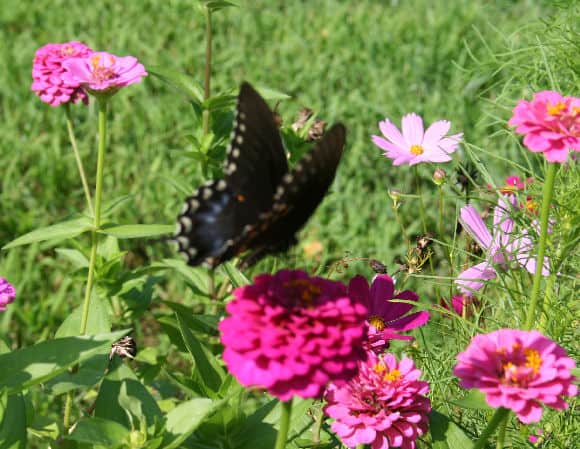
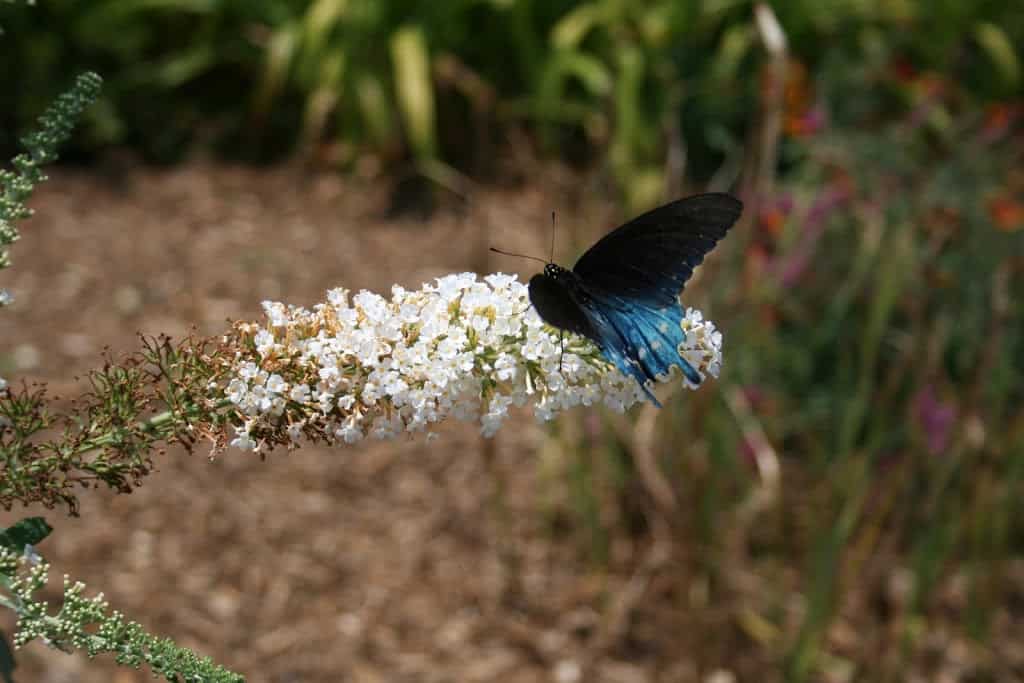


Do you plant flowers for butterflies? I love butterfly gardens and they are so easy to grow.  See my presentation on Slideshare or on the resources page here on the blog for a free and brief guide to butterfly gardens.
Filed Under: Butterfly Gardens

Previous Post: « Columbine Flowers
Next Post: How to Grow and Care for Iris Plants »

Footer

a red knockout rose

June Gardening Tips: Everything You Need to Do in Your Garden This Month

I’m sharing these June gardening tips for gardening zone 7B. However, you can easily adapt them to your gardening zone. June is one of those months that feels like there’s so much to do in the garden you don’t know where to start. Fortunately, nature gives you extra-long days and plenty of sunshine! Whether you…

Read More

watering can with plants

Growing Ginger in the Home Garden

Growing ginger is fun. I was surprised to learn that I could grow ginger in Zone 7B, central Virginia. I attended a lecture by Ann Codrington of Nisani Farms several years ago. She discussed growing both ginger and turmeric. Her farm is in Maryland, but I discovered that both plants can be grown in both…

Read More

borage flower

Companion Planting with Herbs: Your Secret Weapon for a Healthier, Happier Garden

Every summer, without fail, I plant basil at the end of the raised beds. These are the beds filled with Roma tomatoes, the ones we harvest by the bushel to make our salt-free organic tomato sauce. My tomatoes thrive. “Did you know that basil repels aphids?” an organic gardener friend mentioned to me casually one…

Read More

a vintage folk art weather house which accurately predicts the weather

The Folk Art Weather House

I’ve loved this little folk art weather house all my life. It still makes me smile. What gardener doesn’t need to know the weather? I grew up with many German relatives. Thank-you notes were written to “Oncle Ludwig” and “Tante Marie.” During visits to their homes, I was fascinated by the little folk art German…

Read More

  • About
  • Plant a Row for the Hungry
  • Awards
  • Privacy Policy

Let’s Connect!

  • Facebook
  • Instagram
  • Pinterest
  • Substack
  • YouTube

Copyright © 2026 Home Garden Joy on the Foodie Pro Theme