Plant Fast Growing Flowering Trees
Plant fast growing flowering trees to transform your garden! These trees add beauty during the blooming season as well as spring and fall. They’re a great way to transform your landscape – fast!
Three Fast Growing Flowering Trees
Fast growing flowering trees add beauty to the landscape without the wait. Trees provide shade as well as focal points in the landscape, and nothing adds more beauty than flowering trees. Although we tend to think of flowering trees as spring bloomers, there are flowering trees that bloom in the spring as well as the summer. Depending on your growing (gardening) zone you may be able to grow one or more of these fast-growing flowering trees.
Yoshino Cherry Tree
The Yoshino flowering cherry tree is perhaps best known as the tree gracing Washington DC with its clouds of snow-white blossoms every spring. The first cherry trees were a gift from Japan in 1912; new trees have been added to the parks and streets of the United States capital, creating the beautiful annual show that ushers in springtime. Yoshino cherry trees are among the fastest growing flowering trees. A Yoshino cherry tree can grow up to 3 feet a year. They usually top 30 feet at full maturity. Yoshino cherry trees require full sun to partial shade and rich, well-drained soil. They can be plagued by tent caterpillars, which feed upon the leaves and spin a telltale tent for their larvae.
Redspire Flowering Pear Tree
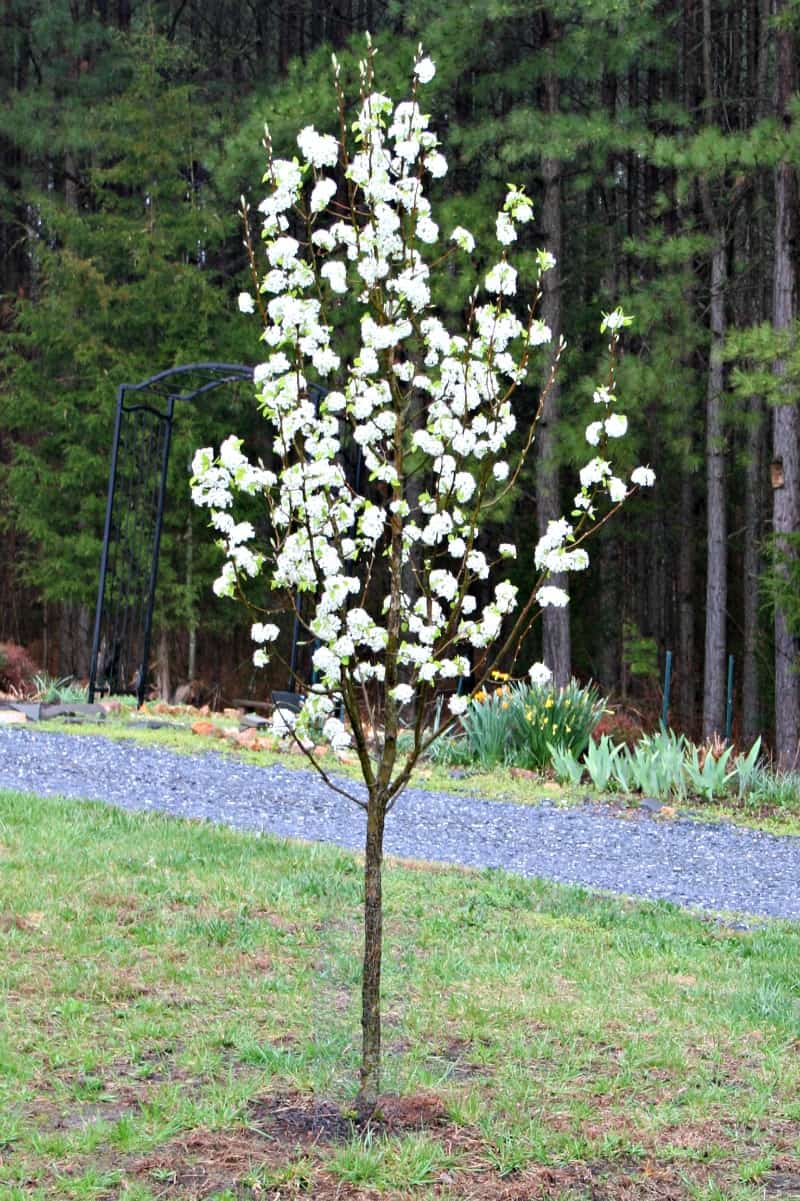
Another great fast growing flowering tree is the Redspire pear. It is an ornamental pear tree with an upright shape and is frequently planted along city streets. It has white blossoms in early spring; the flowers are larger than the other common flowering pear, the Bradford pear. While it doesn’t produce fruit for human consumption, it does produce small pips or fruits enjoyed by wild birds. Redspire pears require full sun to partial shade but are very tough trees, making them ideal for planting near roadsides an in urban areas. They can grow several feet per year under the right conditions.
Thundercloud Plum Flowering Tree
The Thundercloud Plum is among the top three fast-growing flowering trees but may not be as well-known as the Yoshino cherry or the Redspire pear flowering trees. That’s a shame because this beautiful tree offers three-season interest. In early spring, fragrant pink blossoms appear, followed by glossy purple leaves. Leaves turn richer shades of purple before shedding in the fall. Thundercloud Plum flowering trees grow a foot or more per year until they attain their mature height of 15 to 20 feet tall. They’re hardy and deer resistant, making them ideal for people who live in rural areas. They prefer sandy or clay soil and cannot withstand too much drought, so be sure to provide some water during periods of extended drought.
Know Before You Dig: Flowering Tree Planting Considerations
When choosing flowering trees for the garden, you must consider several factors. Although fast-growing flowering trees may be desirable, be sure that the flowering trees you select are suitable for your gardening zone.
Next, consider the space you have available for a flowering tree. You may need one that remains small so that it does not grow into overhead power lines.
Lastly, be sure to plant flowering trees and all trees far enough from your house so that the branches do not obscure windows which can be a safety hazard. Trees looming over the house may look picturesque but if branches topple down during a windstorm can inflict severe damage on roofs and homes, so choose trees that remain small or plant them far enough from your home so that if a branch does come down it won’t hit the structure.
Be sure to add other flowering shrubs to the landscape to complement the flowering trees, such as azaleas, rhododendrons, forsythia, and others.
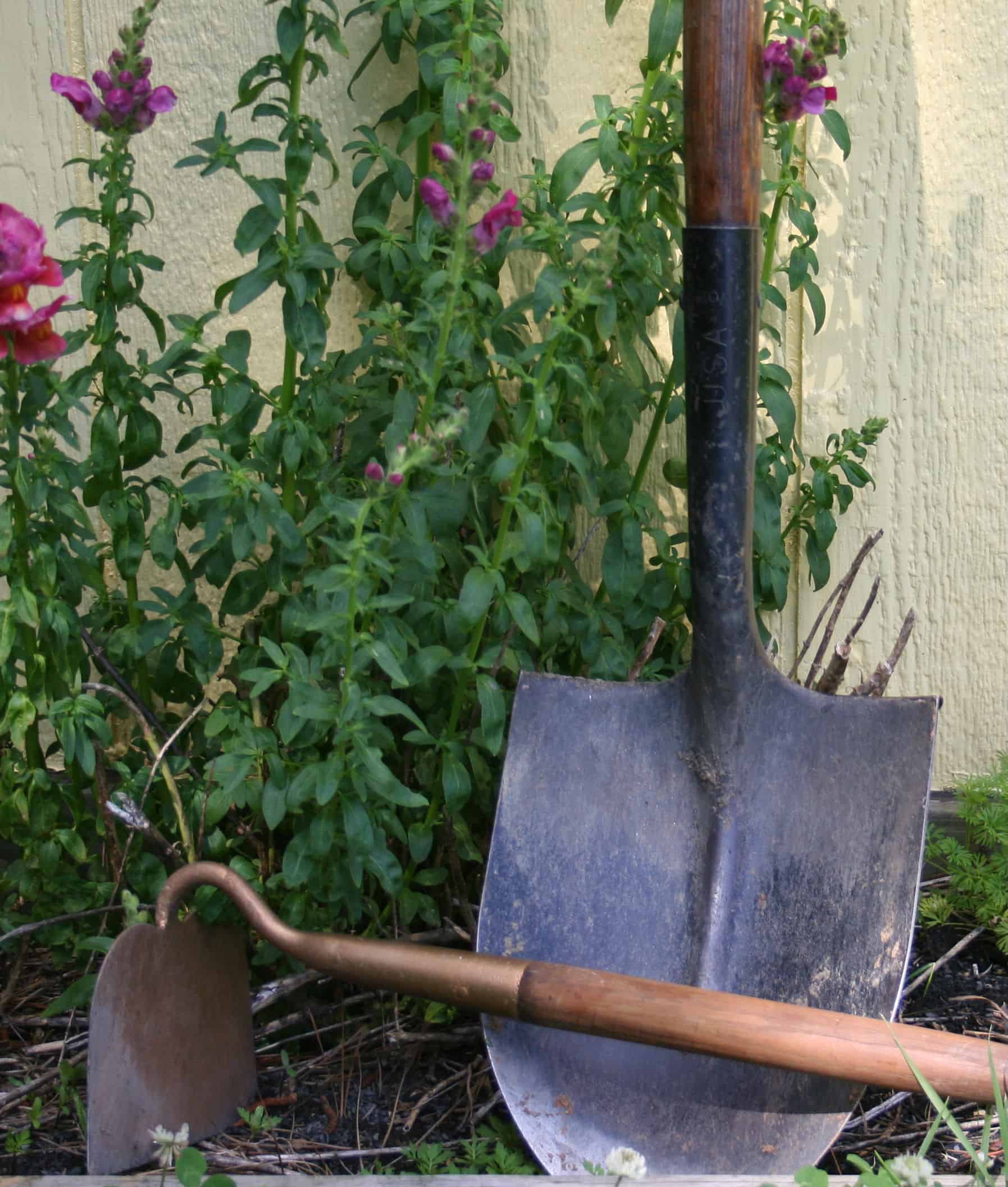
And KNOW BEFORE YOU DIG! Call your local utilities before digging. You may accidentally hit a wire, pipe, or something important.
Thank you ONG and welcome to the Seven Oaks blog! Glad you are enjoying it, and I sincerely appreciate the comments.