I’m reading a fascinating book called The Old Place: A Natural History of a Country Garden, by Merritt Gibson. It’s a large paperback book filled with illustrations that I purchased at the Pamplin Library fall book sale, a used book among the gardening books that caught my eye. It’s available on sites such as PaperbackBookSwap for a trade but Amazon has it listed at the weird price of $84.50. I say weird because it’s neither rare nor hardcover – just an intriguing book. If you can find a copy online used or at your library, it’s worth a second look.
The author lives in Nova Scotia, Canada, and has an 18 acre farm that dates back to the late 1800’s. The best part of her farm is the mixture of habitats. She’s got an old house, stable and pasture, but she also has riverfront and tidal marsh areas, woodlands and more.
Each chapter of the book takes you on a nature walk to examine the plants, insects, birds and natural habitat of The Old Place, the name of her farm. I love taking the imaginary walk with the author. What I love best is that her suggestions for nature watching are exactly what my own mother taught me many, many years ago.
As a child, I used to always note certain parts of our tiny urban/suburban garden and the gardens on my way to school. I used to watch the privet hedge that separated our property from Mr. Hoffman’s; sparrows would nest there. I’d watch for the first blush of tender green shoots on the oaks and maples, the tinge of autumn gold. On my way to school was a wonderful house set on a corner that had a post and rail fence around the property. The owner had planted a different rose at every post and trained various climbers up and onto the fence. I remember one luscious white rose. The blossoms had such a strong scent. In June, I’d stop and inhale the rose fragrance, delighting in the early morning light playing among the roses.
Gibson describes similar experiences on her farm, and she has wonderful suggestions for noting the natural world on your little corner of the world, whether you live on a farm, garden in an urban backyard or a suburban habitat. The suggestions she gives that I want to incorporate in my life include:
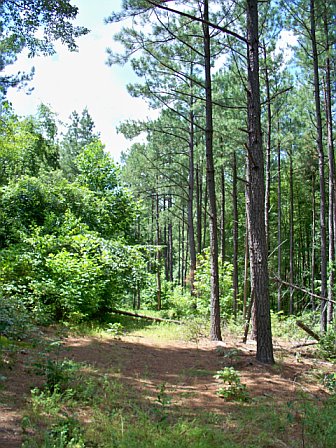
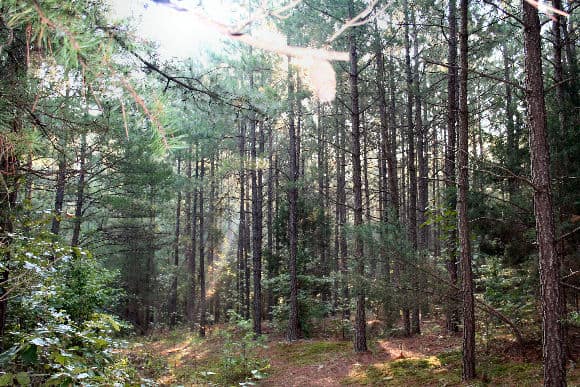
- Planting a mixture of habitats to attract different wildlife – we did this here at Seven Oaks by clearing only 3 acres of the timber that grew here, and then planting that with a mixture of grass, orchard fruit trees, flower gardens and different evergreens. Everything is still very small and growing, but the goal is the same as what Gibson has on her farm that’s had over 100 years to grow; mixed habits attract wild birds and provide forage, food and shelter for many different insects, birds and animals.
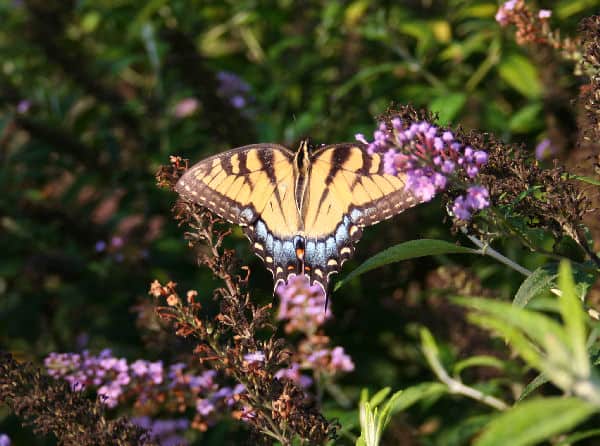
- Visit one or two spots regularly, at different times of the day, to note the wildlife. I do this by walking among my flower garden and sitting comfortably on my porch in the mornings and nights watching the garden. I also do this when walking Shadow. There’s a spot along the road that runs in front of my house that has junipers, cedars, persimmon trees, dogwoods and arbor vitae growing naturally along a fence line with an open cattle field beyond, and on the opposite side of the road, woodland bordered by junipers. This is one of my favorite bird watching spots. I’ve seen beautiful indigo buntings, bluebirds, vireos, wood thrushes and many, many more wild birds here. The butterflies play along the wildflowers growing along the water runoff ditch next to the farm too, and while I do not know enough about them to identify them, the butterflies and wildflowers also provide a changing panoply of color each season. So pick a spot in your yard or garden and make it a habit to visit it daily. You’ll be amazed at what you see!
- Visit the garden at night. I haven’t done this because I still have my city-girl fear of running into wild animals, but I suspect that during the summer I can safely take a flashlight and walk among my plants. The author interested me in the many moths that feed at night. I want to see them!
- Keep a journal. I want to train myself to keep a wildlife journal. We often ask one another, “When did we see the bear?” “When was the last time you saw the hummingbirds?” If I log it into a journal, it will be both a guide and a resource for future years.
My sister gave me a CD that has various bird songs on it with their identification. My next little winter garden project is to challenge myself to learn a few more so that in the springtime, I will know my neighbors better.
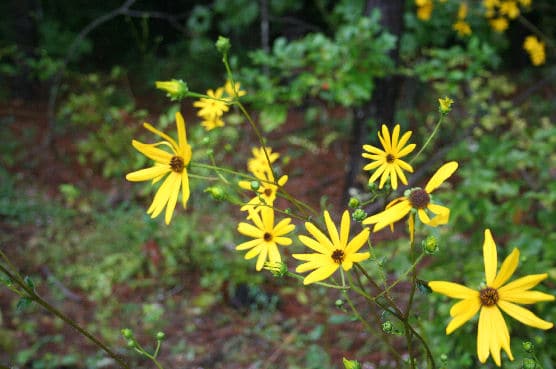
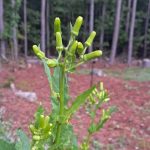
Each year I challenge myself to learn a new star constellation in the night sky; my challenges to myself this year will be to learn a new birdsong, and to find a good guidebook to Virginia wild flowers so I can be like Merritt Gibson, knowing the names of every little bit of beauty in her farm. I want to know them all by name and treasure them too, just like she does.
What do you do for winter gardening fun? Do you also like to learn all the wild things growing and living on your property?