Purple coneflower and other coneflowers are a staple of my garden. This native perennial blooms prolifically through most of the summer.
Purple Coneflower
The Echinacea are now in full bloom throughout the garden, although the latest additions in 2010, Echinacea “Cherry Brandy,” are shyly holding back their blossoms. I even found a few volunteers, or plants grown from seeds blown about by the wind, in the island bed in the middle of the lawn. Shadow and I went out to the garden at noon today, braving the scorching heat wave that’s struck central Virginia, and she plopped down under the snowball Viburnum while I inspected the Echinacea. I did a double take when I realized why Shadow chose to snooze under the Viburnum while I puttered about; it’s tall enough to cast a decent shadow, and she lay down in the shade. I only planted that little seedling in spring 2009 – they sure do grow quickly!
The Echinacea growing throughout my garden are from two groups I started from seeds. The first group started as a ‘sampler’ pack from Park Seed. I bought the Park Seed Coneflower Collection Echinacea and lavender sampler sets in 2008, started them from seed, and used the seedlings as a border around the island bed. I had a few lavender leftover, so that became the border around the rose garden and then a little hedge of lavender nearby.
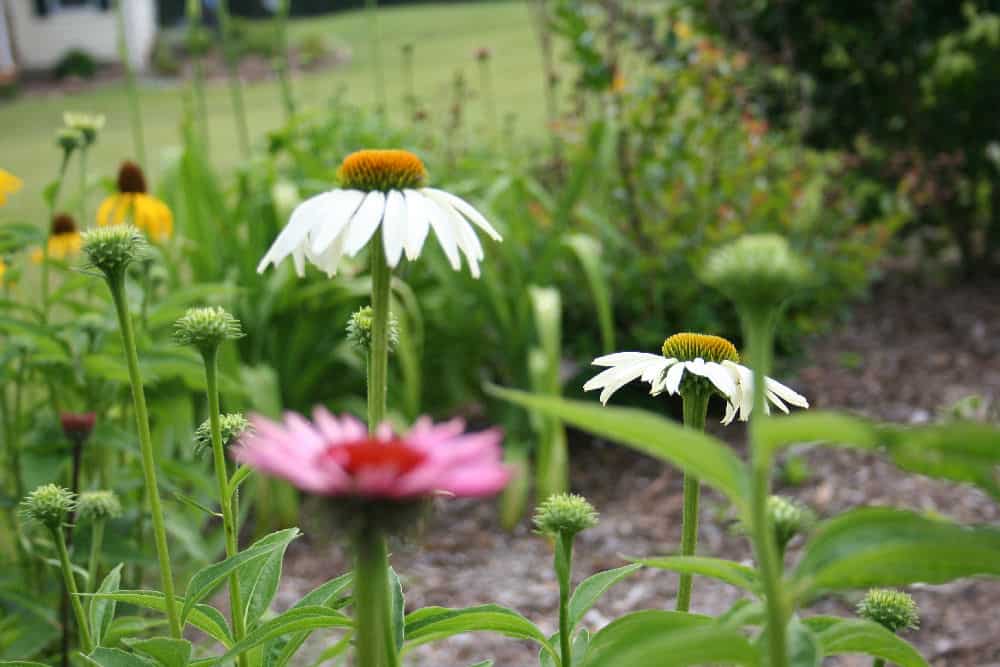 |
| Coneflower collection – White Swan, Purpureau (purple coneflower), Paradoxa (yellow). Petals are upright until maturity, then they point downward into the telltale cone shape. |
The kit included Echinacea “White Swan,” the Traditional “Purpurea” (purple, what everyone thinks of when you say Echinacea – Purple Coneflower), and Yellow “Paradoxa.” (If you buy the collection now, they swapped out the common Purpurea for Magnus, which has a more daisy-like appearance but is also purple.)
Echinacea is native to North America, which is another reason I love seeing the nodding, cone-shaped seed heads. The name comes from the Greek word for “hedgehog” because the first Europreans who saw the plant decided the seed cone looked bristly, like a hedgehog. I’m not sure if I’d have chosen a similar name. I probably would have called the plant “goldfinch mother” since it nurtures the goldfinches and kinglets that love to eat its seed. Every fall, flocks of the beautiful golden birds alight on the seed heads. I collected seeds the first year; now I don’t. I leave them for the birds.
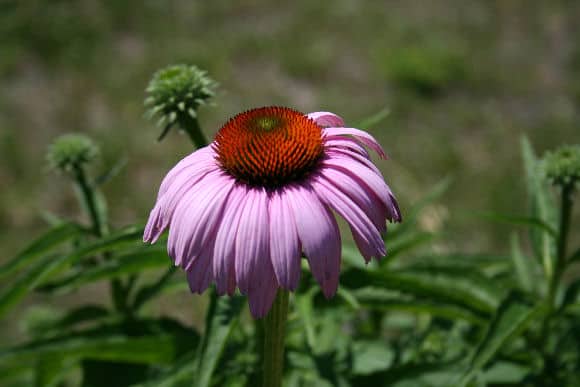 |
| Classic Purple Coneflower |
This year I have a few more Purpurea seedlings snug in their nursery pots on the front porch, waiting for a cooler day to move them into the garden. I like to wait until I have at least three sets of strong, robust leaves on the plants before attempting to transplant them, and I have to wait for a time when I know I will remember to water them daily. If I get too busy, I forget to water them, and in this heat the babies shrivel and wither away under the fierce glare of the Virginia sun.
If you’ve never grown Echinacea, they’re truly easy care perennials, but they do need full sun and some space. I recommend that beginners buy them as fully grown plants at the garden center, since the seeds require some TLC and nurturing until they’re big enough to transplant into the garden. Some of my friends have had success sowing seeds directly into the garden; maybe you will, too. But do add Echinacea to the garden. Nothing says summer like Purple Coneflower!
Great post. If you want more of the species, just smush dry seed heads into the ground where you want new plants to grow. They’ll know when to emerge and you will not have to worry so much about killing newly transplanted seedlings.
Sounds like I’ve been babying them too much. Thanks for the tip, Nell Jean!