
Growing bearded iris (Iris germanica) or the common iris makes even black thumbs turn green. These perennials provide incredible color, diversity, and fragrance.
My Introduction to Growing Bearded Iris
Growing up on Long Island, New York, I don’t think I saw a single bearded iris until I met my husband. My father-in-law grew a small patch of bearded iris in the shade under an oak tree on the front lawn.
These purple and white iris captured my imagination. They smelled like grape soda pop! How can you not love a flower whose fragrance evokes carefree times as a child when grape soda pop was all you needed to make you happy?
When my father-in-law drove to Virginia to move in with us, he carried the rhizomes (roots) of Iris germanica on his lap. I still don’t know what variety they are, but I do know they grow well here in Virginia, too.
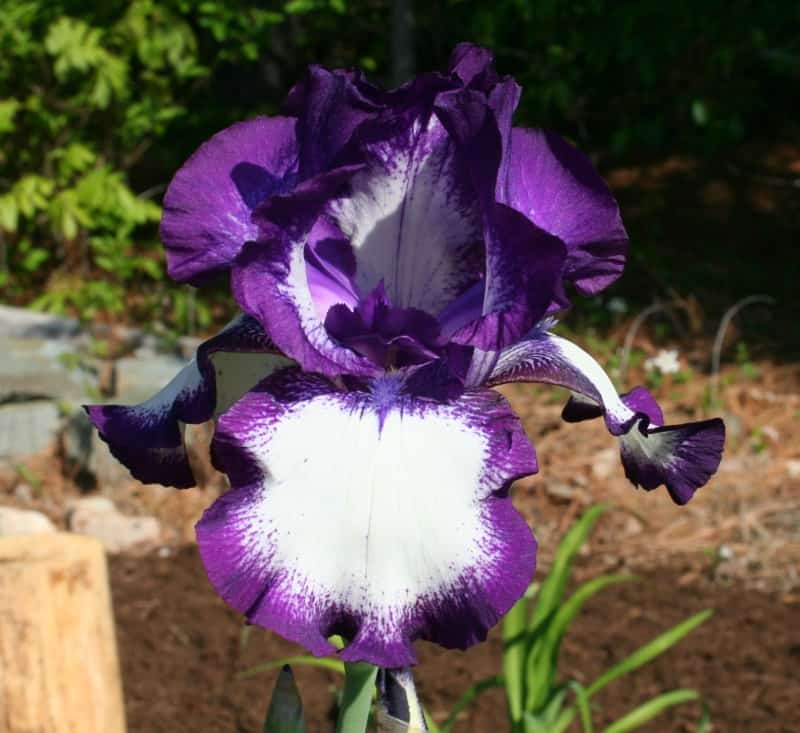
This is the iris that started my love affair with the plant.
Growing Bearded Iris – Iris Germanica
The proper botanical name for bearded iris is Iris germanica – the German bearded iris. There are also Dutch iris, which grows from bulbs, and other types of iris. But the big, showy flowers commonly called iris or flags are the German type.
The original purple or purple and yellow Iris germanica are the forefathers of almost all bearded iris varieties today. Hybridizers created almost an infinite variety of colors, falls (the petal on the bottom of the flower), fragrances and more to bring the rainbow of colors we have today in the iris family.
Light Requirements
Iris germanica requires full sun but tolerate light shade, especially in the south where I live. I’ve seen them tolerate almost full shade. Generally, they aren’t fussy about how much light they receive.
Soil
Soil should be moist hummus but again, iris won’t fret too much if the soil is clay or sand. Along the banks of the old roadways in the Piedmont area of Virginia I often see Iris germanica clinging to the clay, perhaps planted by farmers of old (or squirrels – who knows?) They thrive in almost any soil but do need moisture.
Planting Iris Rhizomes
Planting can be the trickiest part of iris culture and care. The rhizome, or thick, fleshy root part, must be planted so that it is very near the soil surface. Perhaps the most common problem when planting iris rhizomes is planting them too deeply. If they’re too deep, the rhizome rots and the plant dies.
Divide Iris
Iris needs to be divided. If the plants grow too close together, you’ll see a noticeable drop in the number of blooms it produces.
Divide iris in July or August. Dig up the clumps with a spade. Cut the about 2/3 of the leaves off, leaving 1/3 from the root. Wash the roots with water from a garden hose, then use a sharp knife to cut the rhizomes apart. Replant each rhizome in a hole big enough to accommodate the rhizome and the roots. Remember to plant them a few inches deep in the soil.
Garden designers say that Iris germanica looks best in the garden when three of the same cultivars are grouped together. If you choose to do this, plant them 12 to 24 inches apart to leave plenty of room for them to spread out.
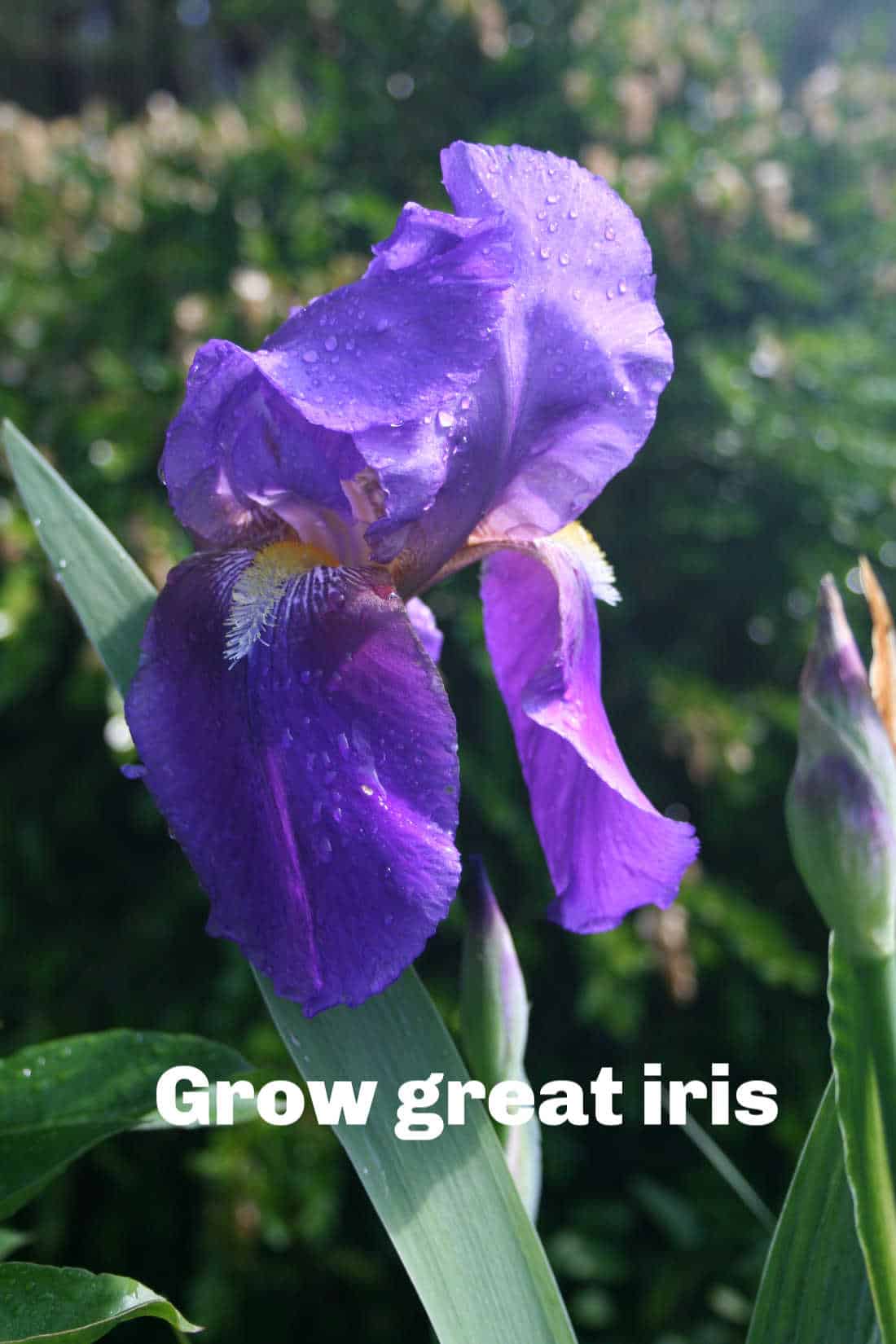
The arrival of iris flowers here in Virginia each spring is like a breath of fresh air in the garden. It heralds the start of the wonderful May weather, and the scent coming from a patch of iris is heavenly. I don’t know what my garden would be without them.

I love your love affair with iris. I, too, am smitten by these lovely flowers. We moved to a home with a lot of barren land because renters had neglected the landscaping and voles had eaten a lot of it. Friends gave me some iris and, even though I have fought and fought the voles and they managed to eat and destroy a good many plants, I finally have the upper hand and I’ve just purchased a few named varieties. However, I have discovered that my friends, the bees, are busy hybridizing some of my iris and I have some pretty new colors and types! Would love to get your newsletter and keep up with your life among iris.