A few weeks ago, I went to take the compost bucket from the kitchen to the compost pile, only to discover a beautiful painted box turtle happily munching away at some lettuce that had bolted and been tossed into the pile. It suddenly struck me what a wonderful ‘habitat’ compost piles are for turtles. Not only is there a lot of soft soil to burrow into, but it’s full of juicy vegetable scraps and attracts insects…it’s like fine dining for turtles!
Yesterday, we used the pressure canner for the first time and canned 10 pints of potatoes. Now that’s a lot of potatoes to peel, so as you can imagine, the compost bucket became full rather quickly. I carried it out to the pile and surprised not one but two turtles near the edge of the pile. I ran into the house to get my husband, and we watched the turtles for a while, but I can never get back in time with my camera to get a picture of these guys. It’s a common misconception that turtles are slow, but when they’re startled, they move quickly, and the forest floor with its golden pine needles and piles of leaves hides them well. Once we return with the camera, they’re gone.
I like to think that perhaps my compost pile is not only recycling the kitchen scraps but providing a nice resting and feeding place for turtles, too. We made a mental note to be careful there when digging out the compost. I wonder if there will be turtle eggs there? Perhaps my two visitors are setting up housekeeping!
Here are some links to turtle information – and the sites have pictures that look exactly like the turtles we saw:
- Eastern Box Turtle – Northern Virginia Ecology Site (we’re in southern VA but the turtle looks the same to me)
- Virginia Department of Game and Inland Fisheries – Eastern Box Turtle
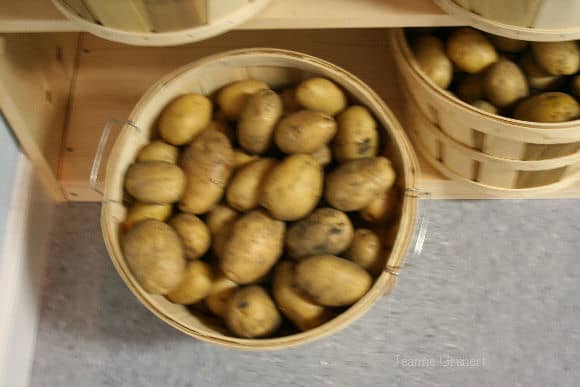 |
| Yukon Gold potatoes from our garden, stored in the basement (Picture by Jeanne Grunert) |