
• Skip to primary navigation
  • Skip to main content
  • Skip to footer
Home Garden Joy
  • Home
  • Gardening
    • Butterfly Gardens
    • Home Garden Tips
    • Seed Starting
    • Compost and Fertilizer
    • Raised Bed Gardening
    • Tools & Equipment
    • Pests & Problems
  • Plants
    • Plant Profiles
    • House Plants
    • Vegetables
    • Fruit
    • Herbs
    • Growing Flowers
  • Garden to Table
    • Easy Recipes
    • Canning and Food Preservation
  • Seasonal Living
    • Home for the Holidays
    • Birds and Wildlife
    • Vintage Finds
  • Shop
    • Books for Christian Herbalists
    • Herbalism Classes
    • Books by Jeanne Grunert
  • About
    • Privacy Policy

Carrots in the Home Garden

April 3, 2014 by Jeanne

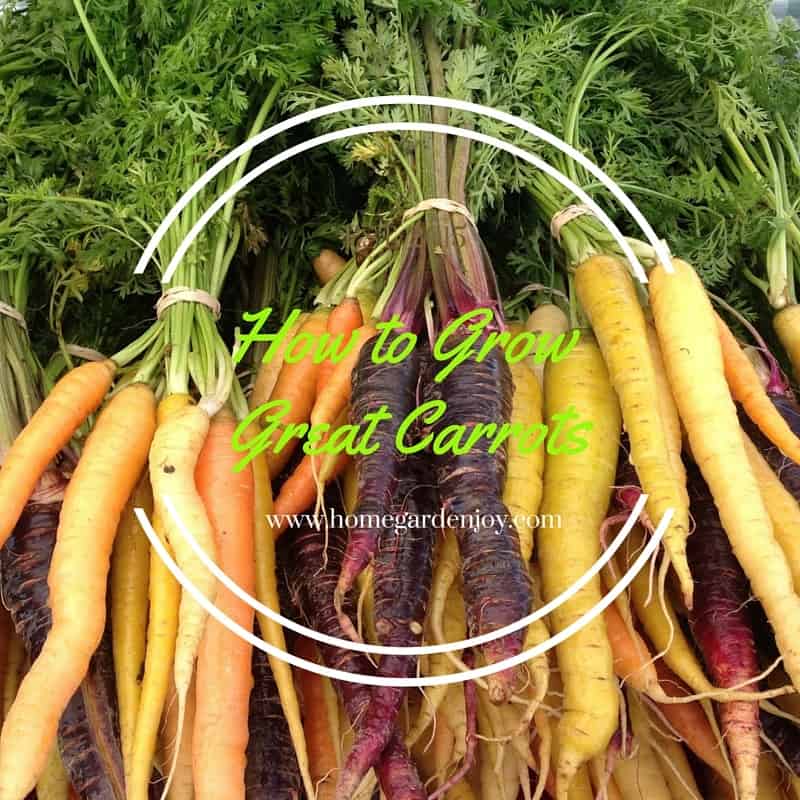
Growing carrots in the home garden is easy with the right soil. Did you know that the Romans loved carrots, or that carrots come in other colors besides orange? Learn more about growing carrots!
how to grow carrots
C is for carrot, those ubiquitous vegetables languishing at the side of your dinner plate or in the back of the fridge. Carrots have sort of fallen out of favor among the gourmets of the world, which is a shame. If you turned back the clock two thousands years and walked into a banquet hall in the Roman Empire, you would find the Emperor beckoning for a second helping of carrots. They were considered a delicacy among the ancients who prized them for their flavor and storage abilities. There’s some debate as to whether the carrots mentioned by ancient writers were the same as our modern-day orange carrots or parsnips. Since both are delicious, let’s pretend that carrots were on the menu and move along.
[Tweet “Did you know that the Romans loved carrots, or that carrots come in other colors besides orange? Learn more about growing carrots!”]


Growing Carrots in the Home Garden
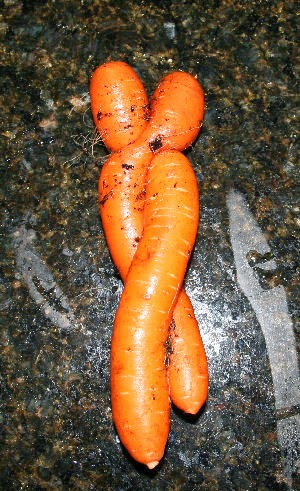
As root crops, carrots need sandy soil or at least very loose, friable soil. Rocks, stones and clay will stunt their growth, or twist them into shapes like this (from my garden a few years ago)….

Oops. We weren’t thinned…and we hit a rock…

Those nice straight, perfectly formed carrots you purchase at the market were most likely grown in sandy loam soil. If you don’t have that kind of soil, you have a few options. You can grow carrots in containers (yes, you really can) or create a raised bed garden so that you can give them the perfect soil. It’s up to you. 
 
Carrots are grown from seeds sown directly into the soil as soon as it can be worked in the spring. They prefer a slightly acidic soil with a pH of 5.5 to 6.5 – perfect for our Virginia climate and the naturally acidic soil found in many parts of the state.
–
Carrot seeds are notoriously tiny and hard to sow perfectly. You can buy seed tapes, which look like a long measuring tape with the seeds already affixed to the tape at the perfect width. You just bury the tape according to the package directions and it disintegrates in the ground; the carrots are then perfectly spaced. Another option is to sow carrot seeds in trenches and thin out the seedlings once they’re a few inches tall. I prefer the second method and use the tiny immature carrots as ‘baby’ carrots. If you have chickens, pigs, rabbits or guinea pigs, you can feed them the baby carrots too. Otherwise they can be composted after thinning them to the proper spacing.
carrots
Carrots should be spaced about an inch apart in order to grow properly. They  need a depth of about 10-12 inches, but that depends on the variety. The scarlet “Nantes” and “Nantes Half Long” varieties produce good carrots that aren’t as long as the store-bought ones but still perfectly fine carrots. They’re great for home gardens or containers.
–
Carrots take a while to germinate, so don’t give up if you don’t see them sprout – be patient. Control weeds and keep them well-watered during their early stages, but cut back on watering as they reach maturity in about 55 to 80 days. Too much water at the late stages creates cracks in the carrots.
You’ll know it’s time to harvest your carrots when you see the tops at the soil level. I usually pull out one or two as test carrots; this is a rough guide to tell you if they’re ready or not. Harvest, rinse, and remove the greens before storing in the fridge.

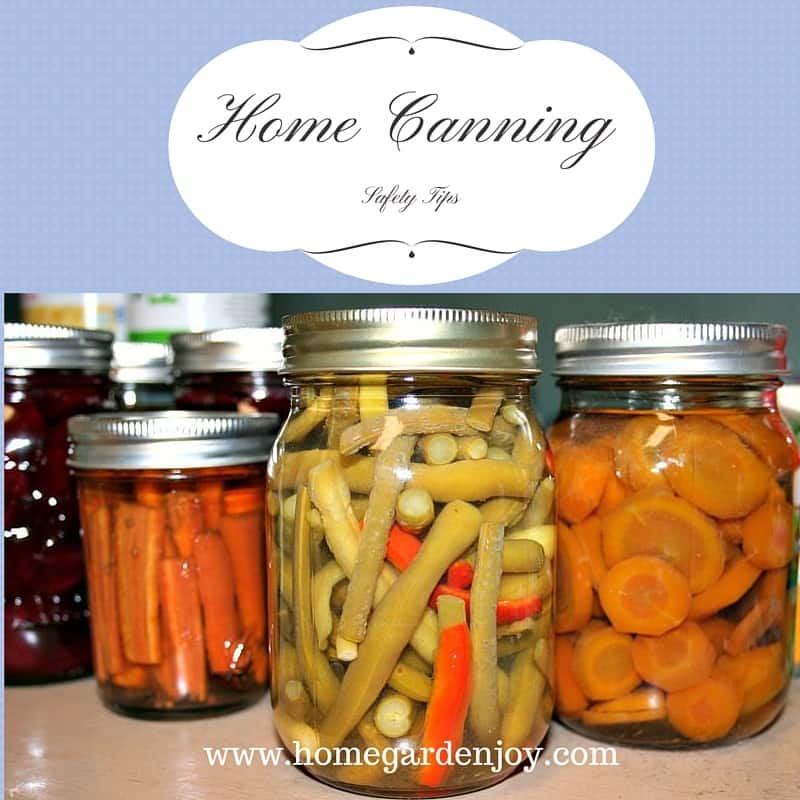
home canning safety tips

Two types of canned carrots: pickled (left) and plain (right).

 

Storing Carrots
Carrots can be frozen or canned following the directions on your pressure canning system. Make sure you use a pressure canning system unless you pickle the carrots; they need the high heat of pressure canning to ensure freshness and prevent spoiling. If you store them fresh, keep them in the refrigerator; they need cool temperatures or else they get rubbery and spoil. I rinse them off outside under the garden hose, cut off the green stems without cutting into the carrot, and store them in plastic bags in the crisper drawer.
–
Here at Seven Oaks, I plant “Nantes Half-Long” carrots which according to the Cooperative Extension Office are great for Virginia’s climate. I agree! Just make sure you use a fresh package of seeds each season. I made the mistake of trying to save a few pennies last year by planting seeds from an open package, and the germination rate was poor. Fresh seeds really do make a difference, and they’re not expensive.
–
For recipes to use carrots, see my previous posts:

  • Carrot Coleslaw
  • Carrot Cake


post signature

Filed Under: Vegetable Gardening

Previous Post: « Plant Profile: Broccoli Rabe
Next Post: Growing Dill Herb »

Reader Interactions

Comments

  1. Romi C

    April 3, 2014 at

    I love carrots! I always make it sure that I have at least two carrots left in my fridge.

    I enjoyed reading your post, and I hope to come back soon and read more about other vegetables.

  2. Gardener on Sherlock Street

    April 3, 2014 at

    Good info. Carrots are the next thing to plant on my list. We’re actually getting a little rain and a little snow right now. Another cold snap is slowing my planting but I’m glad for the moisture. I have a spot in my raised beds just waiting for the carrot seeds.

Trackbacks

  1. How to Grow Great Carrots says:
    August 31, 2015 at

    […] Carrots in the Home Garden […]

Footer

a red knockout rose

June Gardening Tips: Everything You Need to Do in Your Garden This Month

I’m sharing these June gardening tips for gardening zone 7B. However, you can easily adapt them to your gardening zone. June is one of those months that feels like there’s so much to do in the garden you don’t know where to start. Fortunately, nature gives you extra-long days and plenty of sunshine! Whether you…

Read More

watering can with plants

Growing Ginger in the Home Garden

Growing ginger is fun. I was surprised to learn that I could grow ginger in Zone 7B, central Virginia. I attended a lecture by Ann Codrington of Nisani Farms several years ago. She discussed growing both ginger and turmeric. Her farm is in Maryland, but I discovered that both plants can be grown in both…

Read More

borage flower

Companion Planting with Herbs: Your Secret Weapon for a Healthier, Happier Garden

Every summer, without fail, I plant basil at the end of the raised beds. These are the beds filled with Roma tomatoes, the ones we harvest by the bushel to make our salt-free organic tomato sauce. My tomatoes thrive. “Did you know that basil repels aphids?” an organic gardener friend mentioned to me casually one…

Read More

a vintage folk art weather house which accurately predicts the weather

The Folk Art Weather House

I’ve loved this little folk art weather house all my life. It still makes me smile. What gardener doesn’t need to know the weather? I grew up with many German relatives. Thank-you notes were written to “Oncle Ludwig” and “Tante Marie.” During visits to their homes, I was fascinated by the little folk art German…

Read More

  • About
  • Plant a Row for the Hungry
  • Awards
  • Privacy Policy

Let’s Connect!

  • Facebook
  • Instagram
  • Pinterest
  • Substack
  • YouTube

Copyright © 2026 Home Garden Joy on the Foodie Pro Theme