
Growing watermelon in the home garden is not for the faint of heart. I have plenty of room, and it still threatened to take over the garden. You will either need to leave a lot of room for the sprawling vines or look for varieties specifically marked for containers. Growing it on a trellis is possible, but the heavy weight of the fruit requires special support, so I don’t recommend it. Sorry if I am making you sad because you wanted to grow watermelon in your backyard – it is a tricky one to grow!

Watermelon Plant Profile
Botanical Name: Citrullus lanatus
Light Requirements: Requires full sun with at least 8 to 10 hours of direct sunlight daily. Adequate sunlight is essential for fruit development and sweetness.
Space Requirements: Space plants 3 to 5 feet apart in rows 6 to 10 feet apart. Watermelons are vining plants that need plenty of room to sprawl or can be trained vertically on a trellis.
Soil Requirements: Prefers well-draining, sandy loam soil. Optimal soil pH is between 6.0 and 6.8. Enrich soil with compost or aged manure before planting.
Water Requirements: Needs 1 to 2 inches of water per week. Water deeply and infrequently to encourage deep root growth. Avoid overhead watering to reduce the risk of disease. Reduce watering as fruit ripens to enhance sweetness.
Fertilizer Needs: Before planting, apply a balanced fertilizer such as 10-10-10. During early growth, use a nitrogen-rich fertilizer to support vine development. Switch to a fertilizer higher in phosphorus and potassium (e.g., 5-10-10) during flowering and fruiting stages. Fertilize every 3 to 4 weeks or according to soil test recommendations.
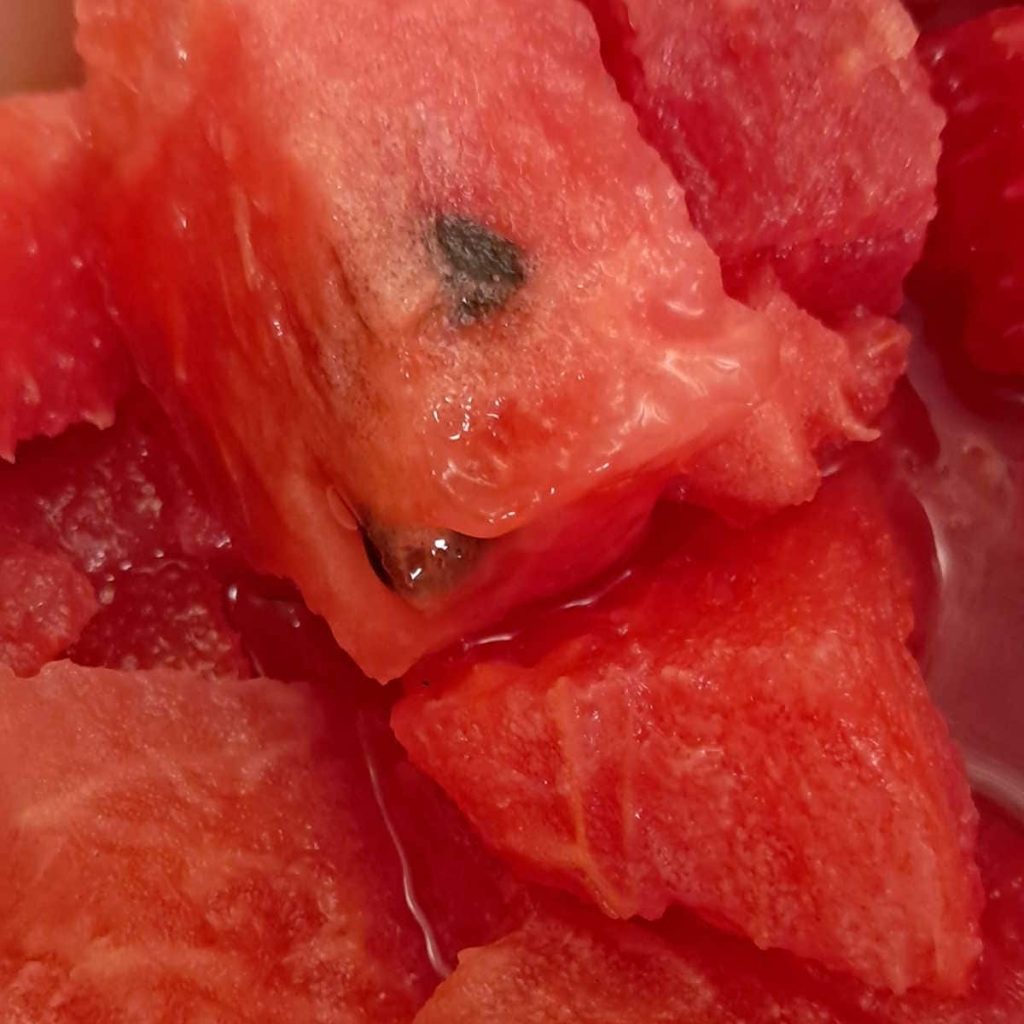
Tips to Grow Amazing Watermelons
I grew watermelon only once here at Seven Oaks Farm, home of Home Garden Joy. It sprawled out in a 12 x 12 raised bed and threatened to overtaken the lawn. Seriously, did Jack have a bean stalk or a watermelon vine? It’s amazing how quickly they grow – and how much water they consume.
Watermelon does indeed live up to its name. Unless you are prepared to irrigate your raised bed and ensure it receives the recommended one to two inches of water per week, it’s best to skip it. It needs plenty of water.
Pollination – Attract Bees
Watermelons rely heavily on bees for pollination, which is essential for fruit development. To support this process, it’s beneficial to plant pollinator-friendly flowers nearby. These blooms attract bees and other beneficial insects, increasing the chances of successful pollination and a healthy harvest. I grow nasturtiums near my plants. The blossoms are edible plus they are pretty and attract bees.
Mulching to Retain Moisture
Applying mulch around watermelon plants helps retain soil moisture, which is crucial during hot summer months. Mulch also suppresses weed growth, reducing competition for nutrients and water while keeping the soil temperature more stable.
When Do You Harvest or Pick Watermelon?
Knowing when to harvest watermelons is key to enjoying their peak flavor. A ripe watermelon typically has a creamy yellow spot on its underside where it rested on the ground. Additionally, the tendril closest to the fruit will dry out and turn brown, signaling that the melon is ready to be picked.
Pests and Diseases that Affect Watermelon
Many pests that affect cantaloupe and squash harm watermelons, too.
Aphids
Aphids are small, soft-bodied insects that can be green, black, or brown. They tend to cluster on the undersides of leaves, where they feed on plant sap. Their feeding causes leaves to curl and yellow, and they secrete a sticky substance called honeydew that attracts ants and can lead to the growth of sooty mold. To control aphids, you can spray them off with water, apply insecticidal soap or neem oil, and encourage natural predators such as ladybugs.
Whiteflies
Whiteflies are tiny, white, winged insects that also feed on the undersides of leaves. Infestations often result in yellowing leaves, stunted plant growth, and a sticky residue similar to that produced by aphids. Effective control methods include using insecticidal soap, neem oil, and introducing beneficial insects like parasitic wasps.
Squash Bugs
I’ve written a lot about squash bugs – probably because I battle them every year.
Squash bugs are brown or gray insects with a shield-like shape. They feed on plant sap, which can cause wilting and damage to the fruit. Their bronze-colored eggs are laid in clusters on the undersides of leaves. To manage squash bugs, handpick the insects and their eggs, use insecticides specifically labeled for squash bugs, and practice crop rotation to reduce their population.
Spider Mites
Spider mites are tiny red or yellow pests that cause stippling and yellowing of leaves. In severe cases, infestations can lead to leaf drop and reduced yields. Control options include neem oil, insecticidal soap, and introducing predatory mites such as Phytoseiulus persimilis.
Thrips
Thrips are slender, tiny insects that feed on flowers and leaves, resulting in scarring and stunted growth. They are also known to spread plant viruses like tomato spotted wilt virus. To control thrips, attract beneficial insects, maintain overall plant health, and use insecticidal soap when necessary.
Diseases that Impact Watermelon Crops
Among common diseases, powdery mildew appears as a white, powdery fungal growth on leaves and stems. It thrives in warm, dry conditions. To manage it, improve air circulation around plants, avoid overhead watering, and apply fungicides if needed.
Downy mildew presents as yellow spots on the upper surfaces of leaves, with gray mold forming underneath. It prefers cool, moist environments. Control measures include planting resistant varieties, rotating crops, and using fungicides.
Anthracnose is a fungal disease that causes dark, sunken lesions on leaves, stems, and fruit. It spreads in warm, wet weather. To control it, remove infected plant debris, rotate crops, and apply appropriate fungicides.
Fusarium wilt is a soil-borne fungal disease that leads to wilting and yellowing of leaves and is often fatal to the plant. The best control methods are using resistant varieties and rotating crops away from cucurbits.
Gummy stem blight causes brown or black lesions on stems and leaves, often accompanied by a gummy exudate. To manage this disease, remove infected plants, avoid overhead watering, and apply fungicides as needed.

Never been all that fond of watermelon, too many pips. I do enjoy the seedless variety but prefer canteloupes and other similar melons.