• Skip to primary navigation
  • Skip to main content
  • Skip to footer
Home Garden Joy
  • Home
  • How to Garden
    • Garden Pests
    • Plant Diseases
    • Raised Bed Gardening
    • Seed Starting
    • Tools & Equipment
  • Plants
    • Plant Profiles
    • Vegetables
    • Fruit
    • Herbs
  • Recipes
    • Canning and Food Preservation
  • Books & Classes
    • Herbalism Classes
    • Books for Christian Herbalists
  • About
    • Privacy Policy

Is Rain Water Better for Plants Than Ground Water?

July 22, 2014 by Jeanne

Is rain water better for plants than ground water? The experts agree…all water is not created equal.

Have you ever noticed how the garden looks better after a rainy day or a good shower during a thunderstorm? I thought it was just my imagination. As I look out my office windows this morning at the flower garden, the plants look greener, perkier. The blooms look more robust. The leaves seem stronger and more upright. No, it has to be my imagination….right?

Is Rain Water Better than Ground Water for Plants

I peer out the back windows down into the vegetable garden and I’m struck by the same thought. The chard looks greener, and I know that’s not my imagination, because I’m picking chard every three or four days for my lunch. The tomatoes are also ripening today; on Sunday, I picked one red tomato that tasted like cardboard. It wasn’t quite ripe yet. There weren’t any other tomatoes even close to ripe on Sunday. Today I counted two that looked promising, with more starting to flush pink and red on their smooth green cheeks. That happened overnight.
My vegetable garden receives plenty of well water through the soaker hoses. So what gives? Yesterday the garden received 7/10th of an inch of rain, according to my trust rain gauge. Is it just more water, or is the quality of the water itself different when it falls from the sky?
As usual, my curiosity was piqued, so I did a little informal online research today. I uncovered the following facts about rainwater versus ground water for the garden:

  • Rain water, especially rain during thunderstorms, contains more nitrogen than ground water. Nitrogen is the first number in a fertilizer listing – 5-10-5, for example, is 5% nitrogen, 10% phosphorous, and 5% potash (potassium).  Nitrogen greens leaves. The first number helps leaves, the middle number boosts flowers, the last number boosts roots. Nitrogen is a macro nutrient that plants need.
  • Ground water doesn’t lack nitrogen, but the soil tends to add various organic salts to the water as it percolates through the soil particles. These salts interfere with a plant’s ability to absorb nitrogen. It’s not that ground water lacks nitrogen, it’s that it contains other chemicals which may hinder a plant’s ability to absorb nitrogen.
  • Thunderstorm rain contains the most nitrogen because of lightning.
  • Other particles in the air from pollution, including nitrogen, descends in the dirt particles attached to rain. These also feed plants!
On the whole, then, rain water IS better for the garden than ground water. It’s not my imagination.  I can’t control rain, and I can only hope and watch the weather forecasts. This summer we actually have too much moisture. Look at my miniature rose, below:
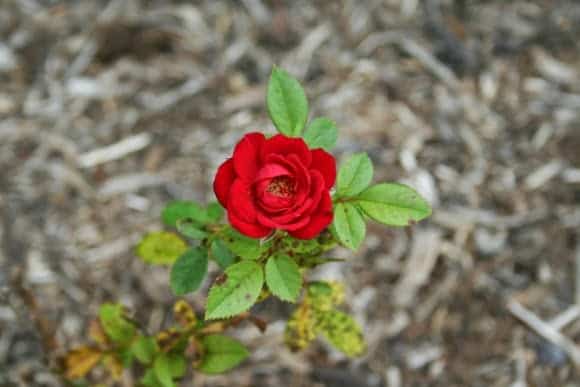
Can you see the yellowed leaves and black spot on the leaves? Black spot is a fungal disease, and all of my roses are typically attacked by black spot during Virginia’s humid summers. However, this year, even the rose relatives like the wild blackberries exhibit black spot, and rust, another fungal disease, appeared on the native sweet bush growing on the forest edges. It’s unusual to see that on wild plants. Most exhibit better disease resistant than the tender hybrids like my miniature tea rose, above.
I’m not complaining, though. The more rain, the better for the garden and for my water well. Rain replenishes the soil and nurtures the plants. Rain, rain go away? Not for a gardener!

Filed Under: How to Garden

Previous Post: « Growing a Lemon Tree from Seeds, the Update
Next Post: Free Online Vegetable Garden Planning Tool »

Reader Interactions

Comments

  1. Gardener on Sherlock Street

    July 23, 2014 at

    Rain is the best! And, when you use city water, you’re likely getting some chlorine. Plus, ground water can have other things. Here it is hard. Let it rain!

  2. Jo

    July 23, 2014 at

    Didn’t know that. I know falling rain produces negative ions which are good for us – not sure about plants.

  3. Karen Jones Gowen

    July 23, 2014 at

    How interesting! I’ve noticed the same thing but never really asked the question. I’m glad you researched it and shared the info.

  4. frank

    November 12, 2017 at

    HI I’m a sustainable landscape designer in Phoenix , Arizona.
    Another reason rain is better because it makes Nitrogen readily available to plants. When Nitrogen in the soil other chemicals present make it more difficult for a plant to access Nitrogen. Rain is best.
    Frank Clemente, Sustainable Landscape Designer

Trackbacks

  1. How to Use a Soaker Hose says:
    September 8, 2015 at

    […] Is Rain Water Better than Ground Water? […]

  2. What Happens When There's Too Much Rain says:
    September 29, 2015 at

    […] Rainwater is better than ground water for plants, as I’ve written before. Research does prove that rain water contains valuable nitrogen, as well as other nutrients essential for plant growth and development. Gardeners do love a good rainstorm, but if we could control the weather the way we can control the valve on our faucets we’d all be a lot happier. […]

  3. Conserving Water in the Garden - Home Garden Joy says:
    October 19, 2018 at

    […] to keep rainwater in the ground near thirsty plant roots, save water for use later, or reduce plants’ needs for […]

Footer

raised bed garden

How to Prepare Raised Beds for Spring Planting

The snow and ice have finally melted. In the mornings when I walk my dog through our farm, I can hear a rooster crowing on a neighboring farm. Cardinals have begun singing in the dawn. It’s spring, folks. And while the calendar reminds me we can still feel winter’s icy breath, spring planting is just…

Read More

two loaves of bread in the oven

Swedish Tea Bread

I first made Swedish tea bread for my 50th birthday. Three of my friends have birthdays in the same month and invited me to their family group birthday celebration (they are all relatives). I shaped the bread into braided rings and decorated it with sliced almonds. It was a hit, and I have made it…

Read More

a shovel with compost on it

How to Start Composting in Winter

Have you thought about starting a compost pile, but you’re wondering how to start composting in winter? I mean, after all, here in Virginia we just had three solid weeks of absolutely tundra-like temperatures. I had a sheet of ice for a lawn, and the raised bed garden was completely covered in a thick layer…

Read More

tomato seedlings

Seed Starting Indoors in February: Best Vegetables for Zones 4–8

February brings a special kind of excitement for gardeners across the northern United States. While snow may still be hanging around, February is the perfect opportunity to get your hands dirty indoors. It gives you an excuse to go to your favorite garden center – you need to stock up on seeds, right? It’s definitely…

Read More

  • About
  • Plant a Row for the Hungry
  • My Books on Amazon
  • Awards
  • Privacy Policy

Let’s Connect!

  • Facebook
  • Instagram
  • Pinterest
  • Threads
  • YouTube

Copyright © 2026 Home Garden Joy on the Foodie Pro Theme