What is rapini? Rapini, also called broccoli rabe, is a cool-weather cruciferous vegetable. Originally grown in Italy, it grows well in most temperate American spring gardens, too.
And it’s delicious!
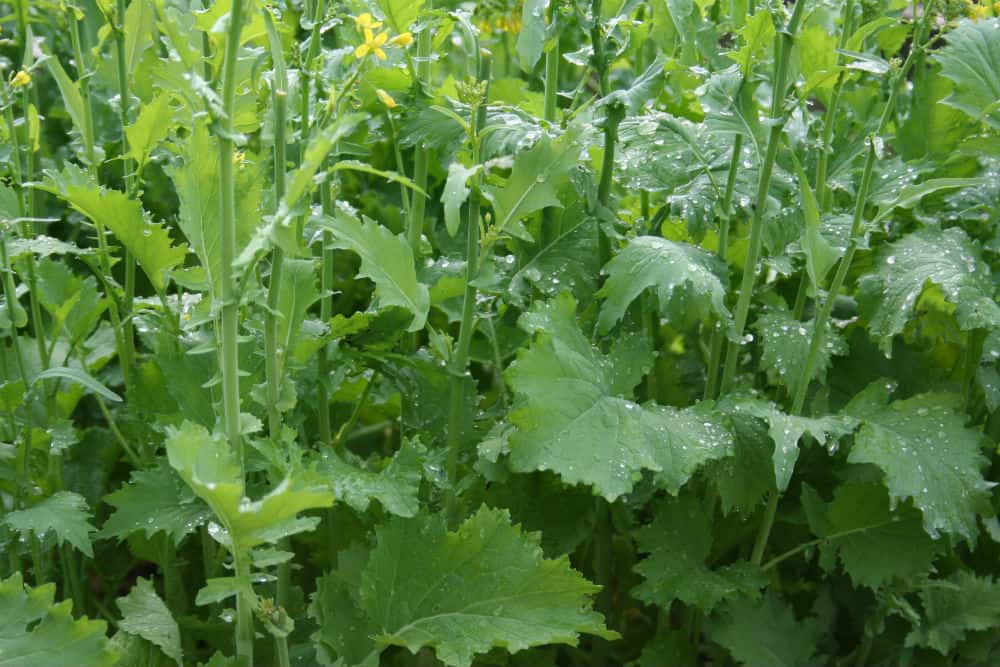
Rapini -Broccoli Rabe, the Surprising Superfood
Rapini, also called broccoli rabe is a vegetable with many aliases. Broccolini, rabe, rapini, broccoli rabe are all names for a leafy green from the mustard family.
It’s more closely related to the turnip than to broccoli, and geneticists and historians confirm that it shares more in common with a far-away turnip ancestor in China than it does to a broccoli plant. Rapini probably came from China and eventually arrived in the Mediterranean.
Rapini Is NOT Broccoli
One thing that’s important to note: broccoli rabe is NOT broccoli!
I’ve seen so many articles online that mix up the two as if they are interchangeable. That’s like saying a potato and an apple are the same things because in French, pomme (apple) and pomme de terre (potato) both include the word pomme.
No. Just – no.
Such different vegetables, broccoli rabe, and broccoli. Both wonderful, healthy, nutritious veggies, but different in their genetics, botanical families, growing habits, and enjoyment in recipes.
Italian Vegetables
Known as cime di rapa in Italy, broccoli rabe is part of the cuisines of southern Italy, Portugal, and southern France.
In the United States, you’ll find it more easily in the grocery stores in New York and New Jersey, where broccoli rabe first entered this country as an immigrant sometime in the early 20th century.
Why New Jersey? New Jersey greeted many Italian immigrants in the 20th century, many from southern Italy. As with any wave of immigrants, they brought with them the recipes they loved and the plants they cherished.
How to Eat Broccoli Rabe
A meal can consist of a plate half-filled with broccoli rabe sauteed in olive oil and garlic, Italian sausage, and a loaf of crusty Italian bread with a glass of red wine. It’s the perfect meal for authentic taste and flavor.
I actually eat it for breakfast! I’ll sautee broccoli rabe with eggs for a meal that’s filling and nutritious.
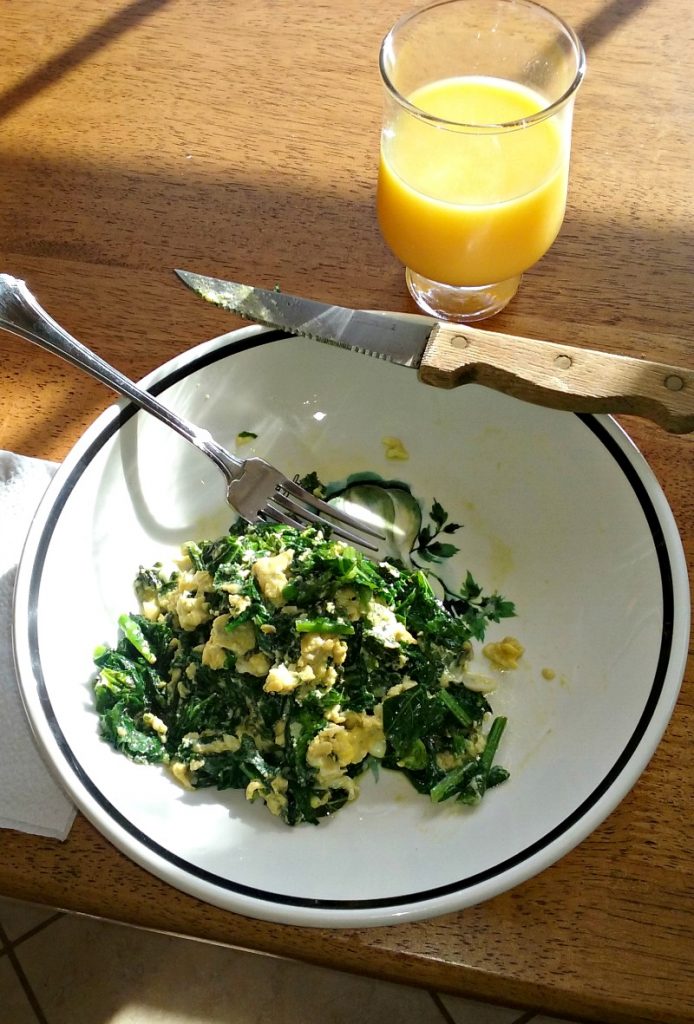
My favorite breakfast – eggs, broccoli rabe and garlic. My husband calls this “Eggs and Weeds”. Recipe coming up!
The Edible Parts of Rapini
Broccoli rabe plants consist of a stem, leaves, and the tiny broccoli-like florets are the tips. The florets open into yellow flower reminiscent of wild mustard and another reminder that the plant is closely related to the mustard family of vegetables.
All aerial parts are edible, but you’ll find that the lower part of the stem on mature plants is tough. Rabe is best enjoyed by stripping or cutting off the lower ends. The thin stems, leaves, and unopened florets can be eaten. Some people strip off the leaves or clip off the stems. If you strip off the leaves, compost the stems.
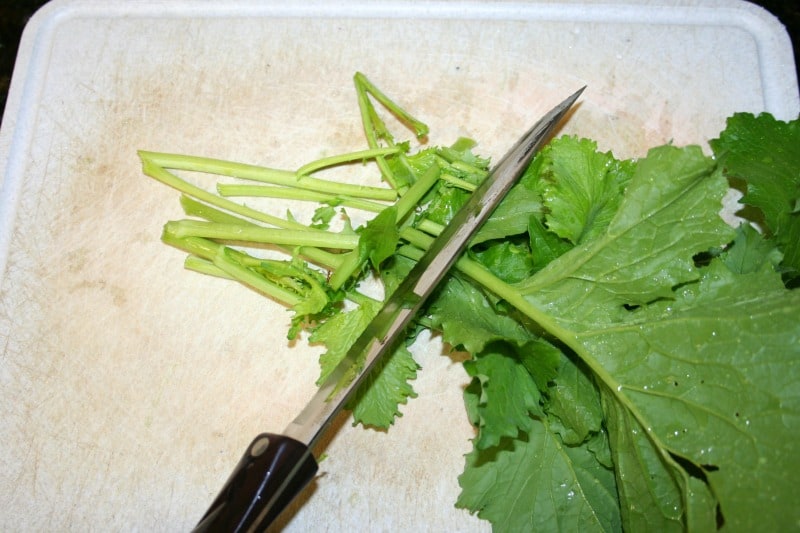
You can eat the stems, leaves and florets, but the lower stems can be tough. Here, I am cutting them off before sauteeing the rest of the edible portion.
Nutrition Information of Rapini or Broccoli Rabe
Everyone talks about kale a superfood. Honestly, broccoli rabe makes kale look like a slacker. Check out the nutrition info on broccoli rabe:
One bunch, cooked (about 1 cup)
Calories: 144
Protein: 16.7 g
Fat: 2.3
- Omega 3 fatty acids: 568 mg
- Omega 6 fatty acids: 87 mg
- Fiber: 12 g
- Vitamins
- A: 396% of your Daily Value (DV)
- C: 270% of your DV
- E: 55% DV
- K: 1398% DV
- Thiamin: 49% DV
- Niacin: 44% DV
- Vitamin B6: 48% DV
- Folate: 78% DV
- Calcium: 52%
- Iron: 31%
- Magnesium: 29%
- Potassium: 43%
- Manganese: 83%
I didn’t include some of the smaller amounts but check out the numbers above. This, my friends, is the true definition of a superfood…one just packed with vitamins, minerals, and protein. For the complete nutrition profile, visit Nutrition Data.
Protein? Surprised? If you’re a vegetarian or a vegan, broccoli rabe provides 16 grams of protein!
Powerful Inflammation Fighter
For those on inflammation-fighting diets, the ratio of omega 3 to omega 6 fatty acids is particularly noteworthy. Omega 3 is in short supply in most modern diets. We tend to eat more processed oils and fats that contain omega 6 than 3, and Omega 3s are the ones that are good for fighting inflammation (that’s the ‘good fat’ in fish oils).
Just be eating one cup of cooked broccoli rabe, you’ve exceeded the 500 mg of Omega 3 fatty acids that many health and nutrition experts recommend.
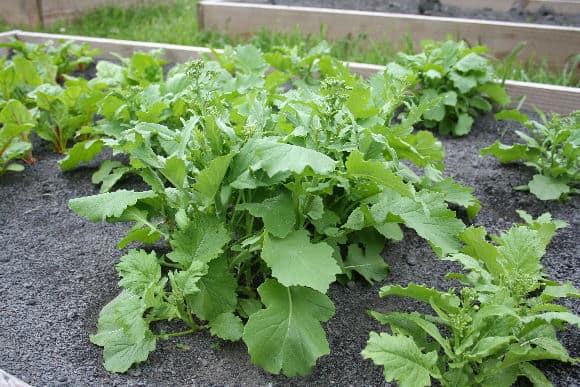
Growing Broccoli Rab
- Light: Broccoli rabe prefers bright, full sunlight.
- Soil: Plant in well-drained garden soil with a pH between 5.5 and 6.5. Amend the soil prior to planting.
- When to Plant: Plant broccoli rabe or rapini from seeds in the early spring as soon as the soil can be worked.
- Seeds: Sow seeds in rows about 10 inches apart. You’ll need to thin the seeds to leave about six inches in between the plants. Cover seeds lightly with soil and water them daily.
- Fertilizer: Not necessary
- Harvest: Harvest when the plants produce the start of little flowers but before the flowers open. The flowers are yellow. If you see them, pick them off to extend the harvest. Broccoli rabe turns bitter once the flowers start blooming so be sure to enjoy it before the bloom!
Broccoli Rabe Recipes
Rustic Italian Broccoli Rabe and Potatoes
Broccoli Rabe and Black Bean Quesadillas
[…] my last post, I shared with you the wonderful nutrition found in broccoli rabe. It’s one of my favorite vegetables and it is very easy to grow here in zone […]