I’ve been on the quiet side lately, blogging about once a week instead of my usual daily blather about all things gardens, gardening, and wildlife. I hope you don’t mind. Work has been busy, but more importantly, I’ve been busy in the garden, in the kitchen, and taking more herbalism classes. And of course, Home Garden Joy received a much-needed facelift! I’ve updated the entire theme of the blog with an eye towards making the text easier to read. I hope you like it.

So what have I been up to in the garden? First, I’ve been gardening more this year than ever before. The trick, as I’ve discovered, is to rise early (I know – I hear you groaning already) and get outside while the sun is still low so that it isn’t blazing hot in the perennial garden. Between the shade of the pine trees on the brow of the hill to the southeast of our home and the shade from the hillside of the garden itself, I can work in relative comfort until around nine a.m. The hours between 7 and 9 are now mine. Most of my marketing clients are on the west coast this year, which gives me a little more breathing room too. I don’t have to be at my desk by 9 a.m. because they aren’t getting to theirs until 11 a.m. Eastern. See how that works out?
Weeding is, of course, the primary gardening task I tackle each summer. This spring, we managed to weed and mulch all but the largest perennial bed. We conquered about half of it before rain, heat, and work took precedence over outdoor chores. By the time I returned to the garden, weeds had grown back over the areas we had previously cleared and mulched. It was time for a touch-up and then I could return to the thick grass growing among the coneflower and rudbeckia.
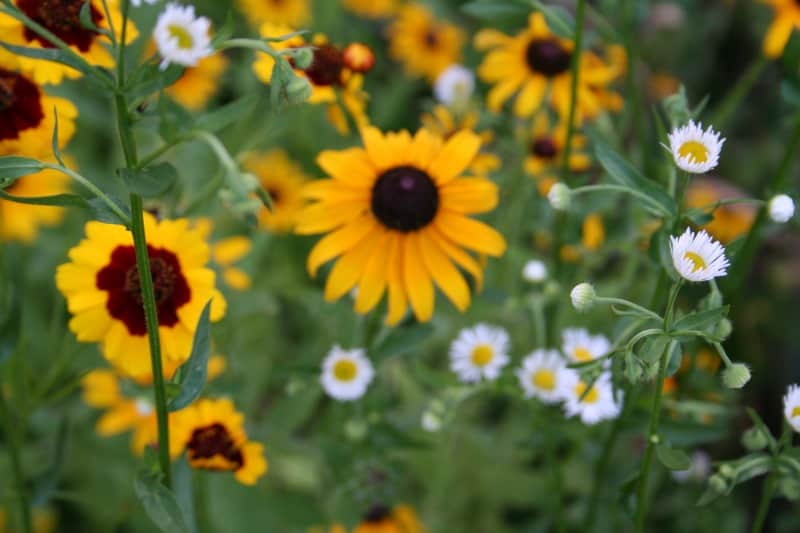
The garden right now looks like a wildflower meadow. Hubby had asked for a manicured English garden, but that’s not possible with our climate, soil, and gardening time. You know those beautiful gardens you see in Pride & Prejudice and old British shows and movies? I love them too. But I live in Virginia with heavy clay soil, heat and drought all summer long, as well as deer and insects eating everything in sight. I need native perennials, and for me, that means prairie and native Virginia flowers. The picture above is a good example. Coreopsis, Rudbeckia, and a daisy-like weed that I keep because it blends in nicely. Well, weeds are native plants, too!
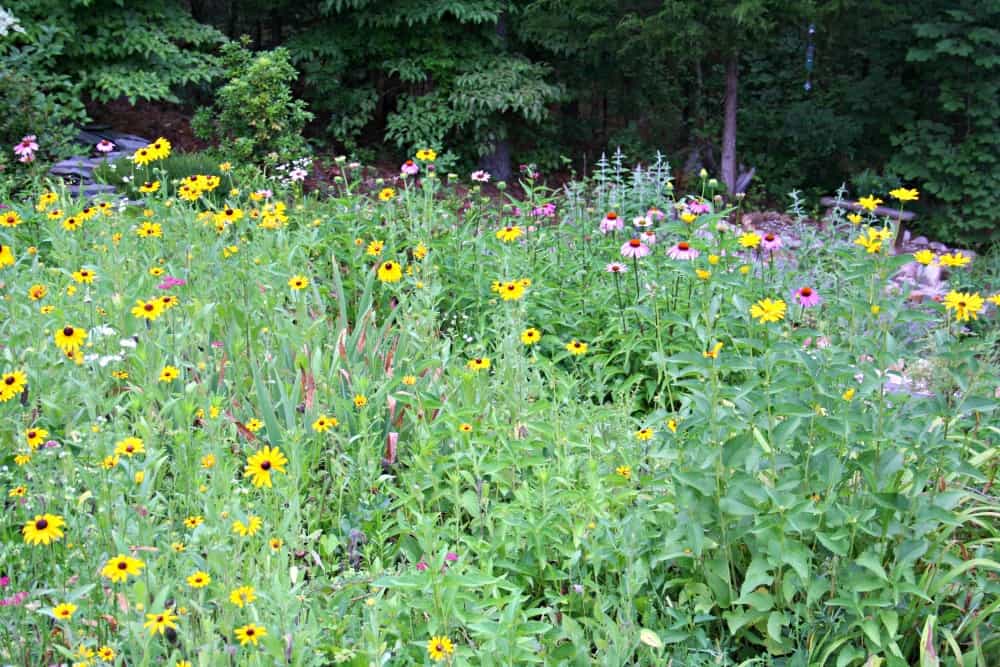
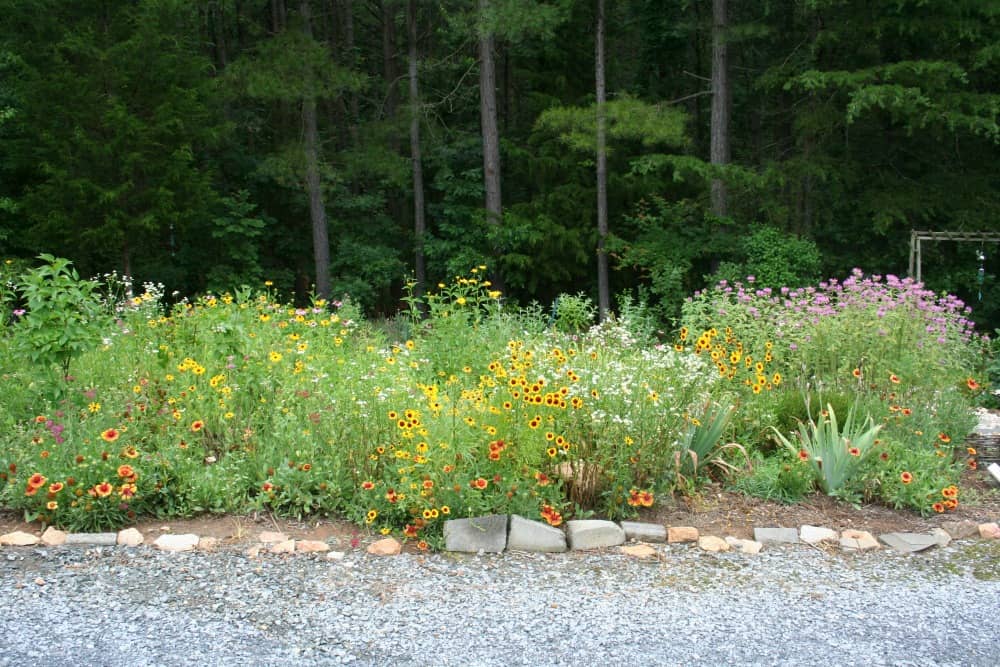
This is the area I’ve been weeding this week. The color scheme in bloom at this time of year is beautiful purple, white, and yellow. Purple coneflower, yarrow, nepeta, salvia, and butterfly bush; white daisies, white coneflower, and butterfly bush; and yellow coreopsis, daisies, daylilies, gaillardia (more orange than yellow).
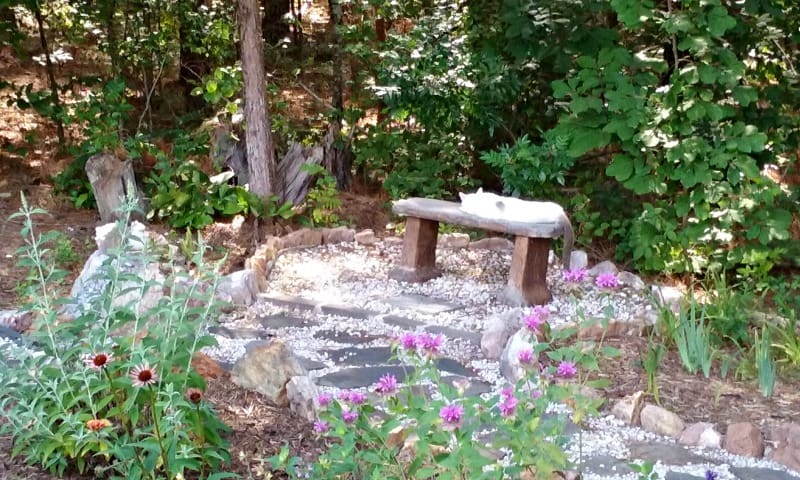
I love sitting on the meditation bench under the trees in the shadiest corner of the garden listening to the wind chimes and the birds, but I don’t get much of a chance to enjoy this spot. Most of the time, the cats beat me to it.
The vegetable garden yielded many greens for spring – plenty of lettuce, broccoli rabe, and beets. We are now harvesting chard and herbs. Herbs such as basil, oregano, lemon balm, applemint, spearmint, savory, dill, and thyme are dried in the dehydrator every Monday. Don’t forget the catnip! Those darn cats have spread seeds (I’m convinced it’s their doing, the six little curmudgeons) throughout the garden to the point that I have catnip growing by the garden shed, on the edge of the compost pile, and IN the compost pile. We have gallons of the stuff dried for their amusement. Cats!
As for the fruit….well, the strawberries yielded a bumper crop this year and are still producing. Hubby was right to switch over the variety of plants from everbearing to June bearing strawberries. The berries are bigger, better, and heavier, and mixed in with the everbearing plants we’ve had enough berries for me to make not one but two batches of jam this spring.
I canned peaches on the 4th of July and there are more on the trees yet to ripen – if the deer don’t get to them first. The darned deer are so bold now that Shadow is too old to chase them out of the property that they are eating fruit right from the trees and meandering so close to the house that they are eating the sunflowers growing under the windows. I wish cats could be trained as guards….they just laze about, eyes cracked to slits, watching the deer with interest. I wonder if they imagine they are lions watching zebra on the plains and wondering how tasty deer meat is. Then I remember: these are my house cats.
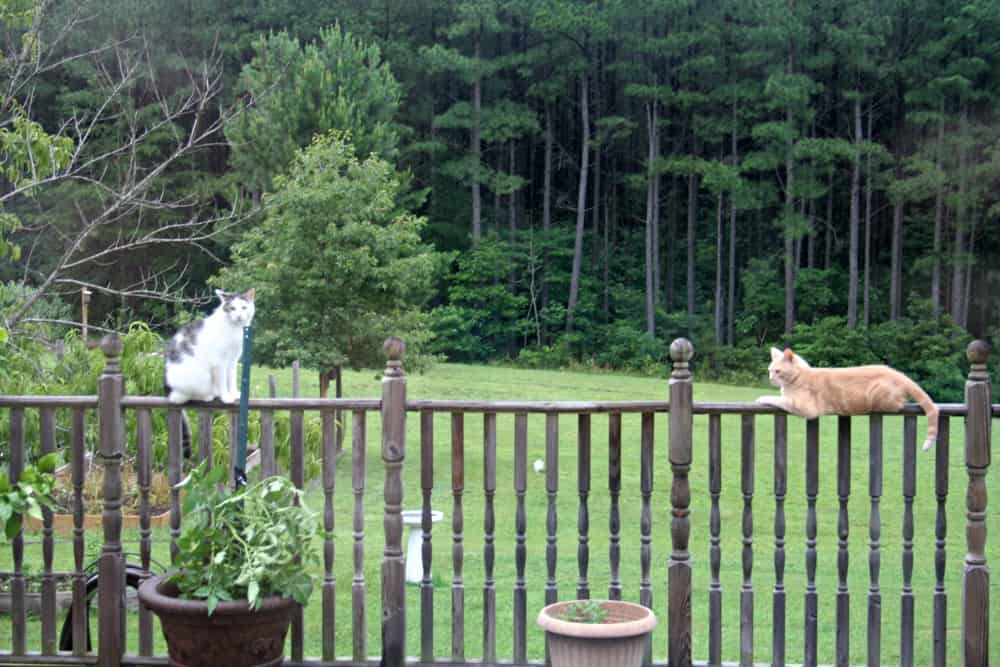
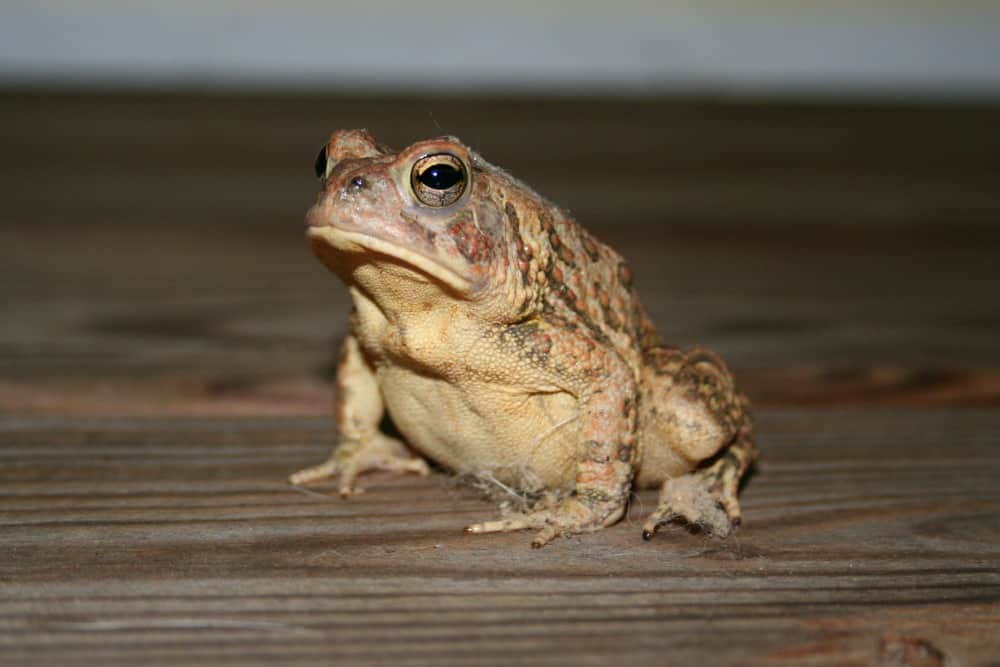
We have seen so much wildlife this year it’s hard to keep track of it all!
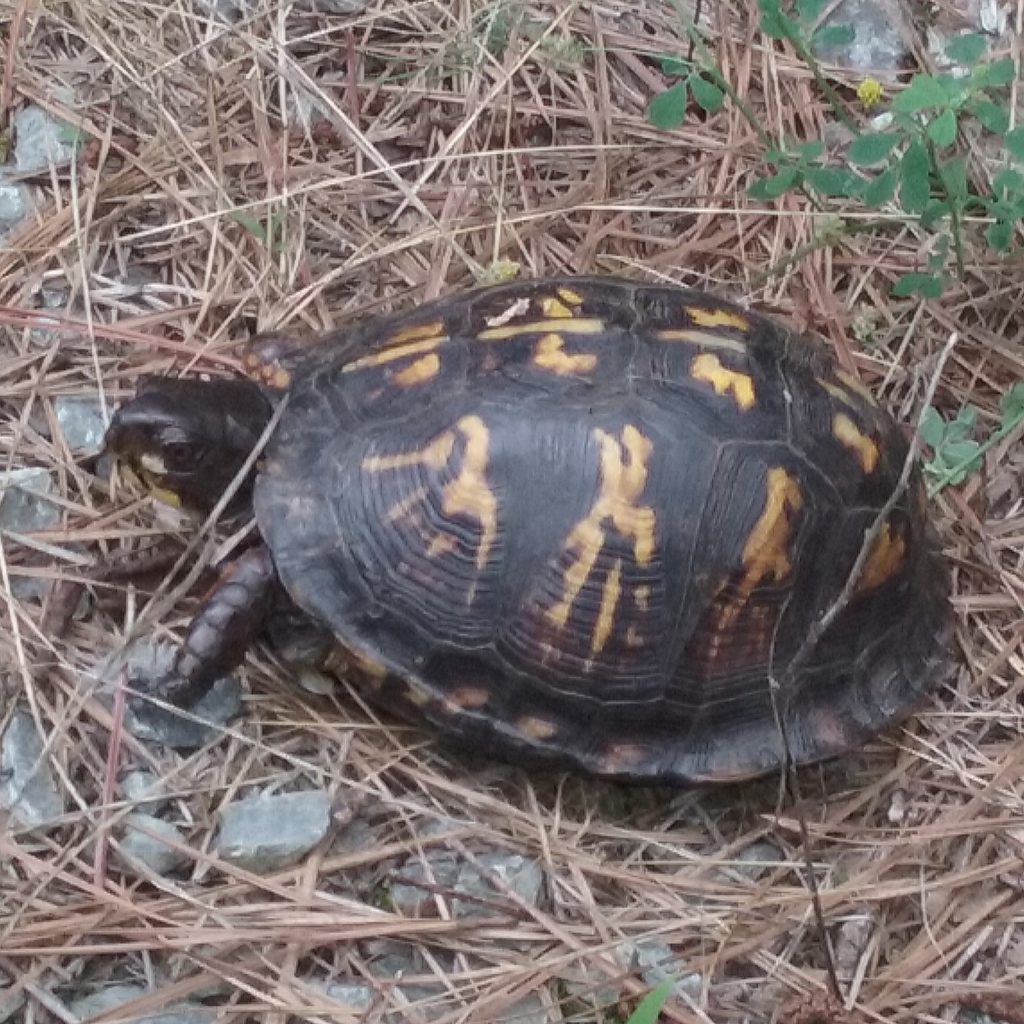
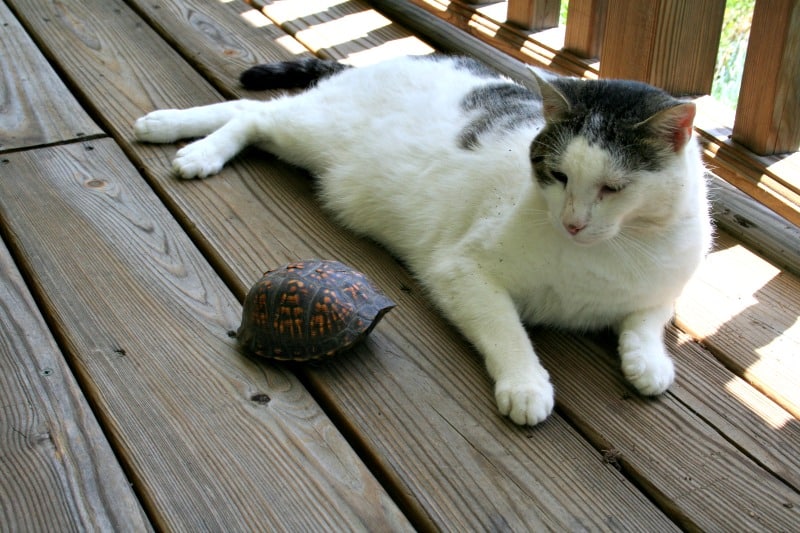
Turtles, including one that Shy Boy befriended….
And of course, butterflies!
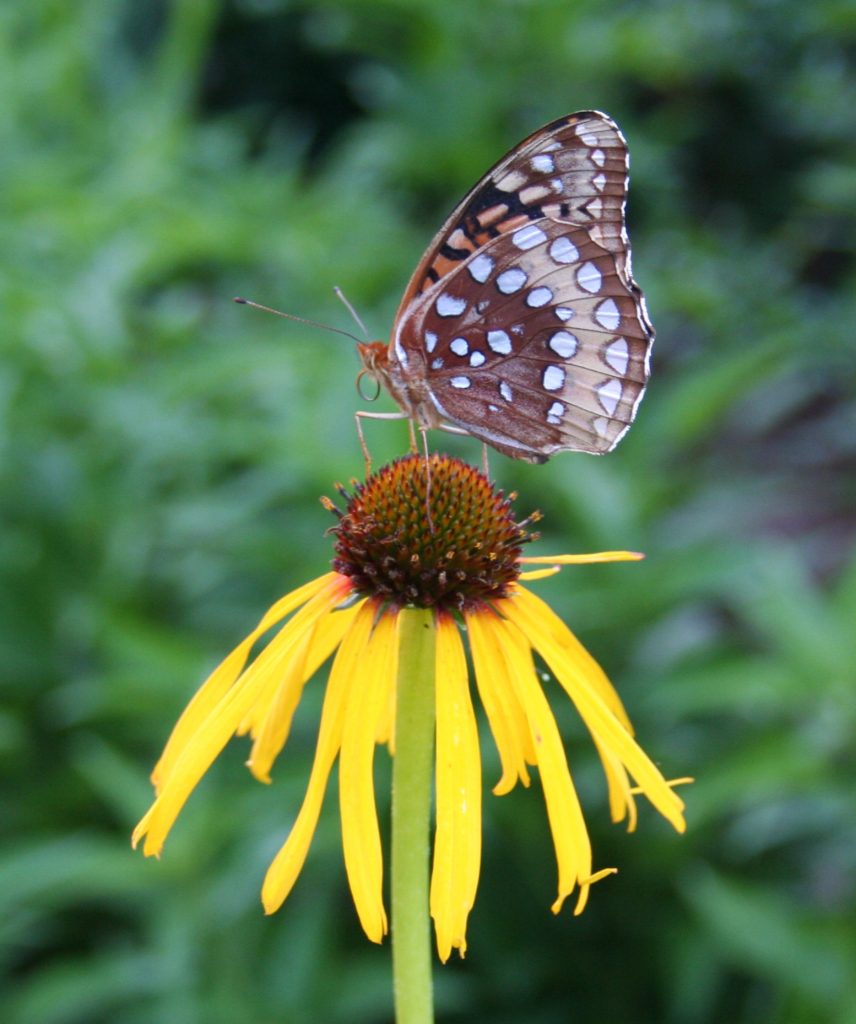
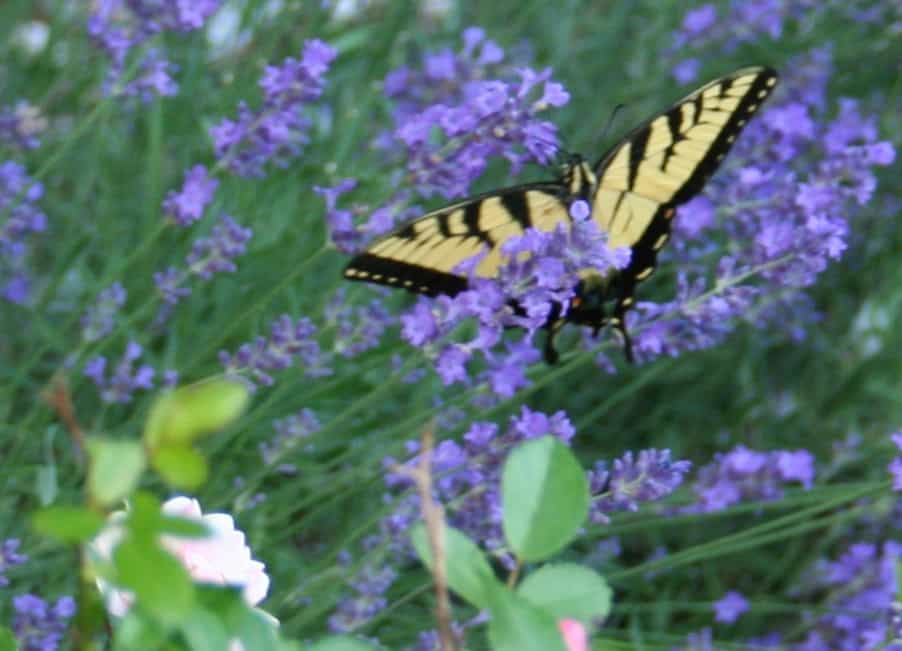
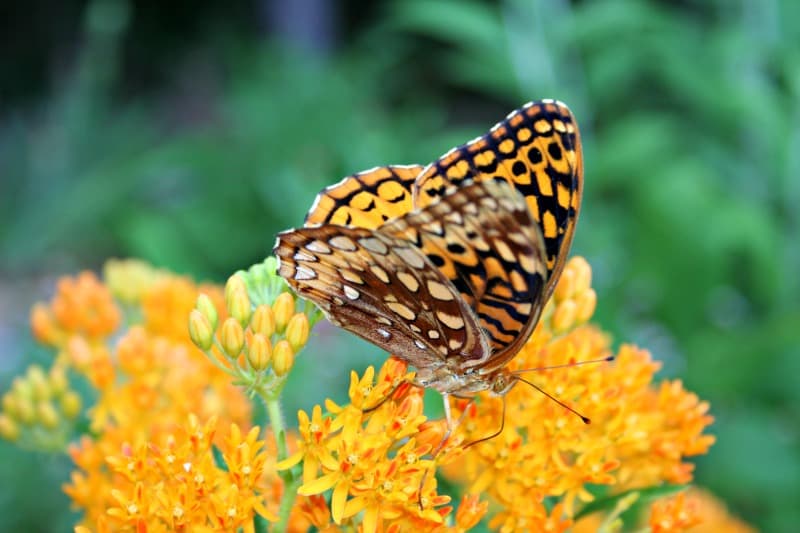
Summer is a wonderful time for the garden. I’m making time to enjoy it more and more, whether I’m outside working or wandering with my camera to capture its beauty. Don’t let the heat spoil your fun, too. Yes, getting up early can be a drag some mornings. But it’s worth it to hear the birds and the tinkle of windchimes before the world awakes.