How did the poinsettia become associated with Christmas?
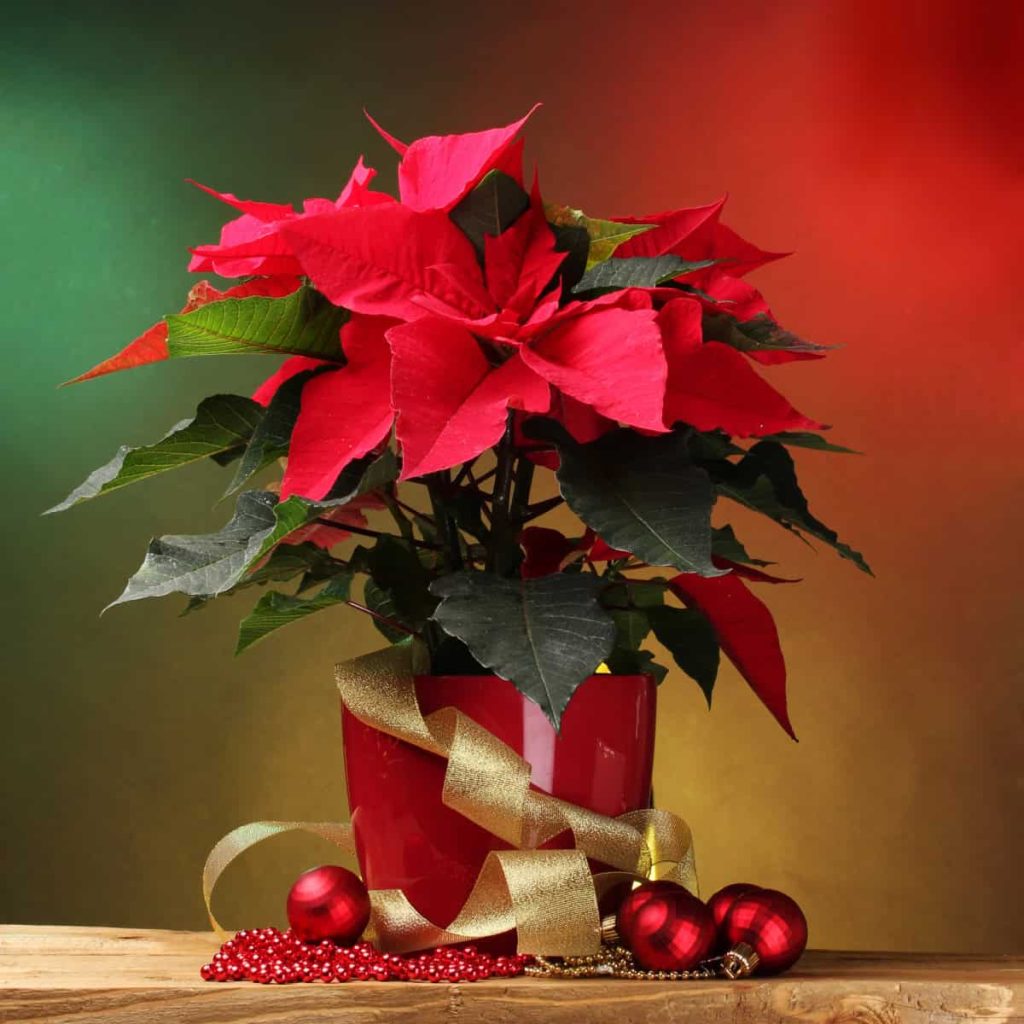
Nothing says Christmas like the poinsettia. Live plants greet you at the door of shopping malls, banks, churches, schools and more. The attractive bushy green plants with large red flowers are the ultimate symbol of Christmas, adorning tablecloths and sweaters, wrapping paper and cards.
The History of the Poinsettia
How did a Mexican roadside weed become the ultimate symbol of Christmas? The story of the poinsettia’s journey from common countryside weed to the symbol of a major Christian holiday is a fascinating tale of legend, science, and marketing that begins in Mexico and ends on The Tonight Show.
The History of the Poinsettia
The poinsettia’s Latin name is Euphorbia pulcherrima, a name meaning “very beautiful.” A German botanist saw the red poinsettia growing through a crack in the greenhouse and said, “That is very beautiful!” leading to its Latin name.
Poinsettia grows wild in Mexico and Central America. The Aztecs called the poinsettia Cuetlaxochitl, and Montezuma, the last Aztec kind, loved poinsettias so much that he’d have them brought into his capital city by carts and carried by workers to adorn his palace.
But the poinsettias that King Montezuma loved looked nothing like those gracing your dining room table today. Wild poinsettias are rather weedy, with a tall, stringy form. The red “flowers” are actually leaves surrounding the very small yellow flowers in the center. Botanists speculate that natural selection helped the plants develop their show colored leaves to attract pollinators because the tiny flowers were easily overlooked by pollinators.
Joel Poinsett introduced the poinsettia from Mexico into the United States in 1825, and today the plant is known in most English-speaking countries as the poinsettia. We pronounce it “POINT settia” but note there’s no T in there….the correct spelling in poinsettia, not pointsettia.
How the Poinsettias Became Associated with Christmas
So how did this weed prized by an Aztec king become a favorite Christmas plant? Mexican legends from the 16th century tell the tale of a girl too poor to bring presents to the child Jesus. An angel appeared to her in a dream and told her to gather weeds from the fields and place them before the church altar. This she did, and much to everyone’s amazement, the weeds “bloomed” into the red “flowered” poinsettia.
How the poinsettia became associated with Christmas is thanks to the Ecke family and their success growing poinsettias commercially. Albert Ecke, a German immigrant, began a poinsettia growing operation in California. Through a secret process, his family transformed the stringy weed-like plant into the bushy plants we know today. He was also able to increase the number of red flowers on each plant.
Over the succeeding generations, the Ecke family changed how poinsettias were shipping, sending cuttings by air instead of fully grown plants by rail, and thus increasing the availability of the plants throughout the United States. Finally, Albert Ecke’s grandson, Paul Ecke Jr, came up with a brilliant marketing ploy in the early days of television. He sent thousands of free plants to the major television stations to use as scenic backdrops.
Viewers saw the plants on television and wanted them. He began appearing on major talk shows demonstrating how to display and care for poinsettias, and people were hooked. We’ve loved them ever since and that’s how the poinsettia became associated with Christmas.
Caring for Christmas Poinsettia
Caring for your Christmas poinsettia plant is relatively simple, although they are difficult to keep in peak shape beyond the holiday season. Use these tips to help your poinsettia stay in tip-top shape and rebloom through the holiday season:
- After you buy your poinsettia at the store, be sure the clerk wraps it carefully. Any exposure to cold – even for just a few minutes as you bring it out to your car – can damage it. Wrap it carefully.
- Once it’s inside, keep it away from hot and cold drafts, radiators and doorways. Rapid changes in temperature can cause your poinsettia to drop its leaves.
- Water the poinsettia when the soil feels dry to the touch, but be sure there’s good drainage holes in its pot and in the foil wrapping if you keep it in a wrapper. They can’t tolerate standing water.
- Keep your poinsettia as a houseplant for as long as you like in a sunny windowsill.
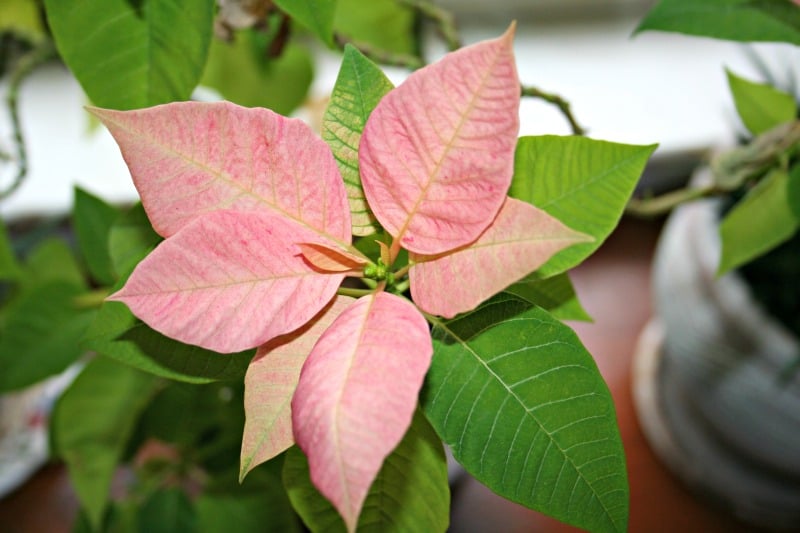
With its lovely leaf-flowers of bright red, orange, peach, cream, white and more, poinsettias make a lovely holiday plant. Like the Christmas cactus, their season is far too short. Enjoy for as long as you like, and have yourself a merry Christmas!
Wonderful article on the Poinsettia or Euphorbia pulcherrima. I remember seeing them growing in San Antonio, TX in outdoor gardens and they do look weedy. Are they truly toxic or is it the latex in the sap, thus animals and people with latex allergies hve a problems with them? We have a native annual weed of the Euphorbia genus that exudes the white milky latex sap when the stems are broken and hence a problem for those affected. This weed is ubiquitous but here in western Washington it is prolific and grows rapidly in the wet winter weather. The leaves of this plant are edible and resemble Watercress and I use them as such. The seeds spring out all over the place when they are ripe.
Thanks, Paul. The latest research is that poinsettia isn’t especially toxic to pets. I don’t know about latex in the sap. Appeciate your comment!
Thanks, Paul. The latest research is that poinsettia isn’t especially toxic to pets. I don’t know about latex in the sap. Appreciate your comment!
I recently wrote and told you about a plant that grows and tastes like watercress. I made a big ERROR. The plant is not in the genus Euphorbia at all, I confused it with another weed that has latex in its sap. That plant is not edible at all. But the one that does taste like watercress is growing like mad now with all the cool rain thatwe get here in western Washington. I can’t eat it all. Sorry for my error.
Sincerely,
Paul Holden