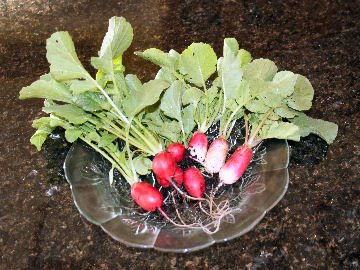
I think every gardener starts with growing radishes. And why not? Radishes germinate readily, grow quickly, and add interest to salads. They’re also great when you have cabin fever after a long winter and you’re dying for something fresh from the garden. And while their spiciness may be an acquired taste, in some cuisines (including my own German heritage) they’re pretty much a staple crop. This plant profile of radishes, along with a little information on how to start radishes from seeds, can help you get growing with this simple, easy to grow vegetable.
You can grow radishes in almost any garden soil, pots, containers, even window boxes. So go ahead…try them!
Plant Profile: Radish
Common Name: Radish
Botanical Name: Raphanus sativus
Light: Radishes grow best in full sun, receiving at least 6 hours of direct sunlight daily. They can tolerate partial shade, especially during warmer weather, but root development may be smaller.
Soil: Plant radishes in loose, well-draining soil rich in organic matter. A soil pH between 6.0 and 7.0 is ideal. Avoid heavy clay soils, which can cause misshapen or stunted roots.
Fertilizer: Radishes are light feeders and usually do not require heavy fertilization. Mix compost into the soil before planting. If needed, apply a balanced, low-nitrogen fertilizer to encourage root growth rather than excessive leafy growth.
Watering Needs: Keep the soil consistently moist but not waterlogged. Radishes generally need about 1 inch of water per week from rainfall or irrigation. Uneven watering can cause roots to become woody, cracked, or overly spicy.
When to Grow: Radishes are cool-season vegetables and grow best in spring and fall. Sow seeds outdoors 4 to 6 weeks before the last spring frost and again in late summer for a fall harvest. In mild winter climates, radishes can also be grown throughout winter.
Radishes grow quickly and are an excellent crop for beginner gardeners. Regular harvesting encourages the best flavor and texture. Leaving roots in the ground too long can make them tough, pithy, or overly spicy.
How to Grow Radishes from Seed
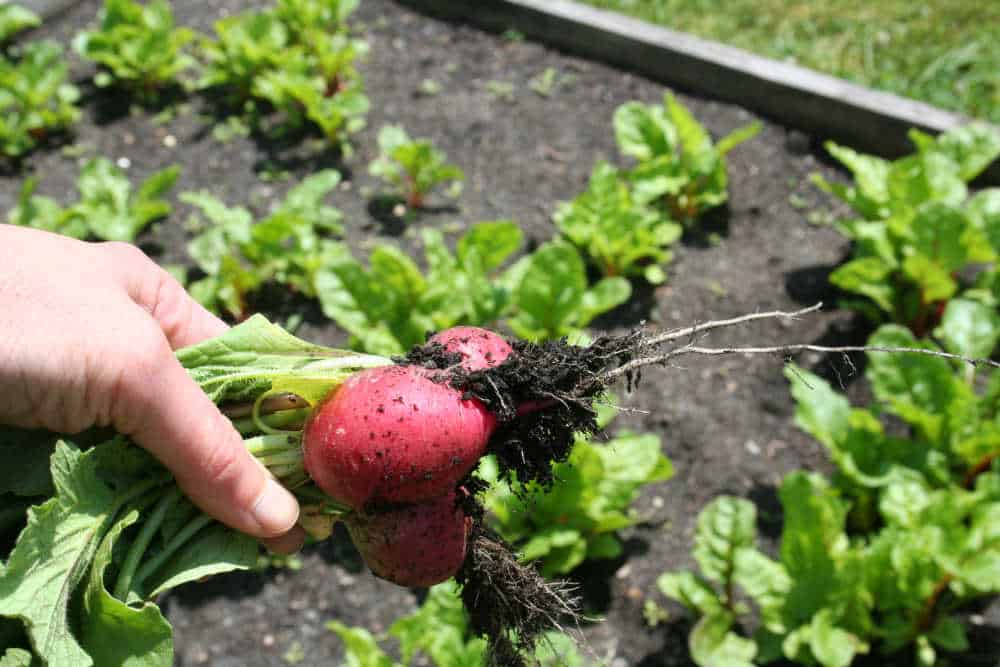
Learning how to grow radishes is easy, making them one of the best vegetables for beginner gardeners. Radishes grow best when seeds are planted directly into the garden, as they do not like being transplanted. Choose a sunny location with loose, well-draining soil and sow the seeds about ½ inch deep, spacing them roughly 1 inch apart. Water gently after planting and keep the soil consistently moist while the seeds germinate.
You’ll usually see seedlings emerge within a week, often in as little as 3 to 7 days. As the young plants grow, thin them to about 2 inches apart to give the roots enough room to develop properly. Continue watering regularly to keep the soil evenly moist, which helps produce crisp, mild-flavored radishes. With the right conditions, most varieties grow quickly and are ready to harvest in just 3 to 6 weeks. Harvesting promptly ensures the roots stay tender and flavorful, as radishes left in the ground too long can become woody or overly spicy.
I think “overly spice” is an understatement. Try hot as firecrackers. Harvest radishes early and often. It’s better to plant a few every two weeks throughout the spring than to plant a lot and end up with a few inedible ones left in the garden!


Leave a Reply
You must be logged in to post a comment.