Growing poinsettia and caring for poinsettia are hot topics at this time of year. ‘Tis the season when many poinsettias are sold…yet few live beyond a few weeks. Worse still, many begin losing those beautiful “flowers” Many homeowners find themselves with a bare, stalky plant and shriveled leaves just in time to wish everyone a Merry Christmas!
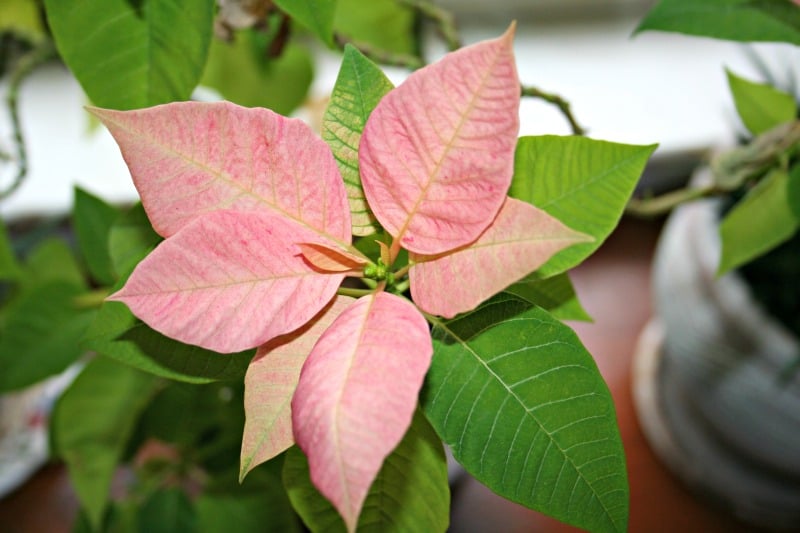
Growing Poinsettia
Poinsettia (Euphorbia pulcherimma) is similar to Christmas cactus in its care requirements. Keeping your poinsettia glowing and healthy throughout the holiday season begins when you purchase it. Make sure that the plant looks perky and healthy when you purchase it. Dead leaves, drooping stems and anything crawling on the plant is no good. Put it back. Step away from the poinsettia. Find another store.
Keep Poinsettia Away from Drafts
Next, when you purchase the plant, make sure the clerk wraps it up carefully before you leave the store. Sudden cold blasts of air, drafts and sudden temperature changes harm poinsettia. Bring it to the car right away and head home after purchasing it. If you’re running multiple errands on one shopping trip, buy the poinsettia last.
Poinsettia Light Requirements
When you get the plant home, make sure it gets the right kind of light. Poinsettia requires as much direct sunlight as you can give them. That’s usually south, east or west-facing window.
Remember how I said poinsettia hate drafts? If you have drafty windows, keep the plant away from the drafts. You may need to juggle your belongings around a bit to find the perfect spot for your poinsettia.
I always cringe when I see big displays of poinsettia in an office building or bank atriums. Every time the doors open, a blast of icy air hits the poor plants. It also misleads the public into thinking poinsettias don’t mind the cold. They do. Building managers don’t care about keeping the plants longer than absolutely necessary and discard them after the holidays or send them back to a toasty greenhouse where they can recover.
Most of us don’t have that luxury, so be sure to care for your plants well by giving them the conditions they want and need for optimal health.
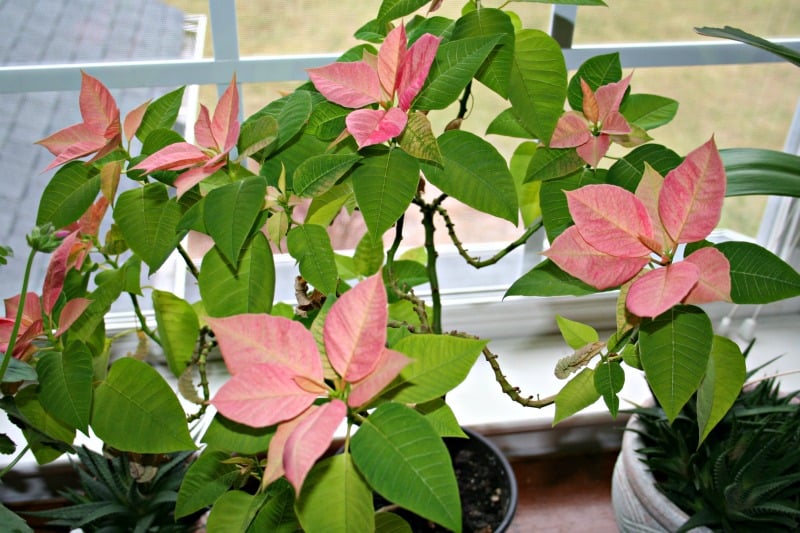
My office poinsettia.
Water Needs for Poinsettia
Lastly, keep your poinsettia well-watered. How do you know when it needs water? Stick your finger into the soil. If it feels dry, it needs water. If it feels wet, it’s okay. Wait to water it. Poinsettia may also need additional humidity; dry indoor air during the winter is rough on all kinds of house plants. To add humidity to the air, place a dish of pebbles under the plant’s pot and add water. As the water evaporates, it will increase the humidity around the plant. Problem solved. You can purchase pebbles or rocks at the garden center.
Getting a Poinsettia to Flower Again
Okay, now on to the bit about the ‘red flowers’ of the poinsettia. Technically, the colorful parts most people call ‘flowers’ on a poinsettia are actually a part of the plant called brachts. The colored brachts of the poinsettia are modified leaves. The true flower is the yellow central part and is properly called cyathia. When the plant is finished dispersing its pollen, it sheds both brachts and leaves.
Tip: when purchasing poinsettia, look for a plant with as little yellow showing in the center as possible. This means that the flowers are still closed. You will have more time to enjoy your plant before the cyathia shed their pollen and the brachts and leaves fall.
Now don’t you feel smart?
Thank you to the Illinois Cooperative Extension Fact Sheet – Poinsettia Facts – for the proper spelling of the scientific words.
[…] Christmas, my friend gave me a lovely poinsettia plant as a gift. I usually don’t keep live poinsettia in the house; they are toxic to dogs and […]