
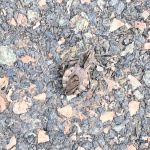
Bagworm moths are part of the Psychidae family of moths and butterflies. They are more easily identified from the unusual and well-hidden cocoon the moths spun themselves on our peach trees.
 |
| The bagworm moth with camo made from pine needles. |
Life Cycle of the Bagworm Moth
The female larvae find a host tree and create the thick bag you see in the picture using twigs, leaves and evergreen needles as camouflage. In the spring, the male moths fly to the females for mating, and the offspring larva emerge from the bag-like structure. The female spins a larger, silky bag to protect her offspring. They emerge in June, according to the Virginia Cooperative Extension website, and begin eating the leaves from the trees. Females remain on the tree or have to crawl to a new host while the males fly off eventually to start the cycle all over again.
Infestations Can Kill Entire Trees
An infestation of bagworm moths can kill the entire tree. Although you don’t see them in action, the larvae emerge each evening from the bag made of pine needles or other leafy material and extend their mouth parts just far out enough to munch on the leaves. They move along the branches, eating and stripping the tree of its leaves. When enough leaves are stripped from the trees, the tree dies because it cannot produce enough food.
Bagworm moths spread by spinning a silken ‘parachute’ and riding the wind to a new host tree. Females become new egg layers; they never turn into moths, but mature to produce more eggs. The males turn into a moth. The only time they feed is when they are in the larval stage.
Vigilance Helps Prevent Problems
I’m grateful for several things. First, that both my husband and I are vigilant. We are observers and love to note and discuss what we see on our walks, or while gardening. We’re always calling attention to unusual insects, wildflowers, animal prints and such. We’re both curious by nature and enjoy researching things too, so researching insects and such is in our nature.
We spotted these bagworm moths on our peach trees and found several on the branches of fruit trees in the orchard. I’ll tell you how I got rid of them (although it’s kind of gross). I put on a pair of rubber gloves and took a large zip-lock plastic bag out to the orchard. I picked the bagworm off of the tree, put it in the zip lock bag, and sent them to meet their maker via the garbage can. In other words, I picked them off, sealed them in a plastic bag, and put them in the trash. Easy, and no pesticides needed.
For more information about the bagworm moth, please see:
Virginia Cooperative Extension
Penn State Cooperative Extension
I have other articles about identifying insects by cocoons and other characteristics.
Identifying Good Bugs from Bad Bugs by Their Cocoons
Oriental Fruit Moth in Peaches
This article was updated on May 10, 2021. The content was revised and rewritten to add new information and remove extra information. Fresh links were also added.


We had a bag worm infestation in our junipers for a few years. My husband got a lot of glee out of squishing them.
They blend in pretty well, I would probably first mistake it as a dead leaf.. Scary!!
-Oscar Valencia