Attracting hummingbirds is easy. It’s not only about feeders – but it’s also about planting the flowers they love.
Attracting Hummingbirds to the Backyard Garden by Growing Flowers They Love
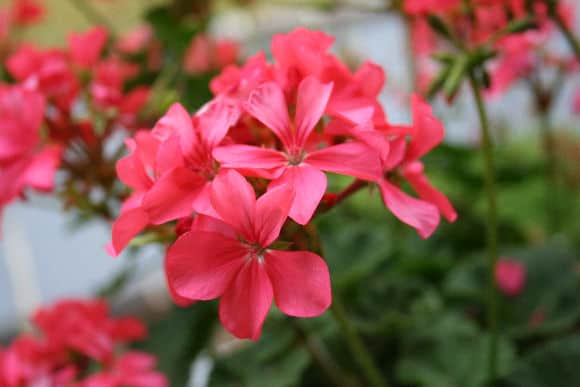
I vividly recall the very first time I glimpsed a hummingbird. I was in the 5th grade and we were sitting around the dinner table. Across from my seat was a window overlooking the driveway of our suburban home, and my dad had hung window boxes under each window and planted them with pink geraniums. The windows were open to the cool offshore summer breezes. As we were eating dinner, a whir and whine zipped by the window. A hummingbird with emerald-green throat hung suspended for an instant, curiously regarding me down the length of his long proboscis. With a zip and a whir, he was off again, but not before I could shout, “Hummingbird!”
Sighting a hummingbird in my Long Island neighborhood was a rare event, but here in the southeastern United States, the cheerful chirrup and whir of the hummingbird greets me every April. Many times as I kneel among the flower bed weeding, a curious hummingbird on his way to the feeder suspended from the morning glory trellis will pause, hovering over me, dip low and zip away after satisfying his curiosity. I have had curious hummingbirds fly to the second story windows and hover, peering in as I sit typing, before they satisfy their curiosity and fly away.
Among all birds, these curious, colorful and friendly visitors to the garden are the most welcome harbingers of spring and summer to come. Let’s explore what attracts hummingbirds to the garden, and plants that will quench their never-ending thirst for nectar in the backyard garden.
Hummingbird Facts
Before sharing how to attract hummingbirds to the garden, let’s look at some fascinating facts about the hummingbird. As I researched my new little friends, I discovered much to my joy and delight that hummingbirds have the largest brains of all birds (when taken as a percent of their total size); in other words, their brains are large in comparison to their size.
Does a large brain equal intelligence? I’m not sure, but this fact alone delighted me and made me wonder at their unusual and often uncanny sense of curiosity. Hummingbirds are also said to recall where their food sources are along their migratory routes. Once they locate palatable plants in your garden or your hummingbird feeder, they will remember it when they return to your area after their winter migration.
More About Hummingbirds
Be sure to use organic gardening methods, as any birds will be affected by heavy chemical or pesticide use.
Hummingbirds are fascinating little creatures. They’re tiny birds with whirring wings that drink nectar from flowers. Hummingbird feeders provide a liquid, sugar infused nectar for the little birds. Each feeder consists of a bottle of some sort with ports shaped like flowers to entice the hummingbirds over for a nip.
Hummingbirds are warm-weather birds and migrate to warmer climates, so place your feeders outside from around April to October (or thereabouts, depending on where you live…northern gardeners can put the feeders out a bit later, while southern gardeners should provide hummingbirds with nectar for a tad bit longer.) Plastic and glass hummingbird feeders are available and while both provide satisfactory feeding stations, I’ve found glass ones a little easier to keep clean.
Cleanliness is the most important aspect of feeding hummingbirds since the sugar-infused nectar tends to generate mold on the feeder and attract various insects, which have a tendency to get into the feeder and drown.
Attracting Hummingbirds with Feeders – Where to Place Feeders
Hang your hummingbird feeder near a porch, deck or window to enjoy the antics of these tiny jewel-like birds. Hummingbirds are naturally curious, sociable birds, and many will come as close as they dare to check out the strange “birds” watching them!
Attracting hummingbirds is easy if you keep feeders filled, but you can also plant flowers to attract hummingbirds.
Flower Gardening to Attract Hummingbirds
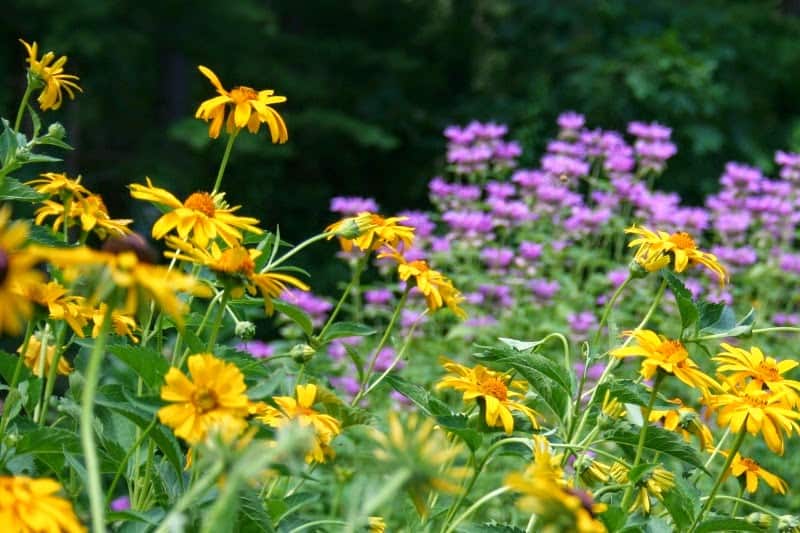
Because hummingbirds have no sense of smell, it is the color and shape alone of flowers that attract them to the garden. Plant flowers in shades of orange, red and yellow; these are the best colors to attract hummingbirds. Look for flowers with long, tubular shapes, which appeal to hummingbirds and tend to produce the nectar they seek.
- Spring blooming flowers that hummingbirds love include azalea, Rose of Sharon and rhododendron, with Rose of Sharon their favorite.
- Summer: lantana , is a favorite annual for both butterflies and hummingbirds; hummingbird vine has long orange tube-shaped flowers, and it can be invasive, but hummingbirds love it. Other flowers they love include petunias, geraniums, and morning glories.
- Autumn: choose autumn-blooming flowers for a last sip of nectar before the hummingbirds take off for their winter quarters in Mexico. Butterfly bushes start blooming in summer and continue through fall; try also Monarda, Cardinal Flower, and others, which although mostly summer bloomers will continue until the first frost.
Between flowers that attract hummingbirds and a nectar feeder filled with sweet sugar water, you’re sure to attract at least a hummingbird or two. Be patient as it may take them several weeks to find your garden. Once they do, continue feeding them and keep their feeder very clean. Be sure to place a chair near the feeders so you can rest and enjoy their antics!
[…] you sit on the bench, you’re looking up at the hillside in bloom, at the sky and the house. Hummingbirds sometimes zoom in for a closer look, and you’re sitting behind the butterfly […]