• Skip to primary navigation
  • Skip to main content
  • Skip to footer
Home Garden Joy
  • Home
  • How to Garden
    • Garden Pests
    • Plant Diseases
    • Raised Bed Gardening
    • Seed Starting
    • Tools & Equipment
  • Plants
    • Plant Profiles
    • Vegetables
    • Fruit
    • Herbs
  • Recipes
    • Canning and Food Preservation
  • Books & Classes
    • Books by Jeanne Grunert
    • Books for Christian Herbalists
    • Herbalism Classes
  • About
    • Privacy Policy

Green as Color in the Garden

June 6, 2012 by Jeanne

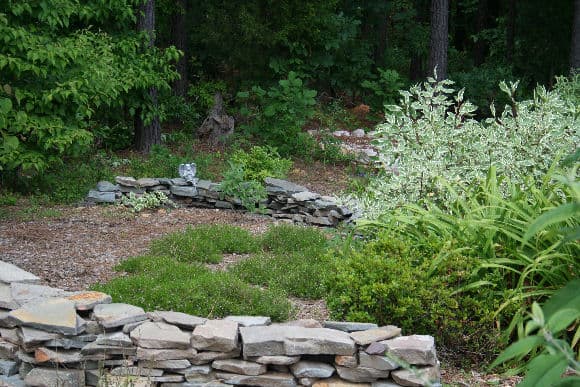
A serene, green corner of the garden.

With all the talk about color palettes and color wheels and coordinating color in the garden, it’s easy to forget that green counts as a color, too. Many garden design books talk about green as a ‘neutral.’  I think of green in the garden the way I think of my favorite pair of black pants.  It goes with everything.  With the thick backdrop of loblolly  pine trees behind the garden, dark green is the backdrop here to the flowers.  And of course all the flowers have green leaves, except the dead plants but I don’t count those.

Yet when you have just green shades in the garden, it can be very soothing.  There’s one corner of the flower garden that now rests in shades of greens and grays.  In early spring, the mounds of phlox growing low on the ground are covered with bright pink blossoms, but by June they are resting and refreshing themselves, growing and spreading out.

The variegated green leaves you see in the right side are from my red twig dogwood.   It does not have flowers, but the leaves offer beautiful color and interest. They are a light green color with plenty of white on them.  The stems and trunk of the red twig dogwood are red – a bright cardinal red. During the winter, when the leaves are gone from the shrub and there’s not much to look at in the garden, it really does provide a beautiful contrast, especially in the snow.

Other greens adding interest include the spiky foliage from the day lilies.  Many of the day lilies are starting to bloom, but I have some thick clumps of what is euphemistically called ditch lilies – the orange tiger lilies that grow wild by the roadside of America – and these have dark green, sword-like foliage which is quite attractive.

Another big swatch of green in the garden is the yarrow. Achillea “Fire King” has spread throughout the sunny perennial garden.  Soon, the clusters or florets will begin blooming, adding a sort of red-purple mistlike haze over the great swaths of lace-like green leaves.  Behind them are the Rudbeckia, the Black Eyed Susan, and various daisies.  While the daisies have begun blooming with cheerful yellow flowers, the daisy and Rudbeckia foliage adds more green.
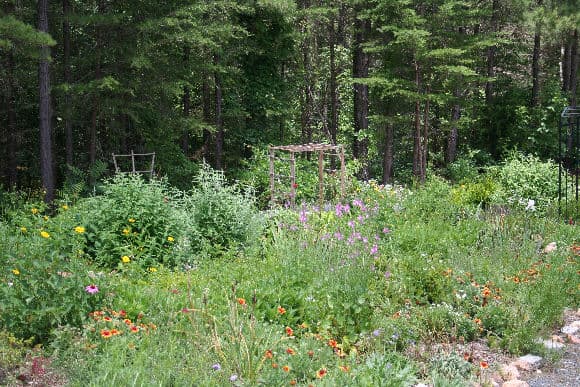
Flower garden, June 2012

The green area offers a peaceful, restful place during the hot summer days. I can look out my office windows at this scene, and although I am looking at it from above and a different perspective than in the photograph, it does offer a serene place for contemplation and retreat when I need a brief respite from work.
Filed Under: How to Garden

Previous Post: « Easy Guide to Growing Gourmet Lettuce and Micro Greens
Next Post: Growing Peach Trees »

Reader Interactions

Comments

  1. Bangchik and Kakdah

    June 7, 2012 at

    what would a garden be without green…..

Footer

a wheelbarrow with bag of soil, trowel, pots and plants

Understanding Fertilizer: A Complete Guide for Home Gardeners

Understanding fertilizer is an important skill for beginning gardeners. In this guide, I’ll walk you through the basics. By the end of this article, you’ll understand fertilizer, what it is and what it does, and how to use it appropriately in the garden. Introduction: Why We Use Fertilizer in the Garden . Plants absorb nutrients…

Read More

red lettuce, mexican tarragon, and chard

The Best Organic Fertilizers

If you’ve been looking for ways to help your garden truly thrive — not just survive — organic fertilizers might just become your new best friend. They’ve become a cornerstone of sustainable gardening and farming, and for good reason: they don’t just feed your plants, they actually improve the health of your soil over time….

Read More

water droplets in sunbeams over a raised bed vegetable garden

Irrigation Tips for Home Gardens: Drip vs. Soaker Hose

Watering is one of the most essential tasks in maintaining a healthy home garden, yet it is also one of the most misunderstood. Many gardeners rely on overhead sprinklers or hand-watering, both of which can waste water and fail to deliver moisture efficiently to plant roots. Two of the most effective alternatives are drip irrigation…

Read More

chive plants in bloom with lettuce

The 10 Easiest Herbs to Grow

Grow them in pots, containers, window boxes, raised beds, or tucked among your flowers. These are the 10 easiest herbs to grow in almost any temperate garden. They take up little space, are generally unfussy, and are used in lots of recipes. What Do I Need to Start an Herb Garden? You don’t need a…

Read More

  • About
  • Plant a Row for the Hungry
  • Awards
  • Privacy Policy

Let’s Connect!

  • Facebook
  • Instagram
  • Pinterest
  • Substack
  • YouTube

Copyright © 2026 Home Garden Joy on the Foodie Pro Theme