Although it’s been so warm outside that I actually have some flowers blooming still – yes, petunias (!), heather, scabiosa and even one gaillardia are still blooming, in December – we’re expecting some colder weather towards the end of the week, and I know that many of my readers live in other states in the United States where winter has actually arrived. I know the feeling of cabin fever quite well; gardener’s cabin fever, a truly unique type of cabin fever in which you gaze longingly at your garden and wish a weed or two would rear its ugly seed head just so you’ve have an excuse to go outside and work the soil a bit. I really do think that gardeners have the toughest time in the winter. Even though most of us, myself included, are grateful for the rest, we also get restless. If I don’t have something growing or flowering around me, I feel like something is missing. That’s why I keep house plants. But I also need the brisk fresh air, the blue skies above, and the warmth of the sun on my face to feel really and truly happy.
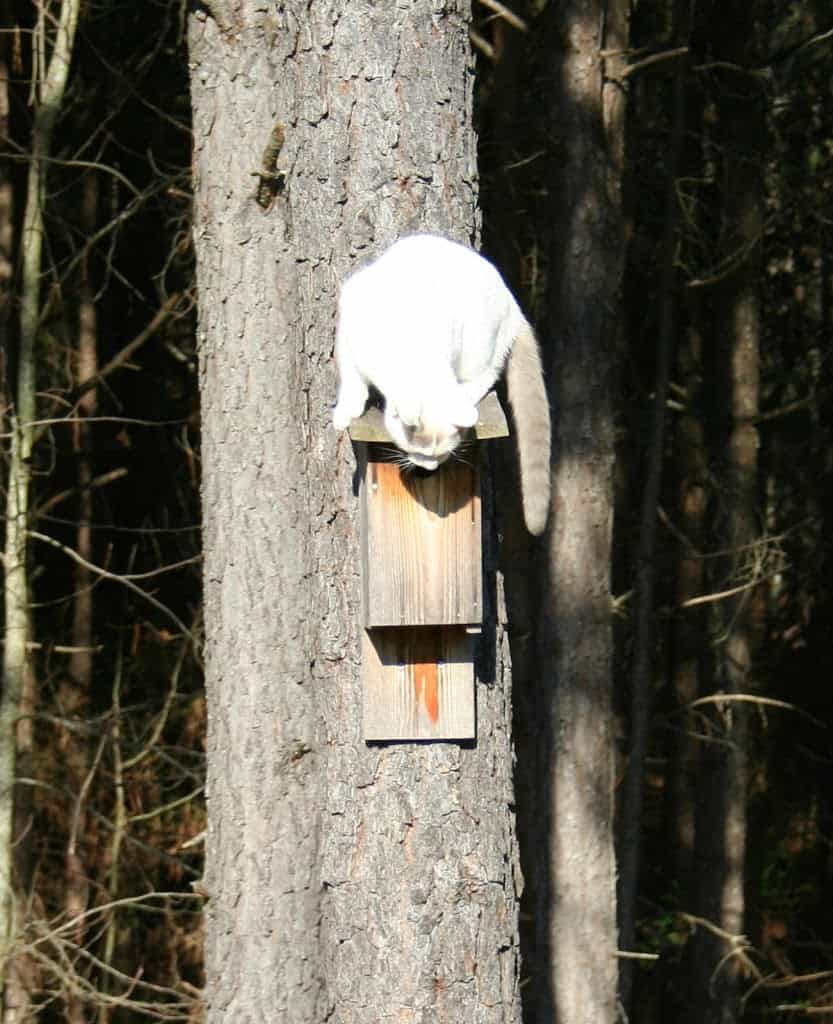 Feeding the birds is my wintertime gardening activity. Now with six cats, five of which go outside daily, I have to be very, very careful. Whitey, one of our outdoor cats, loves birds so much he decided to wait for their return this spring. Sorry to disappoint you, Whitey, but you’ve got a long wait – and he didn’t seem to mind the bit of help we had to give him to get off the bluebird box.
I use tube feeders in the garden and keep them suspended from chains, which discourages the kitties most of the time. They don’t like the swinging sensation of the bird feeders. They will sit and gaze at the birds for the longest time, but the birds are pretty smart, and wait until the cats are distracted by something else before they stop to feed.
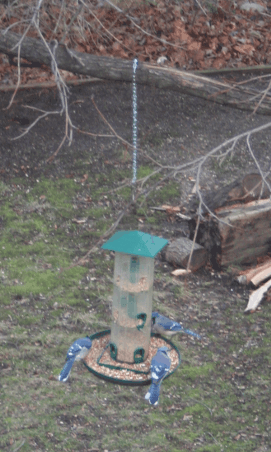 The tube feeders I use are made by a company called Droll Yankee. They are easy to clean and supposedly, the metal used on the little perches doesn’t freeze; it is easier on the bird’s feet. I’m not sure how much of a difference that actually makes, but they are incredibly durable. The smaller feeder was a gift I purchased for my dad back in 1995 when I worked at a garden center and it has withstood almost 15 winters to date without showing a scratch or a bit of rust. The larger feeder is also a Droll Yankee brand feeder; that one and the no-name brand with the turquoise roof, shown here, were picked out of the garbage when I lived on Long Island. The blue roof one had perches missing and the large Droll Yankee feeder was missing the plug in the bottom. I replaced the missing plastic plug with a wine cork, and it worked.
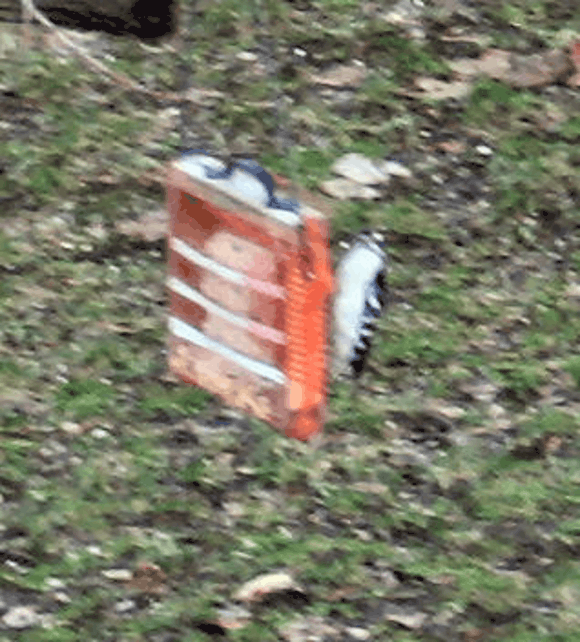 Another type of feeder is a suet feeder. These are small, square boxes with wire mesh on either side. Suet cakes contain fat mixed with seeds, nuts and berries. The entire cake slides into the feeder, which is then hung from a tree. The picture here was taken at my Long Island home many years ago and shows either a flicker or a woodpecker on the suet feeder; hard to identify, because the picture is a bit blurry. Suit feeders attract both kinds of birds, and it is fun to watch them on the feeder. They also tend to attract squirrels. I don’t use them here in Virginia because of bears, squirrels and other wildlife, but I had quite a squirrel problem with my suet feeder back on Long Island. I went through one commercial one that a squirrel chewed through before my husband built a sturdier one of leftover pine and wire.
I do not recommend feeding squirrels. For many, they are cute, furry critters whose antics are amusing, but they are smart pests and will do a lot of damage to your feeders.
Water is often scarce during the winter months. Although you should take in bird baths since the freezing and thawing of the water can crack concrete and resin plastic, a bird bath heater is helpful and provides birds with drinking and bathing water during the cold months. Look for bird bath heaters at your favorite garden center or use the link here, to Amazon.
Around my new home here in Virginia, I see a lot of wonderful birds: gold finches, sparrows, blue birds, cardinals, blue jays, indigo buntings, meadow larks, barn swallows, wild turkeys, turkey vultures, hawks. I hear whippoorwills during the spring and summer; these night birds are loud, but hard to spot, and of course there are the wonderful owls hooting away in the forest at night. My friends have seen bald eagles, America’s national bird, on their riverfront farm, but I have not been so lucky to see them here. The most interesting bird I have seen on our property is quail; a flock of quail visited our driveway, darting from the brush pile on one side of the driveway into the woods on the other side at precisely 3 p.m. for almost a whole week two years ago. I have since seen these shy, difficult to spot brown birds several times in the past few years; I always see them in late December, and they scatter so quickly it is nearly impossible to take a photograph of them. But seeing them always cheers me up; it is like a wonderful winter guest has arrived, and allowed me a glimpse into his life before departing.
I hope you take a moment to feed the birds this winter. You don’t need the most expensive feeder or seed to get started, but at least buy a good bird identification book. I can almost guarantee you that you’ll spot a bird on the feeder one morning and wonder, “What is that?” Having that book handy can forestall plenty of arguments when you insist it’s a phoebe and someone else thinks it’s a sparrow…