Key Takeaways
- The Christmas cactus, often confused with the Thanksgiving cactus, thrives in indirect light and requires a specific care routine.
- These plants come from tropical rainforests and need moisture, humidity, and well-draining soil to flourish.
- Both cacti can live for decades and are easy to propagate, making them ideal houseplants for families to pass down.
- To encourage blooms, provide long, dark nights and cool temperatures starting in early fall.
- Common issues include wilting from over or underwatering and stress from sudden environmental changes.
A Different Kind of Holiday Plant
Every fall, garden centers and grocery stores fill with plants covered in magenta, coral, white, and yellow blooms. Among the poinsettias and amaryllis, the holiday cactus stands out for one reason: it doesn’t have to be a seasonal disposable. With a little understanding, one plant can bloom every year for decades, and many families have specimens that have been passed down through generations.
The name can be misleading, though. Despite the word “cactus,” these plants aren’t from the desert. They come from tropical rainforests, and they want very different conditions from the spiny cacti you’d find in the Southwest. Treat one like a desert plant and you’ll likely end up with limp, yellowing segments. Treat it like a tropical houseplant that happens to store a little water, and it will thrive.
This guide covers everything you need: light, water, soil, temperature, feeding, getting your plant to bloom, repotting, propagation, and troubleshooting.
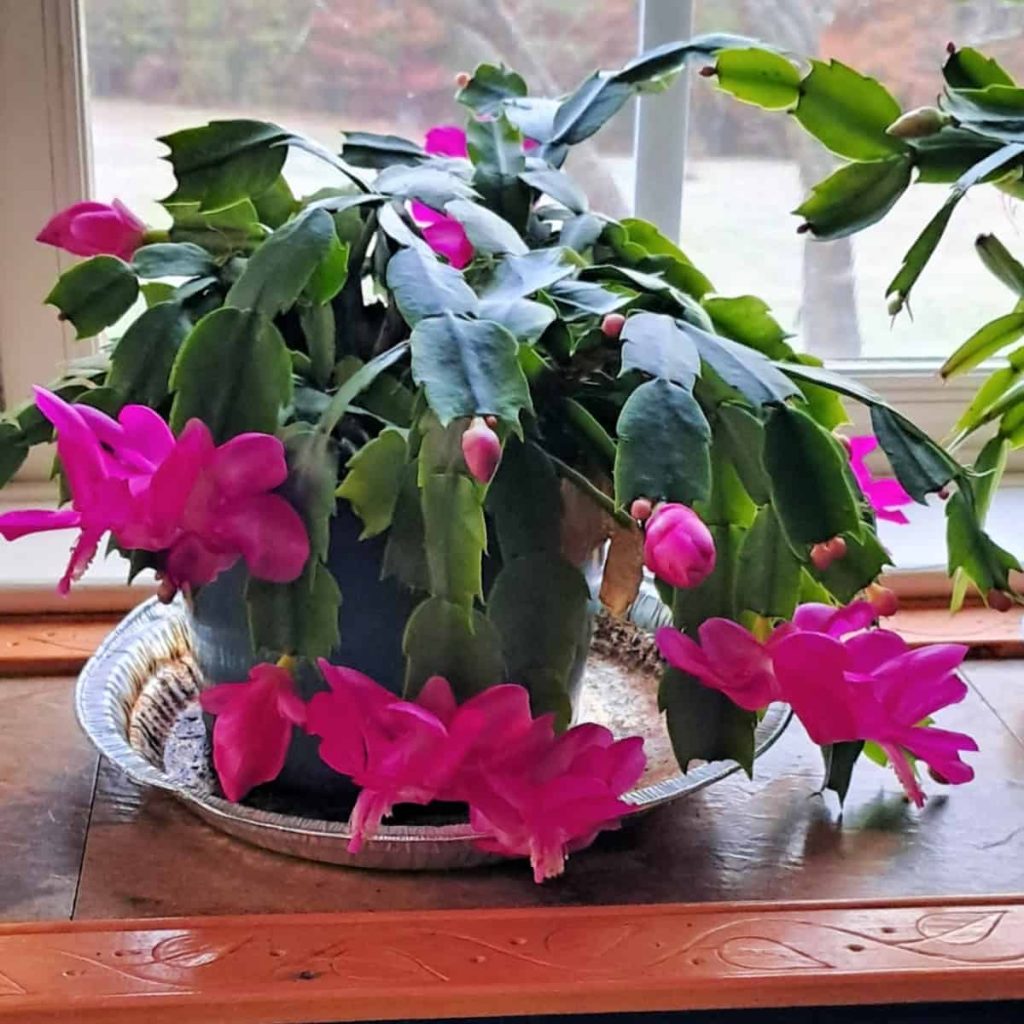
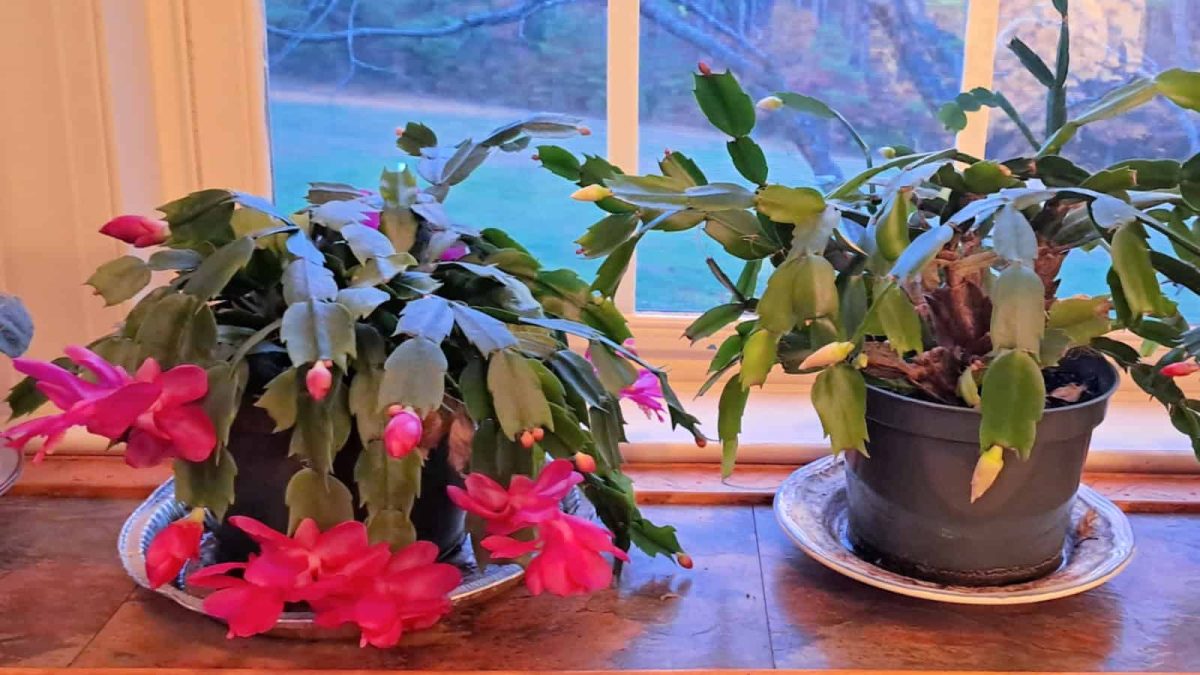
(My pictures with this article are technically photos of Thanksgiving cacti…for the sake of clarity, I may refer to these plants as “Christmas cactus” or “holiday cactus” since everyone mushes the terms together anyway. As a master gardener, I like to be clear, accurate, and precise. As someone who just loves plants, I call them Christmas cactus.)
Thanksgiving Cactus vs. Christmas Cactus
What’s sold as a “Christmas cactus” is very often a Thanksgiving cactus. The two are closely related but are distinct species, and telling them apart is easy once you know what to look for.
Thanksgiving cactus (Schlumbergera truncata)
Look closely at the segments and you’ll see pointed, claw-like projections along the edges that give the plant a slightly serrated look. This is the one that tends to bloom first, from late fall right through Thanksgiving, and its flowers usually stand out horizontally from the stem tips.
Christmas cactus (Schlumbergera × buckleyi)
The segments on this one have softly rounded, scalloped edges with no points at all. It blooms a little later, closer to Christmas, and its flowers tend to hang gracefully downward from the tips of the stems.
The good news is that their care requirements are nearly identical. For simplicity, this article will use the term “holiday cactus” to refer to both Thanksgiving and Christmas cacti.
Understanding the Holiday Cactus
Natural Habitat and Growth Habits
Holiday cacti are native to the coastal mountains of southeastern Brazil. There, they grow as epiphytes, meaning they perch on tree branches and in rocky crevices rather than rooting in deep soil. They draw moisture from the humid air and from rain that runs quickly past their roots, and they live under the filtered light of the forest canopy.
That origin explains almost everything about their care.
In the wild, they’re adapted to filtered light, high humidity, and excellent drainage. Picture dappled sunlight under the forest canopy, damp air, and roots that get a good soaking from a rain shower and then dry out quickly, because they’re exposed to the breeze rather than buried in heavy soil.
This is why treating them like desert cacti, with full sun and long stretches of bone-dry soil, so often leads to problems.
Why Holiday Cacti Make Excellent Houseplants
For starters, these plants live a long time, often for decades, and many families hand them down like heirlooms. They’re also wonderfully easy to propagate, since a single stem segment can become a whole new plant, which makes them perfect for sharing with friends. With the right care they bloom reliably every year, and they’re a friendlier choice for pet owners than many holiday plants. Holiday cacti are generally considered non-toxic to cats and dogs, though a big nibble may still upset a stomach. That puts them well ahead of poinsettias, lilies, or mistletoe.
Light Requirements
Providing the Right Amount of Light
Holiday cacti do best in bright, indirect light. Think of the dappled light beneath a tree canopy.
An east-facing window is often the ideal spot, because it offers gentle morning sun that isn’t too intense. South- or west-facing windows can work too, but the afternoon sun may be too strong, so filter it with a sheer curtain or set the plant a few feet back from the glass. A north-facing window is usually too dim for strong growth and flowering, though it can work if the room is very bright.
Signs of Too Much Light
If your plant is getting too much sun, the segments may look pale, yellowish, or bleached. You might also notice red or purple tinges, especially along the edges, which is a stress response. Wrinkling, or tan, crispy, scorched patches, means the plant has been sunburned by direct light that was simply too strong.
Signs of Too Little Light
Too little light shows up as sparse, leggy growth with long gaps between segments. The plant may fail to produce flower buds at all, or it may simply bloom less than it did in previous years.
Seasonal Light Adjustments
Daylight changes dramatically through the year, and a spot that’s perfect in summer may be too dim in winter or too harsh in spring. Reassess your plant’s location with the seasons. If your home doesn’t get enough natural light in winter, a full-spectrum LED grow light placed above the plant for several hours a day can help keep growth healthy. Just be careful not to extend the light too late into the evening during bud-setting season (more on that below).
Watering Your Holiday Cactus
How Often to Water
The goal is soil that is evenly moist but never soggy.
Start by poking a finger into the soil and waiting until the top inch is slightly dry. Then water thoroughly, until the excess flows out of the drainage holes, and empty the saucer so the pot never sits in standing water.
There’s no fixed schedule. Depending on your home, pot size, and the season, that might mean every week or every two weeks.
Avoiding Overwatering
Overwatering is the most common way holiday cacti are killed. Constantly wet soil suffocates the fine roots and invites root rot.
Watch for yellowing segments, soft or mushy stems (especially near the base), and segments dropping off the plant.
Avoiding Underwatering
Because they aren’t true desert plants, holiday cacti also suffer when left dry for too long.
Drought stress shows up as wrinkled, shriveled segments, drooping or limp growth, and reduced flowering.
If the plant is only mildly wilted from dryness, a thorough watering usually revives it within a day or two.
Seasonal Watering Changes
During active growth in spring and summer, water regularly and keep the soil lightly moist. When fall and winter flowering arrives, keep the moisture consistent, and don’t let the plant dry out completely once buds appear. After blooming, the plant enters a resting period, so cut back on watering slightly and let the soil dry a bit more between drinks while it recovers.
Choosing the Best Soil and Pot
Ideal Soil Mix
Because these are epiphytes, they need a mix that drains quickly but still holds a little moisture. Plain potting soil is usually too dense, and straight cactus mix can be too gritty and dry out too fast.
One good option is regular cactus mix amended with orchid bark, roughly two parts cactus mix to one part bark. Another is a blend of peat or coco coir, perlite, and bark, which is airy and holds just enough moisture.
Importance of Drainage
Drainage holes are essential. Without them, water collects at the bottom of the pot, roots rot, and the problem is often invisible until it is advanced. If you love a decorative container with no holes, use it as a cachepot: keep the plant in a plastic nursery pot with drainage and set it inside the decorative one, removing it for watering and letting it drain fully before returning it.
Selecting the Right Pot
Plastic pots hold moisture longer, which suits many homes with dry indoor air. Terracotta breathes and dries faster, which is helpful if you tend to overwater, though you may need to water more often. Holiday cacti bloom well when their roots are a bit snug, so don’t worry about a slightly root-bound plant.
What you do want to avoid is an oversized container, because the extra soil stays wet for too long. Choose a pot that is only an inch or two wider than the root ball.
Temperature and Humidity
Preferred Temperature Range
Holiday cacti are comfortable in the temperatures most people keep their homes at, roughly 60 to 70°F (15 to 21°C). They tolerate normal household conditions well, though they prefer to avoid extremes of heat or cold.
Humidity Requirements
Having come from the rainforest, they appreciate moderate humidity. Average household humidity is usually acceptable, but if your air is very dry, especially in winter with the heat running, a little help goes a long way.
A humidifier near the plant is the easiest fix. You can also make a pebble tray: a shallow tray of pebbles with water just below the top of the stones, with the pot resting above the waterline. Grouping several plants together creates a slightly more humid microclimate, too.
Protecting from Temperature Extremes
Keep your plant away from a few common troublemakers. Drafty windows and exterior doors are the first culprits, followed by heating vents, radiators, and fireplaces. Sudden temperature swings are a common cause of bud and segment drop, so aim for a steady spot. My holiday cacti are in the plant room, on the windowsill, but I don’t open the window nearest to them. They like steady growing conditions, including steady water and temperature.
Fertilizing for Healthy Growth
When to Fertilize
Feed during the active growing season in spring and summer. As fall approaches, reduce or stop fertilizing so the plant can shift its energy toward setting buds rather than producing new growth. Resume feeding lightly once flowering is over and new growth begins. I use a liquid house plant food, added to my watering can, once per month. It seems to do the trick!
Recommended Fertilizers
A balanced, water-soluble houseplant fertilizer works well. Dilute it to half strength and apply it every two to four weeks during the growing season. These are light feeders, and more is definitely not better. I just add it once a month.
Signs of Nutrient Deficiencies
Nutrient hunger tends to show up as pale or washed-out growth, weak and thin stems, and poor flowering. If you see these signs even with regular feeding, make sure the real issue isn’t overwatering or poor light, which can mimic nutrient problems.
Encouraging Holiday Blooms
Understanding Bloom Triggers
In nature, holiday cacti set buds in response to shorter days and cooler nights. Indoors, your plant is following the same internal calendar, and you can encourage it by mimicking those conditions. Thanksgiving cactus is a bit more sensitive to day length, while Christmas cactus responds to both cool temperatures and short days, but the same approach works for both.
You can work with the natural light in your home or trick them into blooming. My dad used a timer with artificial plant lights to trick his into blooming for Christmas. We always had a huge display of them just in time for the holidays. Today, I let the natural light encourage them to bloom, and I usually have good blooms in time for Thanksgiving.
How to Get Christmas Cactus to Bloom
It’s a trick of light. Here’s how to encourage them to bloom for the holidays.
Light management
Starting in early to mid fall, give your plant 12 to 14 hours of uninterrupted darkness every night. “Uninterrupted” is the key word, since even a brief flick of a lamp can disrupt the process. Put the plant in a room that isn’t used in the evening, or cover it with a box or opaque cloth overnight. Keep this up for roughly four to six weeks, until buds appear, and give the plant bright, indirect light during the day.
Temperature management
Cooler nights help considerably, so aim for about 50 to 55°F (10 to 13°C) at night during bud formation. Cool temperatures can partly stand in for the darkness treatment, so a naturally cool room, like an unheated porch or a spare bedroom, may be all you need. Just don’t let the temperature drop below about 45°F (7°C), and bring the plant inside well before frost.
Common Reasons a Holiday Cactus Won’t Bloom
The most common culprit is light at night, from lamps, TVs, streetlights, or a hallway light. Too much fertilizer, especially nitrogen-heavy feeding in late summer and fall, pushes leafy growth instead of flowers. Warm temperatures can keep buds from forming, and frequent relocation stresses the plant and can cause buds to drop. It’s also possible the plant simply didn’t get enough light during the growing season.
My plant room is dark after hours. The television is on the other side of the house, and there are no street lights visible. It’s the perfect environment to encourage bud formation, and it works for me.
Caring for Your Plant During Bloom
What to Expect During Flowering
Tiny buds appear at the tips of the segments and slowly swell over several weeks. Once they begin to open, the plant typically stays in bloom for several weeks, and often rebloom lightly afterward. The main show usually lasts a month or more, with new flowers opening in sequence.
Preventing Bud Drop
Bud drop is the most common frustration at this stage, and it’s almost always caused by stress. At least, that’s what my research indicates. My own plants are coddled in the best environment I can give them, and I still get bud drop. It happens.
Here’s what the experts say: Once buds form, pick a spot and leave the plant there, avoiding sudden moves and unnecessary rotating. Keep watering consistent, neither letting the plant dry out completely nor keeping it soggy, and protect it from temperature shocks like drafts, heating vents, or cold windows.
If you buy a plant in bud from a store, expect some bud drop while it adjusts to your home. That’s normal. They really don’t like the change from greenhouse to store to your home, but they do recover.
Extending the Flower Display
Blooms last longest when the plant is kept in bright, indirect light, in a cool room (around 60 to 65°F) with steady moisture. A slightly cooler spot can noticeably extend the life of each flower. Avoid hot, dry spots near vents.
Post-Bloom Care
The Importance of a Rest Period
When flowering ends, your plant has spent a lot of energy and needs time to recover. Water a little less, letting the soil dry more between waterings, and hold off on fertilizer. Keep the plant in a cool, bright spot while it catches its breath. This gentle rest period sets the stage for healthy spring growth.
Pruning and Shaping
Pruning encourages branching, which means more tips and therefore more flowers next year. The best timing is after flowering and the rest period, typically late winter or early spring. Hold the stem and gently twist off one to two segments from the ends of the branches. Clean cuts with sterilized scissors also work, but twisting is the traditional method, and each pruned stem usually sends out two or more new branches. You can also remove damaged segments at any time, including any that are shriveled, mushy, or diseased.
The pruned segments can be used as cuttings (see below). And then you have more. Who doesn’t want more?!
Preparing for the Next Growing Season
As new growth appears in spring, the routine starts up again. Resume regular watering, restart fertilizing at half strength, and move the plant to a spot with good bright, indirect light. If the plant needs it, spring is also the perfect time to repot.
Many growers also move their plants to a shaded spot outdoors for the summer, such as a covered porch or under a tree, which promotes lush growth. Just bring them in before nighttime temperatures drop near 50°F. I do not do this. My own are coddled houseplants, year-round. My dad used to move them from the basement plant light setup he had to the greenhouse for the spring and summer. I may do this once our greenhouse is built, but I am not sure yet.
Repotting a Holiday Cactus
How Often to Repot
Holiday cacti like being a little crowded, so repotting is only needed about every 2 to 4 years. You’ll know it’s time when roots poke out of the drainage holes or the plant becomes top-heavy and topples over. Another clue is water running straight through without soaking in, or soil that has broken down and compacted. Growth that has slowed despite good care is a final sign.
Best Time to Repot
Repot after flowering and the rest period, usually in spring when new growth is starting. Avoid repotting while the plant is budding or in bloom, as the disturbance can cause the buds to drop.
Step-by-Step Repotting Process
Begin by selecting a new pot only one size larger, with drainage holes, and mixing up fresh, well-draining soil as described above. Gently remove the plant and loosen the root ball with your fingers, then inspect the roots and trim away any that are black, mushy, or dead. Set the plant at the same depth it was growing before and fill in around the roots with fresh mix. Water lightly and place it in bright, indirect light. Throughout, try to minimize root disturbance, because these plants have delicate roots. Hold off on fertilizer for about a month after repotting.
Propagating Holiday Cacti
Why Propagation Is Easy
Holiday cacti are among the easiest houseplants to propagate. A cutting from a healthy stem has a high success rate and will form roots quickly, so you can multiply your plant or share it with friends and family.
How to Take Cuttings
Choose healthy, plump segments from a vigorous plant, and take a piece of two to three segments by gently twisting it off at a joint, or by cutting cleanly with sterilized scissors. Spring is the best time, and the segments you remove while pruning are perfect candidates.
Rooting New Plants
First, let the cutting callus by setting it aside in a dry spot for a day or two, so the cut end forms a protective seal that helps prevent rot. Then plant it about an inch deep in a small pot of light, well-draining mix, water sparingly, and keep it in bright, indirect light. You can root cuttings in water, too, though soil-rooted plants usually adapt better.
Be patient. Roots typically develop in a few weeks, and a little resistance when you gently tug the cutting means they’ve formed. Keep the soil lightly moist, avoid direct sun, and don’t fertilize until you see new growth.
Planting several cuttings in one pot gives you a fuller plant faster.
Common Problems and Solutions
Wilting Plants
Both overwatering and underwatering can cause wilting, so diagnose before you act.
If the soil is dry and the segments are shriveled, the plant is thirsty, so give it a thorough watering. If the soil is wet and the segments are soft or limp, you’re probably looking at overwatering and possibly root rot. Let the soil dry out and take a look at the roots.
Segment Drop
Segments fall off when the plant is stressed. The usual suspects are sudden changes in light, location, or temperature, overwatering or letting the plant dry out too much, and cold or hot drafts. Often the fix is simply to restore stable conditions and leave the plant alone.
Failure to Bloom
Revisit the bloom-trigger basics: long, uninterrupted nights, cool temperatures, bright daytime light, and no late-season fertilizer. One of these is almost always missing.
Pests
Mealybugs
Mealybugs look like white, cottony clusters tucked into the joints between segments and along the stems. Dab individual pests with a cotton swab dipped in rubbing alcohol, then treat the whole plant with insecticidal soap or neem oil, repeating weekly until they’re gone.
Spider mites
Look for fine webbing, stippled or dull-looking segments, and tiny moving dots, especially in warm, dry conditions. Rinse the plant, raise the humidity, and spray with insecticidal soap or neem oil, repeating several times.
Fungus gnats
These small flying insects breed in constantly damp soil. Let the top layer of soil dry between waterings, avoid overwatering, and use yellow sticky traps to catch the adults.
Root Rot
Early warning signs are yellowing or wilting despite wet soil, a sour smell from the pot, and soft stems at the base. Prevention comes down to a fast-draining mix, pots with drainage, and careful watering.
If rot sets in, unpot the plant, cut away all rotted roots and mushy tissue, repot into fresh, dry mix in a clean pot, and water lightly. If most of the plant is affected, take healthy cuttings and start over.
Frequently Asked Questions
Why Is My Holiday Cactus Turning Purple or Red?
Usually it’s a sign of stress, most commonly too much direct sun, but it can also result from cold temperatures, nutrient problems, or root issues. Move the plant to gentler light and check your watering and soil. It’s reversible once the cause is corrected.
Can a Holiday Cactus Live Outdoors?
In frost-free climates (roughly USDA zones 10 to 12), they can live outdoors year-round in shade. Elsewhere, you can set them outside in a shady, sheltered spot during summer, but bring them in before nighttime temperatures approach 50°F, and never expose them to frost.
How Long Do Holiday Cacti Live?
With decent care, several decades, and many are passed down through families. Some plants are said to be 50 to 100 years old. My dad’s were decades old, and I am glad one of my sisters gave them a home. I have one plant that is now 20 years old, and the others are also getting on in years, and they are still beautiful.
Why Is My Plant Growing but Not Flowering?
Most likely it isn’t getting the long nights and cool temperatures it needs in fall, or it’s been fertilized too heavily. Review the bloom-trigger section above, and make sure it’s getting enough bright, indirect light during the growing season.
Should I Mist My Holiday Cactus?
Misting provides only a brief humidity boost and can encourage fungal problems if water sits on the segments. It’s generally better to raise humidity using a humidifier, a pebble tray, or by grouping plants. I like pebble trays to raise humidity as they do so gently and gradually. Plus, they’re easier to maintain.
Enjoying a Healthy, Long-Lived Holiday Cactus
Thanksgiving and Christmas cacti have nearly identical care requirements, and they all come down to a few principles: bright, indirect light; careful watering; a fast-draining mix in a pot with good drainage; and a deliberate period of cool, dark nights in the fall.
Give your plant these basics and it will reward you year after year. With the right care, a holiday cactus can become a cherished houseplant that blooms every holiday season, and may even be passed down through generations.
This article was originally published in December 2016. It was heavily updated November 14, 2026, with new text, photos, and links.



Hi Jeanne. I enjoyed your article about Christmas Cactus in the Farmville magazine. You did a good job of bringing attention to this group of plants. I’ll bet at least a few readers have gone out and purchased one or now have a new appreciation of an existing one.
My care regime is extra simple. As soon as all danger of frost is past in the spring I set mine(a white Thanksgiving Cactus) outside, usually on the ground, under a group of trees. There it gets fairly heavy shade, no direct sun at all, and I don’t water it. It gets only what water falls from the sky. As temperatures drop in the fall the cactus slowly begins to set buds. I leave it out usually until early November. Even a few light frosts are no bother with the pot being under trees. When I bring it in it is already covered in buds and begins to bloom in a matter of days. I think summering them outdoors is one key to success. They also don’t need much soil. Can stay in the same pot for years.
Again, I enjoyed your article in the magazine and your blog.
-David Fowlkes
Horticulturist
Town of Farmville
David, it was very kind of you to share your tips and to leave a note on my blog. Thank you and have a happy holiday!