 |
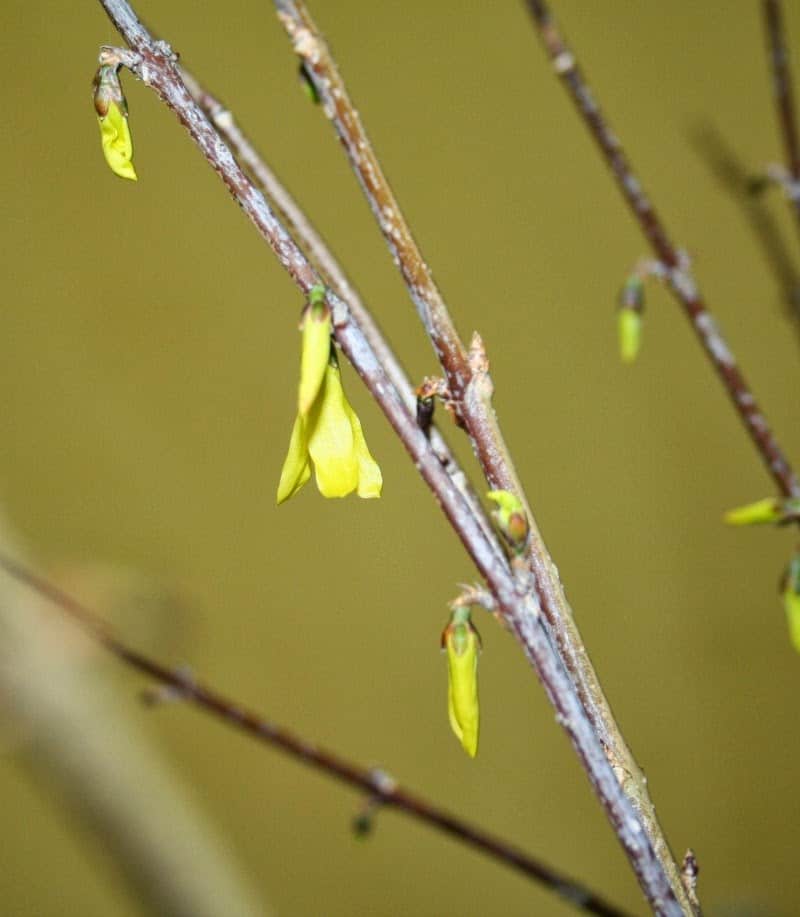
| Forsythia blooming in my kitchen. |
You can learn how to force forsythia, or get it to bloom indoors.
Forsythia flowers are easy to force, or coax into blooming. All it takes is a mature forsythia shrub, a pair of sharp pruning shears, a vase and warm water.
The best time to force spring-flowering shrubs to bloom indoors is February and March. Pussy willow and forsythia are the two easiest to work with, and among the two, I prefer forsythia because of the bright golden flowers. I have a photo album full of pictures of my siblings and cousins arranged in front of the big forsythia bush in our yard in our Easter finery every year; to me, nothing says “spring” like forsythia flowers.
To get forsythia branches to bloom indoors, simply cut a handful of branches in the spring, preferably when you can see a hint of the flowers. Cut the branches about a foot long, then bring them indoors. Cut the stems another half inch and fill a vase with warm water. Immerse the cut-side down in the vase, and voila – leave it alone. Some gardeners recommend re-cutting the stems the next day, changing the water in the vase and adding commercial floral preservative, but I don’t fuss with that. I simply change the water to keep it fresh.
[Tweet “Learn how to force forsythia or get it to bloom indoors.”]
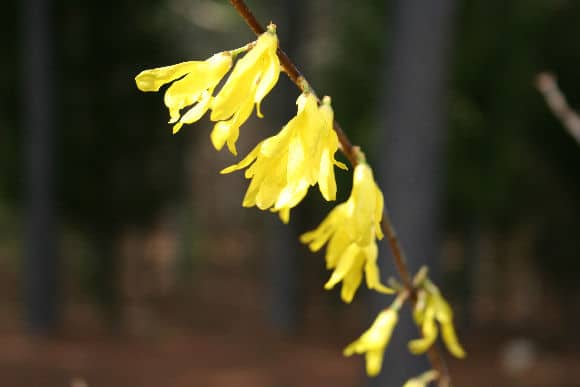
The pictures today are from my own home. This Saturday, temperatures soared to 70. Hubby and I worked outside in our shirt sleeves. It was wonderful! I even got a little color in my skin, the pasty winter white fading to my fresh sunburned pink look. We dug a post hole by hand, sinking a large post into the ground and cementing it in. We hung a bluebird house on the pole facing the orchard. While there was no activity yesterday, today a pair of bluebirds checked it out, and then some kind of thrush we have around here with a red band on the neck. It’s nice to see the birds already interested in a possible new nesting site. We also refilled the raised bed in the vegetable garden that we rebuilt, adding compost, cow manure, top soil and peat moss back into the bed. I changed and refilled the bird feeders too, in anticipation of the next wave of winter weather coming in tomorrow. Whenever we get storms, my backyard bird feeder is always busy with phoebes, chickadees, sparrows and other small birds. I love sitting all cozy and warm at my kitchen table in the morning, eating breakfast or sipping coffee and watching the birds on the feeder. It’s a great way to start the morning.
But during the day, I decided to cut and force forsythia branches. At first I cut the branches because some were in the way; they were starting to crowd into the pathway to the compost pile, and Hubby complained that he couldn’t get the tractor past them without getting a branch in the face. After I cut a few, I decided to cut more and bring them indoors. I vaguely remember my mother doing something similar when I was very young, but Hubby had never heard of the custom of forcing branches and he was skeptical until today, when he saw the first bell-shaped golden flowers emerge. I now have a convert to the process of forcing forsythia flowers!