• Skip to primary navigation
  • Skip to main content
  • Skip to footer
Home Garden Joy
  • Home
  • How to Garden
    • Garden Pests
    • Plant Diseases
    • Raised Bed Gardening
    • Seed Starting
    • Tools & Equipment
  • Plants
    • Plant Profiles
    • Vegetables
    • Fruit
    • Herbs
  • Recipes
    • Canning and Food Preservation
  • Books & Classes
    • Books by Jeanne Grunert
    • Books for Christian Herbalists
    • Herbalism Classes
  • About
    • Privacy Policy

Dealing with Colorado Potato Beetle Infestation

June 12, 2014 by Jeanne

Colorado potato beetles are native insects that can decimate your potato crop. They are common garden pests throughout the United States. Here’s some ideas for dealing with a Colorado potato beetle infestation.
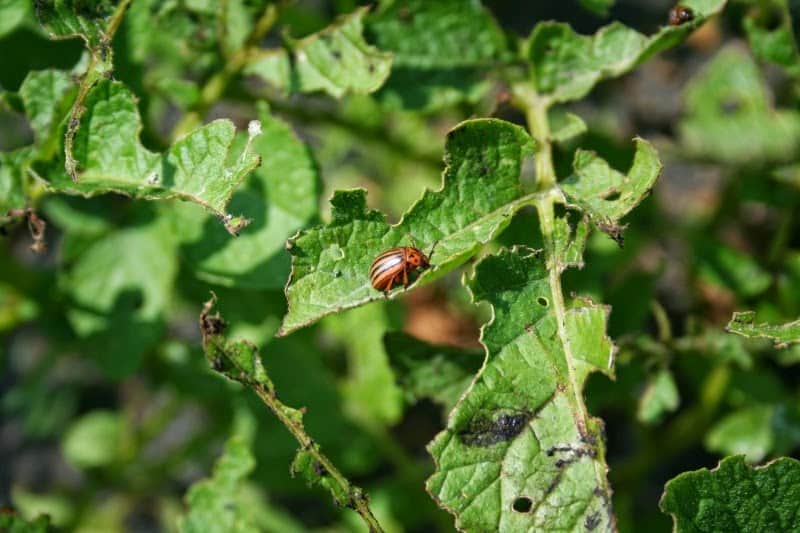
Colorado potato beetle

Colorado Potato Beetle Infestation

Meet public enemy #1, at least around here this month…the Colorado potato beetle. The picture I took above doesn’t give you an idea of the full extent of the damage these awful pests have done to my potatoes. Not only do they infest potatoes, they’re working their way back in the garden towards the tomatoes. I’m afraid to plant my eggplant seedlings; they’re still in small pots on my front porch, well away from the infested areas, and last year my eggplants were eaten down to skeletons in one night.

Lifecycle of the Potato Beetle

Here is what I’ve learned from researching the Cooperative Extension websites: these beetles are native to the United States, possibly from Colorado and New Mexico. The young emerge in spring when the soil warms and can fly great distances to find their favorite plants – anything in the nightshade family. They like weeds in the nightshade family, as well as potatoes, eggplant and to some extent, tomatoes.  They lay clusters of eggs on the underside of leaves. The larvae hatch and devour the leaves, leaving nothing but a skeleton.

An Organic Method to Control Potato Beetles

My uncle taught me this method on his upstate, New York farm. When I was six years old, he took me out into the corn field with an old coffee can filled with a mysterious liquid. He showed me how to tap the corn leaves so the Japanese beetles fell into the liquid. The same method works for the Colorado potato beetle.

Find an old jar, like a spaghetti sauce jar that’s empty, or an old coffee can. Squirt a tablespoon of dish washing liquid in the bottom. Fill a quarter of the container with hot water.

Walk around your plants and flick the adults and larvae into the water, where they drown. Place lid on the jar. Repeat daily.

Crop Rotation to Prevent Infestations

Crop rotation helps, such as planting potatoes only every other year or so. The beetles fly elsewhere and there are fewer larvae in the soil. My plan for next year is to plant melons again in the areas where I have potatoes this year, and grow only sweet potatoes. They leave those alone, which is great news.

Organic Insecticides

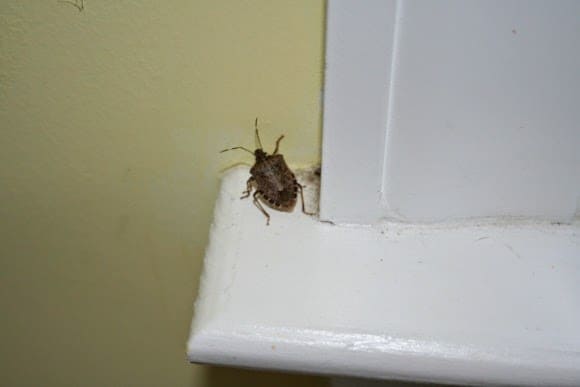
BT, an organic bacterial insecticide, and neem oil both are promising organic treatments, so I will try neem this weekend as I have it in the garage. The only known predators for these Colorado potato beetle are the lady beetle, also known as the lady bug, and the stink bug. God has a sense of humor, because those two insects are the ones that manage somehow to get INTO my house each year and plague my upstairs rooms.
A stink bug in my kitchen. Hey, you – there’s plenty of food outside!
Bugs. Can’t live with ’em, can’t live without ’em.
It’s really one of the worst infestations of Colorado potato beetle I’ve seen in years. Do you have them in your garden?
Source:  Colorado Potato Beetle
post signature

Filed Under: Garden Pests

Previous Post: « How to Use a Soaker Hose
Next Post: How to Make a Pair of Gardening Gloves »

Reader Interactions

Trackbacks

  1. Good Bugs or Bad Bags |Bad Garden Bugs | Home and Garden Joy says:
    September 17, 2014 at

    […] the Japanese beetle, the Colorado potato beetle isn’t an import into the United States. Rather, it was found almost exclusively in the West […]

  2. Why Crop Rotation Is Important - Home and Garden Joy says:
    March 6, 2015 at

    […] was a disaster! I had so many potato bugs I lost EVERYTHING. They ate every leaf and stem from my potatoes. I went outside daily with a glass jar filled with soapy water and hand-picked the potato bugs […]

  3. Garden Update - Too Many Bugs at the Party - Home Garden Joy says:
    May 16, 2018 at

    […] written in the past about the influx of Colorado potato beetles in the garden. These voracious insects love potatoes and any plants in the nightshade family. […]

  4. Your First Vegetable Garden: What Should You Grow? - Home Garden Joy says:
    June 14, 2018 at

    […] easily throughout the temperate gardening zones, but they are often troubled by things like the Colorado potato beetle (my particular nemesis here in […]

Footer

a wheelbarrow with bag of soil, trowel, pots and plants

Understanding Fertilizer: A Complete Guide for Home Gardeners

Understanding fertilizer is an important skill for beginning gardeners. In this guide, I’ll walk you through the basics. By the end of this article, you’ll understand fertilizer, what it is and what it does, and how to use it appropriately in the garden. Introduction: Why We Use Fertilizer in the Garden . Plants absorb nutrients…

Read More

red lettuce, mexican tarragon, and chard

The Best Organic Fertilizers

If you’ve been looking for ways to help your garden truly thrive — not just survive — organic fertilizers might just become your new best friend. They’ve become a cornerstone of sustainable gardening and farming, and for good reason: they don’t just feed your plants, they actually improve the health of your soil over time….

Read More

water droplets in sunbeams over a raised bed vegetable garden

Irrigation Tips for Home Gardens: Drip vs. Soaker Hose

Watering is one of the most essential tasks in maintaining a healthy home garden, yet it is also one of the most misunderstood. Many gardeners rely on overhead sprinklers or hand-watering, both of which can waste water and fail to deliver moisture efficiently to plant roots. Two of the most effective alternatives are drip irrigation…

Read More

chive plants in bloom with lettuce

The 10 Easiest Herbs to Grow

Grow them in pots, containers, window boxes, raised beds, or tucked among your flowers. These are the 10 easiest herbs to grow in almost any temperate garden. They take up little space, are generally unfussy, and are used in lots of recipes. What Do I Need to Start an Herb Garden? You don’t need a…

Read More

  • About
  • Plant a Row for the Hungry
  • Awards
  • Privacy Policy

Let’s Connect!

  • Facebook
  • Instagram
  • Pinterest
  • Substack
  • YouTube

Copyright © 2026 Home Garden Joy on the Foodie Pro Theme