
 Everyone makes mistakes, especially the first time they try to do anything. We’ve all botched recipes, sewn crooked seams, and banged cars into garage doors, right? Well, the same goes for starting seeds. Seed starting mistakes are common. They’re unfortunate, but they’re common.
A few of the more common seed starting mistakes that I see are:
- Starting seeds too soon: While it’s a good idea to allow seeds plenty of time to germinate and develop, starting them too soon may be even worse than starting them too late. Seeds started too soon indoors can grow tall, lanky and weak as they stretch towards whatever light source is available. They may fail to develop deep roots, or suffer greater transplant shock.
- Starting all of your garden seeds at one time: Seeds need varying amounts of time to germinate and develop into robust plants ready to move into the garden. Peppers and tomatoes need about 8 to 10 weeks indoors before moving them into the garden; cucumbers can be moved in under four weeks. If you start them all at the same time in early winter, your cucumbers may be ready to move into the garden before the temperatures are warm enough for them to survive and thrive.
- Watering seeds too much: You can give your seedlings too much of a good thing. Too much water leads to weak seedlings. It can also lead to damping off, a fungal disease in which the plants suddenly fall limp and die off.
- Not hardening off your seedlings: Hardening off is the gradual process of acclimating seedlings to the varying temperatures, stronger light, and winds outdoors. If you just take seedlings from their comfortable space inside and plunk them into the garden, they will go into shock. They need time to adjust their cells to the outdoors and to grow strong, vigorous roots, stems and leaves. Give your seedlings plenty of time outside while they are still in the comfort and security of their original containers before transplanting them into the garden.
- Starting seeds indoors that should have been directly planted into the garden soil: Oops! Been there, done that. Beets and many root crops hate to be transplanted. If you’ve planted them indoors, it can be hard to move them outside.
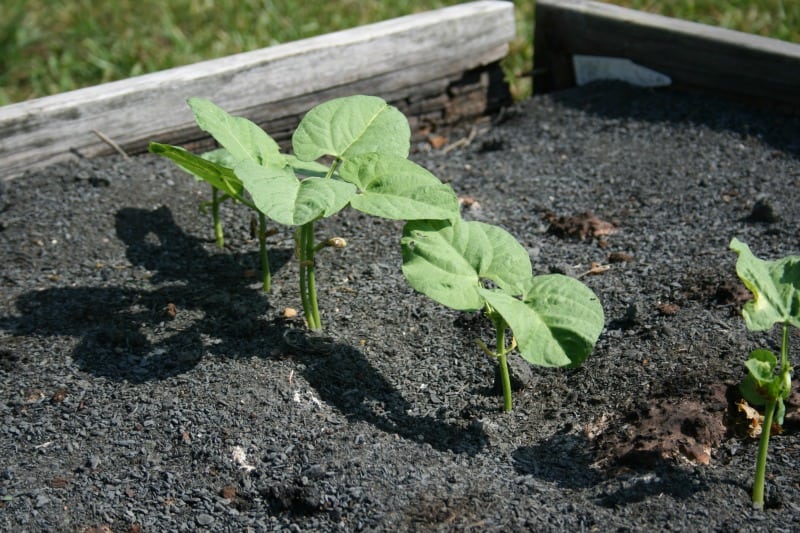
Start green bean seeds directly in the garden after Mother’s Day.
Seed Starting Mistakes and How to Fix Them
Fortunately, most of these seed starting mistakes can be fixed. The key is to read the back of the seed packages and follow the directions before starting your seeds.
Seed companies want you to be successful with your seed starting projects. After all, successful customers are happy customers, and happy customers are return customers! Seed companies go to great lengths to write clear and simple directions for starting their products on the backs of the seed packages. A few things to note when you flip over a typical seed package:
- A map: Seeds sold in America have a map of the United States on the back. It is usually colored in with various colored bands and a key at the bottom of the map tells you the planting dates for the seeds based on the colored bands. Read this carefully and in conjunction with the instructions.
- Directions: Make sure you note whether the directions indicate that seeds can be started indoors or outside. Packages will distinguish ‘sow indoors’ from ‘direct sow’ seeds and will specify whether it’s imperative to start plants inside to give them a strong headstart or whether you can sow them outside in the ground.
- Know your frost free date. This is the date in the spring of the last average frost. It’s not a hard and fast date; we’ve had late frosts, and they can hard to deal with, but not impossible. This date varies according to the gardening zone or USDA hardiness zone where you live. It is safe to plant most garden vegetables after this date, but keep in mind that some veggies prefer cool weather. Peas, lettuce and radishes LOVE cool weather while tomatoes, eggplant and peppers thrive in HOT weather. Know your plants and what they need!
- Give your plants time to adjust to the great outdoors, especially if you’re started them from seeds under fluorescent lights. They really do need plenty of time to adjust.
- Save some seeds “just in case”! If this is your first time starting seeds or growing a garden, here’s a good rule of thumb: save about 1/3 of each seed package just in case you made a mistake. (I still do this and I’ve been gardening my whole life!). This way, if anything dies you can easily replant it from the saved seeds.
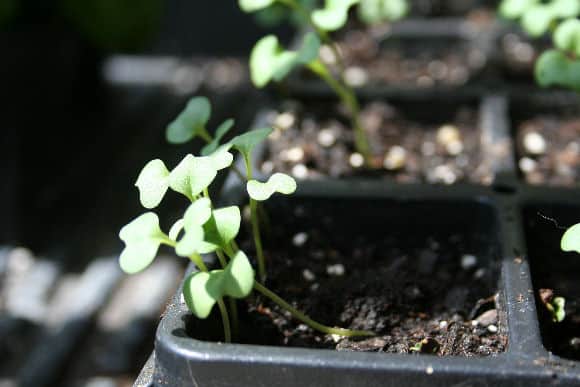
Harden off seeds outside before transplanting into the garden.
I hope that these common seed starting mistakes and easy fixes help you be successful growing a garden. I have two books out that may also be helpful:
Get Your Hands Dirty: A Beginner’s Guide to Gardening is for “black thumbs” and people who kill plastic plants. It’s a very basic beginner’s guide to starting a garden. It is currently available as an ebook and will be a paperback soon.


Plan and Build a Raised Bed Vegetable Garden offers guidance on how to build a plain raised bed garden, choose pathway materials, decide the type of soil you want and even turn beds into cold frames. It is available as both a paperback and an ebook.



I have some herb seeds and tomato seeds planted inside and they are up and growing. Thanks for the tip on hardening seeds off outside before transplanting. This info really helps.
Glad it was helpful! Let me know how your seeds do outdoors 🙂 Thank you for dropping by.
I usually start mine too late. We end up buying plants at a local greenhouse to get us started until our seedlings catch up.
If something us going to go wrong for me it’s the hardening off that does.
And I thought I was the only other person who made car door mistakes? 😉
We are going to make our first veggie garden this year. Your tips will definitely be helpful!
I’ve made lots of mistakes starting a garden and these are definitely helpful tips for anyone looking to start from seed.
Thank you for this! I’m featuring this in my Hearts for Home favorites list, this Thursday.
Neat! Thanks, Jenn!!!