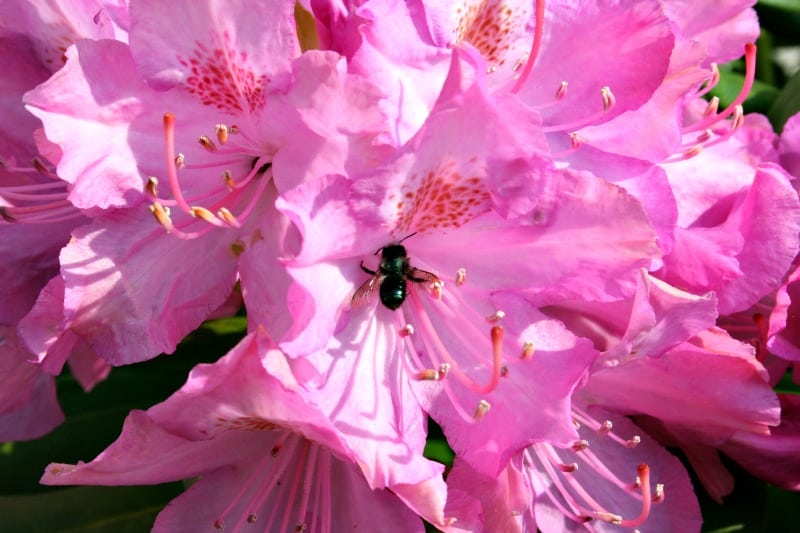
 The other day, my husband call me outside to witness something unusual. He’s been working on a new garden area in the back yard, almost on the edge of the woods, and he had transplanted some perennials and lilac bushes. He went out to water them and found a huge swarm of bees.
At first, we thought they were honey bees. It was hard to identify them; there were so many it was as if my backyard was buzzing! We watched them alight on the hard-packed clay soil, and they were definitely bees, not wasps, and the right size and shape for a honey bee. I assumed they were honey bees and we returned to the house, delighted to welcome the newcomers to the yard.
The next day, the swarm continued! Now Hubby noticed a series of hills, like ant hills, but bigger. There seemed to be hundreds of them scattered around on the soil in the backyard:
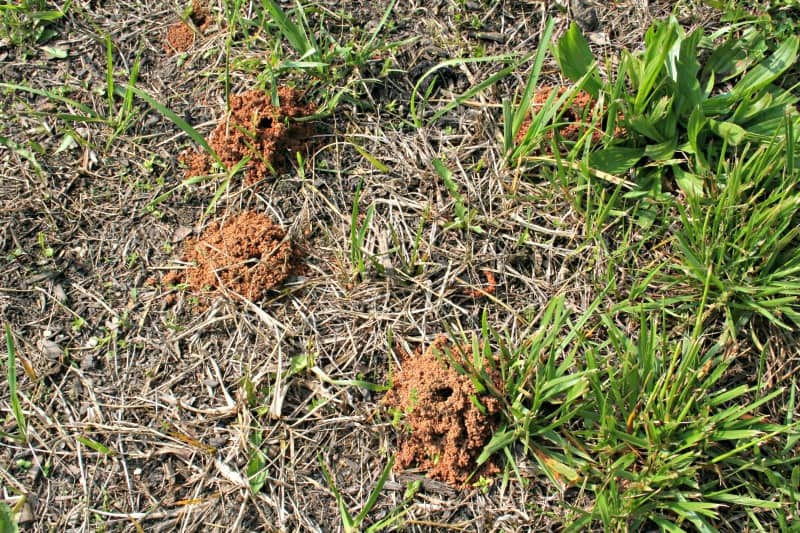
Just three of the hundreds of ground bee nests we found.
As we watched, a single bee shot out of a hole and flew away. What in the world was happening?
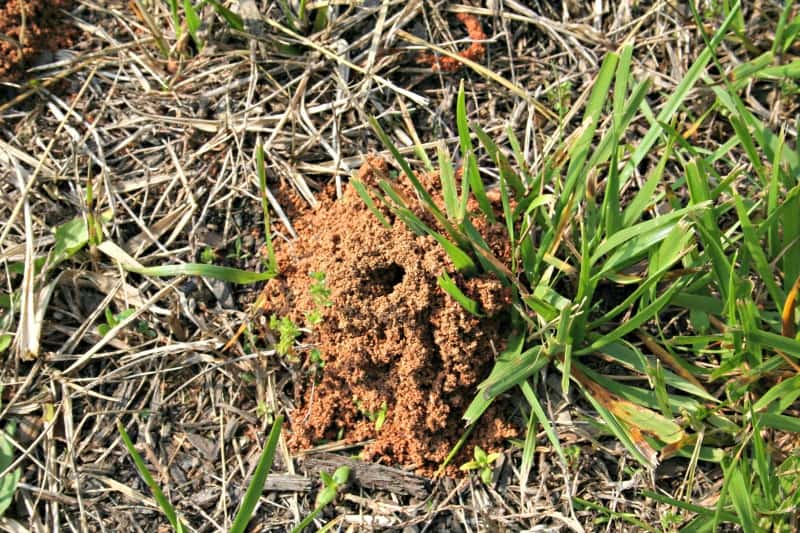
Close up of a ground nesting bee hole. It’s bigger than an ant hill but looks similar.
Thankfully, a few weeks ago I attended a lecture called, “Trees, Bees and Clean Waterways” so at least I knew that bees don’t always form hives. Some bees are indeed solitary, and some nest in the ground. A quick internet search revealed our new farm visitors as Solitary Ground Bees.
A few facts on solitary ground nesting bees:
- They build individual tunnels in the ground. The female lays her eggs inside the ground tunnel, and prepares a nutritious package of nectar to accompany her eggs.
- The new crop of bees emerges the following year – so I should expect a swarm again next March or April. Hurray! That’s when our fruit trees bloom, and….
- Solitary bees are great pollinators!
- They don’t sting, or at least they aren’t aggressive. Hive-based bees sting to protect the hive and their young, as well as the nectar/honey/food supply for the young. Ground-nesting bees, on the other hand, are gentle. You can mow or walk around them and they won’t sting. So it’s best to leave them alone.
Well, I hung up mason bee houses around the yard and didn’t get a single mason bee that I can see as a tenant, but my yard itself appears to be a welcoming place for ground nesting bees. If they pollinate my apple and peach trees next year, I’m all for it!
Here’s to pollinating insects and the wonderful ground nesting bee/
How cool! I’m always happy when I see a bee in my yard. They’re tough little buggers to get a good photo of though!
I’ve never heard of these kinds of bees! I’ll bet your flowers will look better then ever!