• Skip to primary navigation
  • Skip to main content
  • Skip to footer
Home Garden Joy
  • Home
  • How to Garden
    • Garden Pests
    • Plant Diseases
    • Raised Bed Gardening
    • Seed Starting
    • Tools & Equipment
  • Plants
    • Plant Profiles
    • Vegetables
    • Fruit
    • Herbs
  • Recipes
    • Canning and Food Preservation
  • Books & Classes
    • Herbalism Classes
    • Books for Christian Herbalists
  • About
    • Privacy Policy

Butterfly, Caterpillar and Cocoon Identification

February 17, 2016 by Jeanne

Caterpillar and cocoon identification help you determine if the bugs you’re looking at are helpful or harmful. These easy steps will help you get the hang of cocoon identification in no time.

Fast, Easy Caterpillar and Cocoon Identification

You don’t need to be a master naturalist or an entomologist to learn caterpillar and cocoon identification. Even if you don’t know a worm from a caterpillar or a moth from a butterfly, these steps will help you identify caterpillars and cocoons so you know if it’s helpful or harmful to the garden.

The following includes affiliate links. We are a participant in the Amazon Services LLC Associates Program, an affiliate advertising program designed to provide a means for us to earn fees by linking to Amazon.com and affiliated sites. Thanks so much for being a part of Home Garden Joy!

Four Simple Steps for Caterpillar and Cocoon Identification

Step 1: Take a clear picture.

No matter how you proceed with your investigation, you’ll need a clear picture of the insect in question to help with the identification. Descriptions alone aren’t enough because everyone identifies colors and other attributes differently. A picture, in this case, is definitely worth more than a thousand words!

Step 2: Upload the image to a reverse image search site.

A reverse image search site is a great tool to identify cocoons, insects, or bugs you don’t recognize. Google Image Search is a free tool offered by the search engine company Google. It allows you to upload your own picture, then search online for ones that match it. How does this help with butterfly, caterpillar, and cocoon identification?

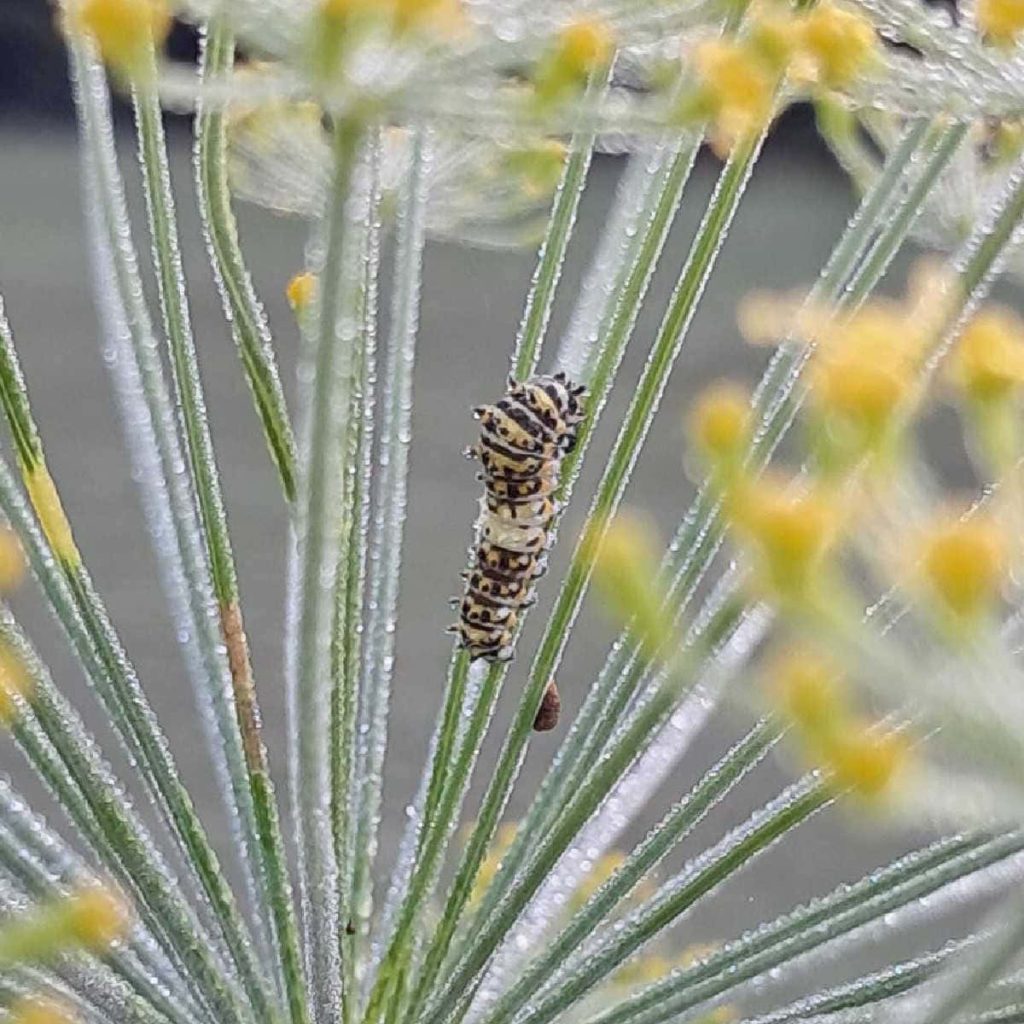
Let’s say you’ve taken this picture but you don’t know what it is:
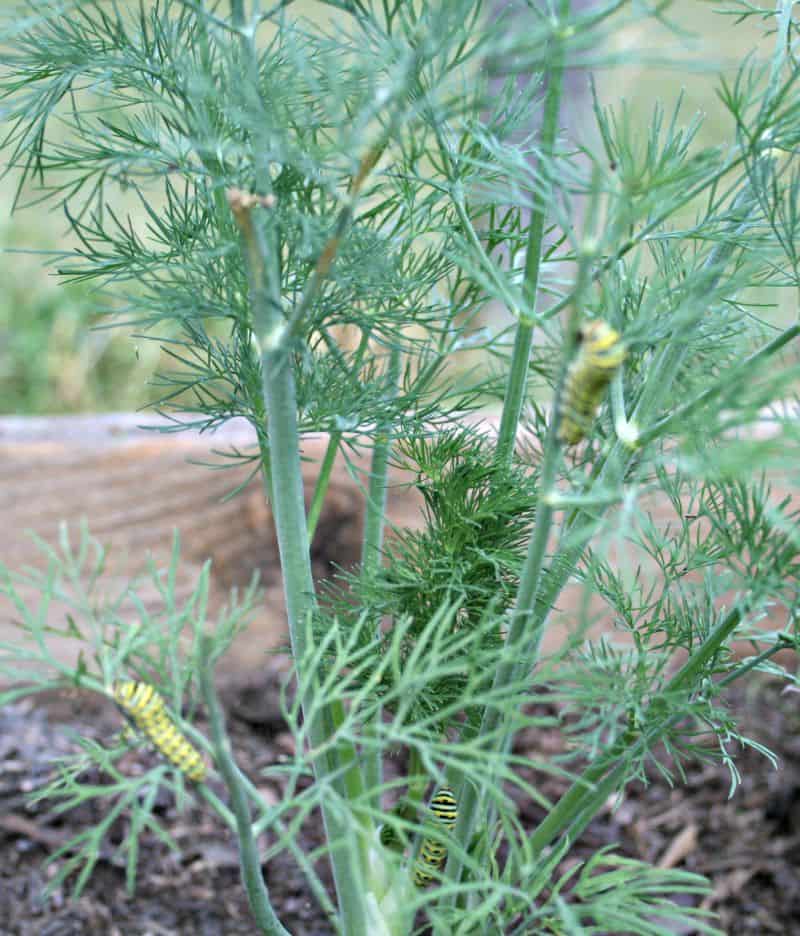
caterpillars on dill
swallowtail caterpillar on dill

Using a reverse image search such as Google Image search offers many suggested matches. Once you have suggested matches, you can proceed to the next step.

Step 3: Read through and find ideas based on where you live.

Butterflies live in specific regions of the world. Some live in very specific geographic areas, like mountains or deserts, tropical climates or temperate climates. The butterflies you see in New York may be different from the ones you see in Florida or Texas. It’s important to match the picture and search engine results to where you live.

So read through the closest and best matches. If the source identifies your cocoon or caterpillar as one that lives in your part of the world, chances are good it is a match.

Step 4: Consult a professional

Let’s assume you’ve walked through Steps 1-3 and still aren’t sure what you’re looking at – that can happen to anyone. Consult a professional. Resources you can try include:

  • Books, such as Peterson Field Guides
  • Local universities
  • Cooperative Extension agents

Examples of  Caterpillar and Cocoon Identification
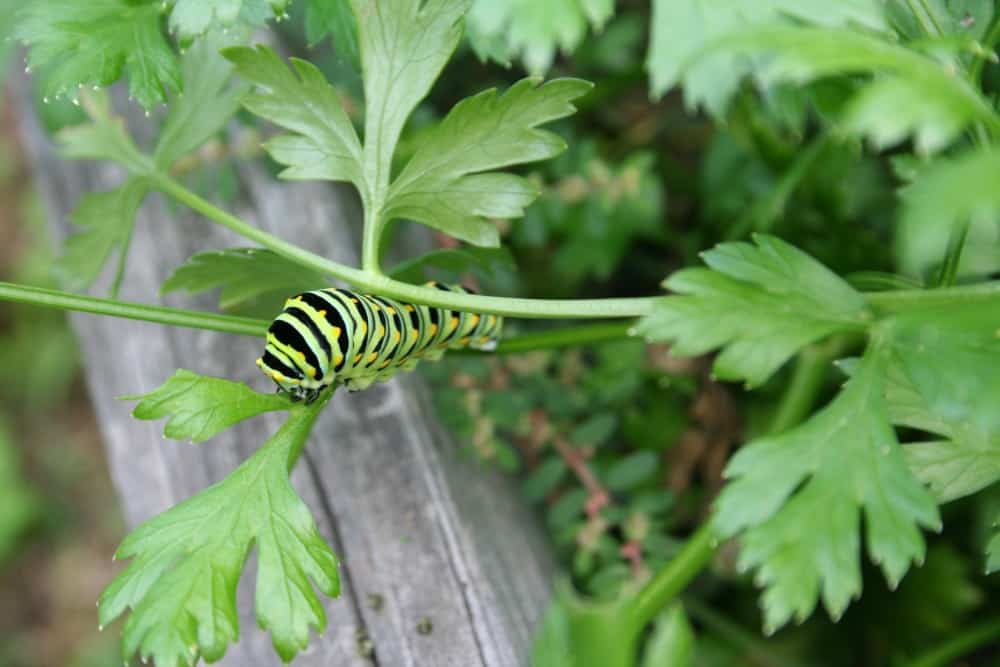
caterpillar and cocoon identification photo
Swallowtail butterfly caterpillar.
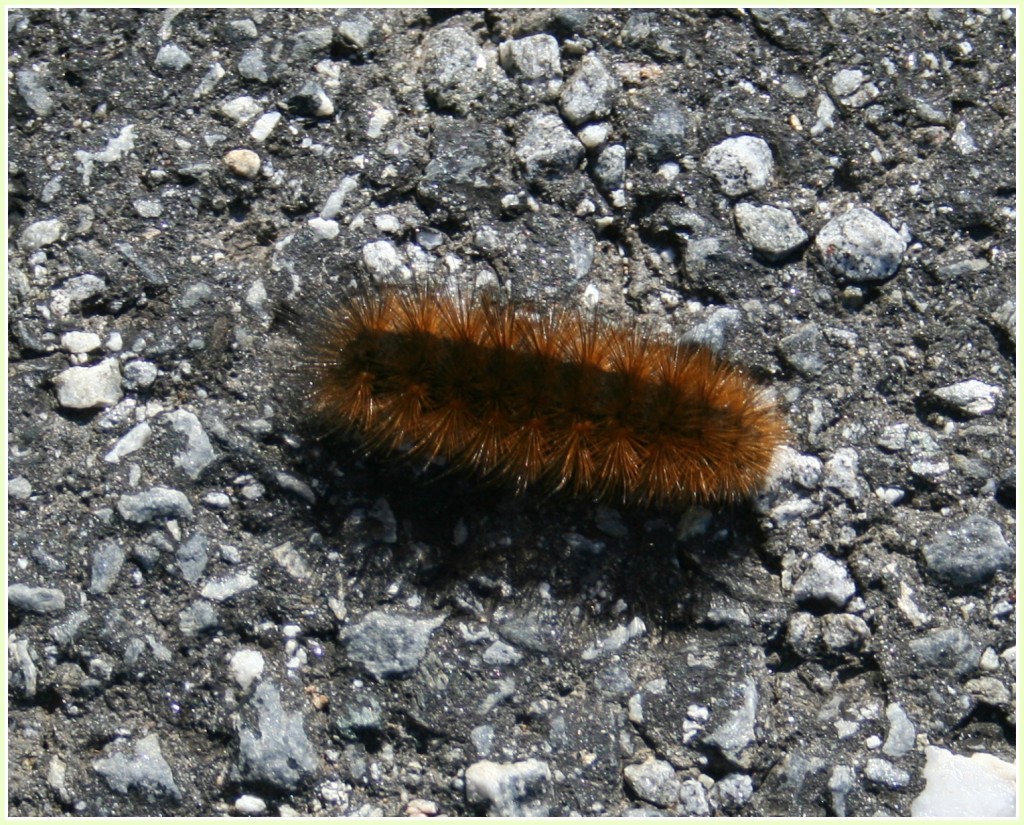
woolly bear caterpillar on gravel driveway
A great, clear image for caterpillar and cocoon identification.
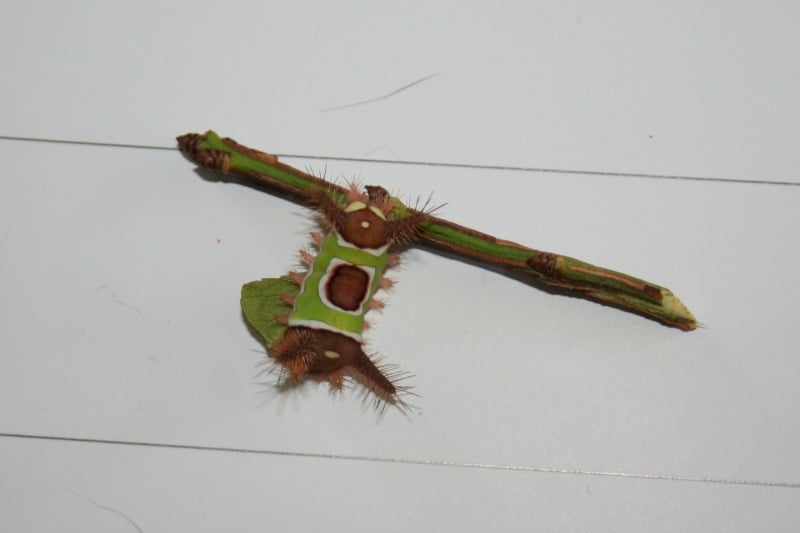
saddleback caterpillar
Another clear image for identification. This is a saddleback caterpillar which has a wicked sting!
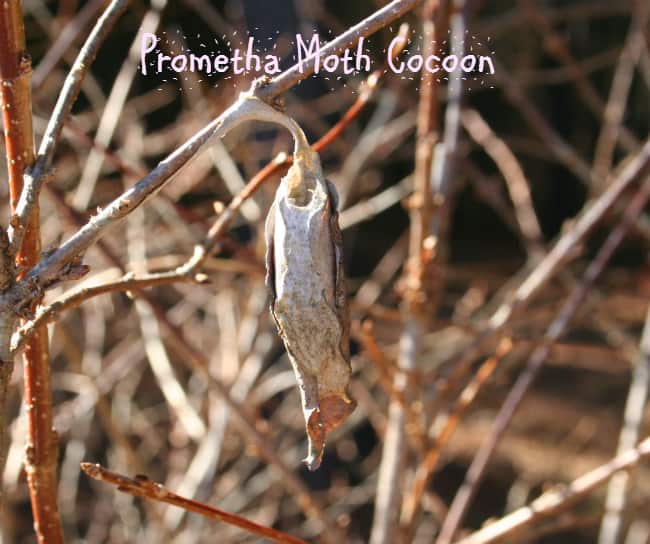
prometha moth cocoon
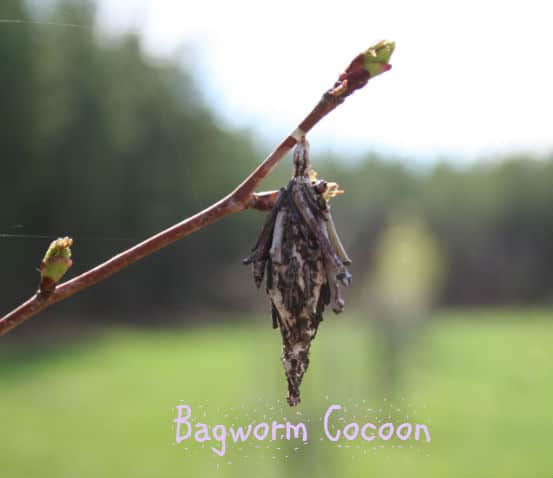
bagworm moth cocoon
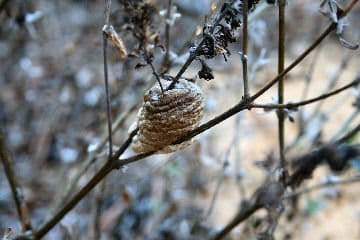
praying mantis egg case on winter twigs
A small bug clear image of a praying mantis egg case for easy cocoon identification.

Filed Under: Garden Pests, Home Garden Tips

Previous Post: « Best Plants for Low Light Areas
Next Post: The Absolute Easiest Way to Grow Flowers: Carpet Bedding »

Footer

a blue borage herb flower

How to Start Herb Seeds the Right Way: Free Course

Learn how to start herb seeds the right way with The Herbal Academy’s new, FREE online course! Home Garden Joy is an Herbal Academy affiliate. We love their ebooks and courses. I’ve taken many of them and found them to be very helpful. They get to the heart of herbalism without introducing spiritual aspects in…

Read More

raised bed garden

How to Prepare Raised Beds for Spring Planting

The snow and ice have finally melted. In the mornings when I walk my dog through our farm, I can hear a rooster crowing on a neighboring farm. Cardinals have begun singing in the dawn. It’s spring, folks. And while the calendar reminds me we can still feel winter’s icy breath, spring planting is just…

Read More

two loaves of bread in the oven

Swedish Tea Bread

I first made Swedish tea bread for my 50th birthday. Three of my friends have birthdays in the same month and invited me to their family group birthday celebration (they are all relatives). I shaped the bread into braided rings and decorated it with sliced almonds. It was a hit, and I have made it…

Read More

a shovel with compost on it

How to Start Composting in Winter

Have you thought about starting a compost pile, but you’re wondering how to start composting in winter? I mean, after all, here in Virginia we just had three solid weeks of absolutely tundra-like temperatures. I had a sheet of ice for a lawn, and the raised bed garden was completely covered in a thick layer…

Read More

  • About
  • Plant a Row for the Hungry
  • My Books on Amazon
  • Awards
  • Privacy Policy

Let’s Connect!

  • Facebook
  • Instagram
  • Pinterest
  • Threads
  • YouTube

Copyright © 2026 Home Garden Joy on the Foodie Pro Theme