• Skip to primary navigation
  • Skip to main content
  • Skip to footer
Home Garden Joy
  • Home
  • How to Garden
    • Garden Pests
    • Plant Diseases
    • Raised Bed Gardening
    • Seed Starting
    • Tools & Equipment
  • Plants
    • Plant Profiles
    • Vegetables
    • Fruit
    • Herbs
  • Recipes
    • Canning and Food Preservation
  • Books & Classes
    • Books by Jeanne Grunert
    • Books for Christian Herbalists
    • Herbalism Classes
  • About
    • Privacy Policy

Deer Damage and Trouble

July 31, 2017 by Jeanne

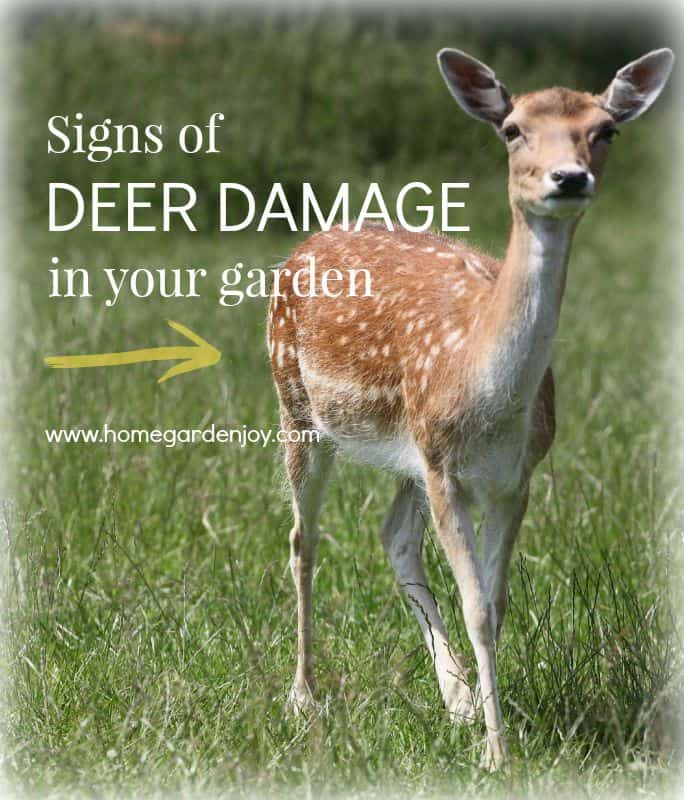
signs of deer damage_hotblack_morguefile photos

Photo by hotblack/Morguefile.com license

Deer damage?  Oh, I’ve got deer damage. I was so enthralled by mama doe and her fawns that I’d forgotten how destructive one doe can be.

Our fenced in vegetable garden has kept deer out for over eight years. When we dug in the fence posts and stapled the wire to the posts, we made the initial fence four feet tall, but kept the posts eight feet tall “just in case.”  Just in case of what? Deer. Eight feet is considered the standard size of a fence to keep deer out of the garden.

Our four foot fence worked fine for over eight years. Then, a week ago, one curious doe leaped the perimeter. She stomped her way through the empty beds, pulled out carrots, ripped apart my tomatoes, took a few bites of tomatoes (and threw the rest on the ground), then found Deer Nirvana – my patch of green beans and the two beds of lush sweet potato vines.

In the first evening, before we realized what was happening, she ate every single green bean plant down to the ground.

On the second night, we saw her leap into the garden and make her way straight for the large sweet potato beds. We shouted and clapped from the house and she leaped out – from a standstill mind you, up and over that fence – but returned in the middle of the night while we were asleep to eat the every leaf off of my sweet potato vines. She left the wiry stems and a few forlorn leaves.

This, my friends, made me so angry I took a hoe out to the garden and hoed away every single hoofprint. I let my dog into the garden so her scent would permeate the grass. I sprayed stinky deer repellent that smelled like predator poop on the fence posts and the raised beds and every wooden surface I could find. The wind, laughing at my endeavors, blew just at the precise moment the liquid stink stream hit a fence post, drenching me in the new perfume of eau de predator poop.

The deer, of course, laughed. Then came back a third night and ate all the sweet potato leaves they missed on the first go-round.

I’ve been watering, praying, and praying some more that my garden returns to its full splendor. Over the winter, that second course of fencing we never quite managed to get into place will be installed, taking the fence height to eight feet. If that doesn’t keep out our athletic friend, maybe fall hunting season will take care of my problem.

Deer! And I swore I’d never have a deer problem!

Nature always gets the last laugh….
Filed Under: Vegetable Gardening

Previous Post: « Prevent and Treat Blossom End Rot in Tomatoes
Next Post: Garden Toads »

Footer

a wheelbarrow with bag of soil, trowel, pots and plants

Understanding Fertilizer: A Complete Guide for Home Gardeners

Understanding fertilizer is an important skill for beginning gardeners. In this guide, I’ll walk you through the basics. By the end of this article, you’ll understand fertilizer, what it is and what it does, and how to use it appropriately in the garden. Introduction: Why We Use Fertilizer in the Garden . Plants absorb nutrients…

Read More

red lettuce, mexican tarragon, and chard

The Best Organic Fertilizers

If you’ve been looking for ways to help your garden truly thrive — not just survive — organic fertilizers might just become your new best friend. They’ve become a cornerstone of sustainable gardening and farming, and for good reason: they don’t just feed your plants, they actually improve the health of your soil over time….

Read More

water droplets in sunbeams over a raised bed vegetable garden

Irrigation Tips for Home Gardens: Drip vs. Soaker Hose

Watering is one of the most essential tasks in maintaining a healthy home garden, yet it is also one of the most misunderstood. Many gardeners rely on overhead sprinklers or hand-watering, both of which can waste water and fail to deliver moisture efficiently to plant roots. Two of the most effective alternatives are drip irrigation…

Read More

chive plants in bloom with lettuce

The 10 Easiest Herbs to Grow

Grow them in pots, containers, window boxes, raised beds, or tucked among your flowers. These are the 10 easiest herbs to grow in almost any temperate garden. They take up little space, are generally unfussy, and are used in lots of recipes. What Do I Need to Start an Herb Garden? You don’t need a…

Read More

  • About
  • Plant a Row for the Hungry
  • Awards
  • Privacy Policy

Let’s Connect!

  • Facebook
  • Instagram
  • Pinterest
  • Substack
  • YouTube

Copyright © 2026 Home Garden Joy on the Foodie Pro Theme