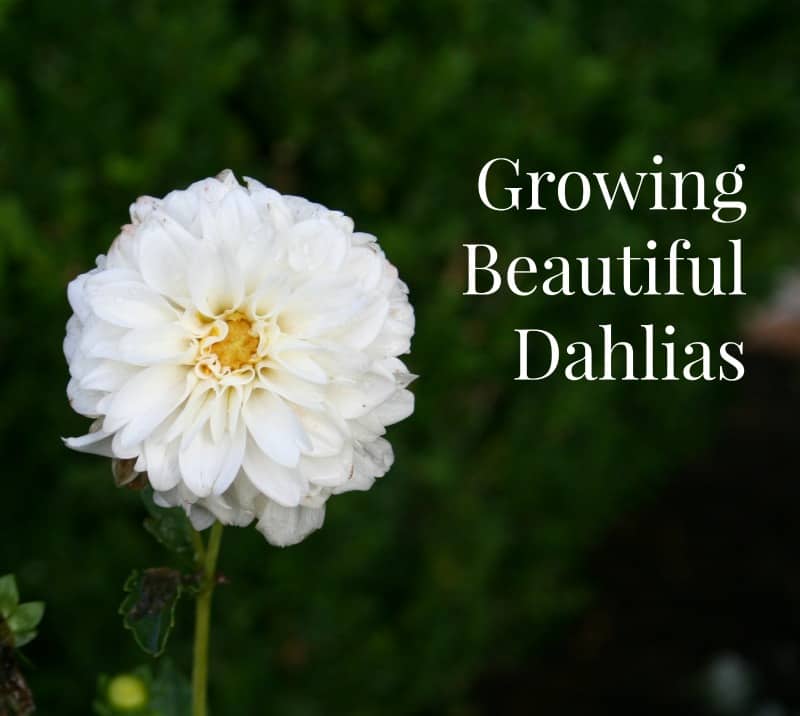
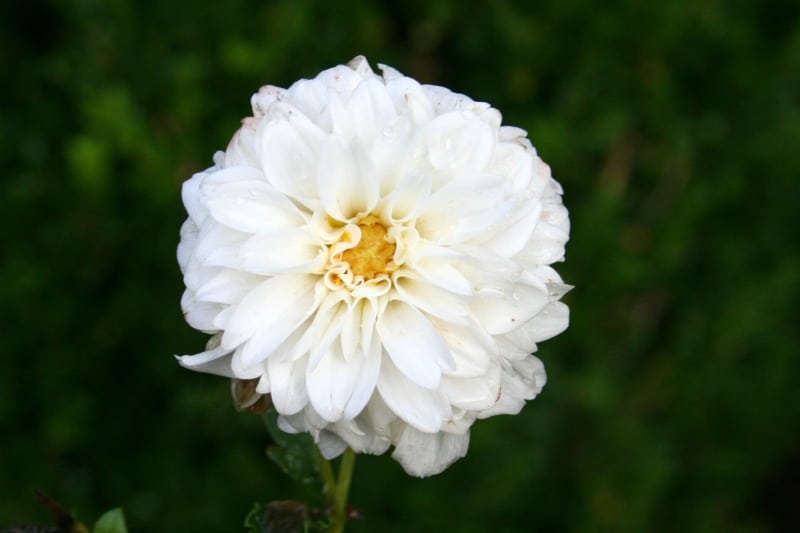
Do you see this dahlia? It’s my first attempt at growing beautiful dahlias and I’m thrilled it survived. Here’s why my little dahlia is so special, and how you can grow beautiful dahlias in your garden, too.
Growing Dahlias
I’d never tried to grow dahlias before because I had heard, somewhere through the horticultural grapevine, that they were ‘fussy.’ A fussy plant doesn’t last long in my garden. Between periods of drought, clay soil, and hot summer weather, if you’re a plant, you’ve got to be tough to survive here.
I knew that my grandfather had been fascinated with dahlias and had grown them in his Bellerose, Queens, garden. I don’t remember this because my grandfather died before I was born. The beautiful garden I remember was lush with tomato plants, apple trees, and green grass paths, but no dahlias.
When a friend called me and asked if I wanted some dahlia tubers, I said sure. I wasn’t quite sure what to do with them. Her father had them in a bag in the basement of his home and she had no idea how long they had been stored. We thought perhaps six months, maybe a year…but who knows?
The dahlia tubers arrived, and I planted the last fall. Then I promptly forgot about them – did I mark the spaces where I’d planted them? Of course not. When it came time to dig up the soil and pull out all the crabgrass and wiregrass growing in the flower beds, I forgot all about my poor dahlias. I probably discard them along with the weeds. Ugh! I hate it when that happens!
This summer, a mysterious plant appeared near the boxwood hedge surrounding our water pump. I thought it was a daisy. Then it bloomed. Glowing white flower on top of a tall, thin stalk…and a beautiful cactus-like flower.
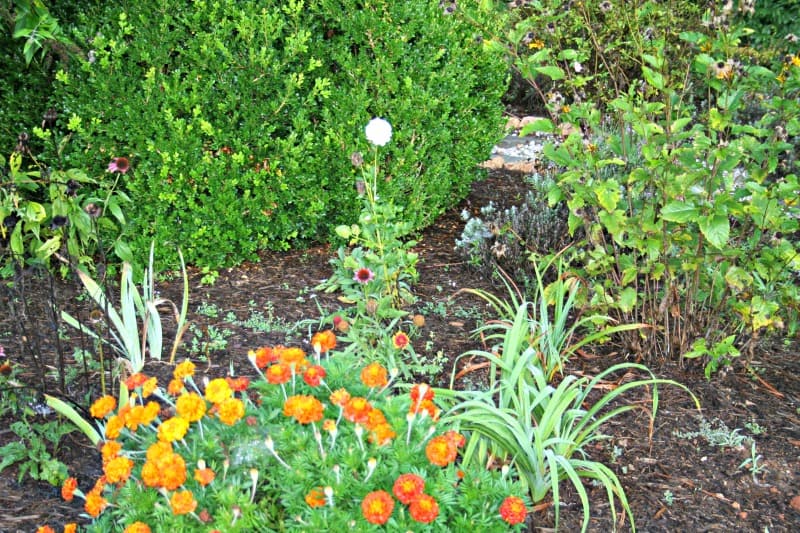
Here she is, the lone dahlia survivor in my garden. It doesn’t look like much from a distance. But close up…wow!
Growing dahlias isn’t rocket science. They aren’t as fussy as I thought they were, and in fact, they are actually quite tolerant of poor soils. They need abundant bright, full sunlight and good water to get established, but once they have all of that? They’re good to go!
Growing dahlias:
- Plant dahlia tubers (root parts) in spring after the soil is warm.
- They cannot tolerate frost, so plant after the frost-free date for your zone. In Virginia, that is generally after Mother’s Day or May 1-15.
- Plant in any kind of soil.
- Plant tubers about 6 inches deep.
- Don’t bother to water them until they start growing. Then, water only if there’s no rain for a week or more.
- No fertilizer necessary.
- Mulch the tubers with 1- 2 layers of bark mulch or dig up and store the tubers inside to keep them from freezing in the fall.
And that’s it!
There are so many beautiful dahlias…big ones, small ones, all sizes and colors. I’m smitten. I can’t wait to try more in my garden.
I’m glad that my misconceptions around growing dahlias were changed. They’re a beautiful flower and one that deserves a permanent place in my garden.
Happy gardening. Keep growing!