Growing fig trees in Virginia was a goal of mine. Ever since I tasted my first fresh figs, I’ve wanted my own fig plants. Here’s what I chose to add to my Virginia, zone 6B garden.
Growing Fig Plants
Fig plants (Ficus) are surprisingly easy to grow in the backyard as long as you meet two conditions. First, they need eight hours of bright, direct sunlight each day. Secondly, most varieties cannot tolerate winter temperatures below 10 degrees F. If your region of the country regularly experiences prolonged periods of cold weather, you’ll need to wrap your fig tree up (more on that later) to protect it from the winter’s cold.
To grow great fig trees, you’ll need:
- Bright, direct sunlight, typically 8 hours or more per day.
- Temperate or moderate winter temperatures.
- Good well-drained soil with a pH of 6.0 – 6.5
I recommend planting fig trees in large containers at first and then deciding if you want to plant them in the garden. Containers can be moved into a garage or shed during the winter to protect the young trees from the cold. After the trees are a few years old, if you choose to, you can plant them directly in the garden.
Do You Need More Than One Fig Plant for Fruit?
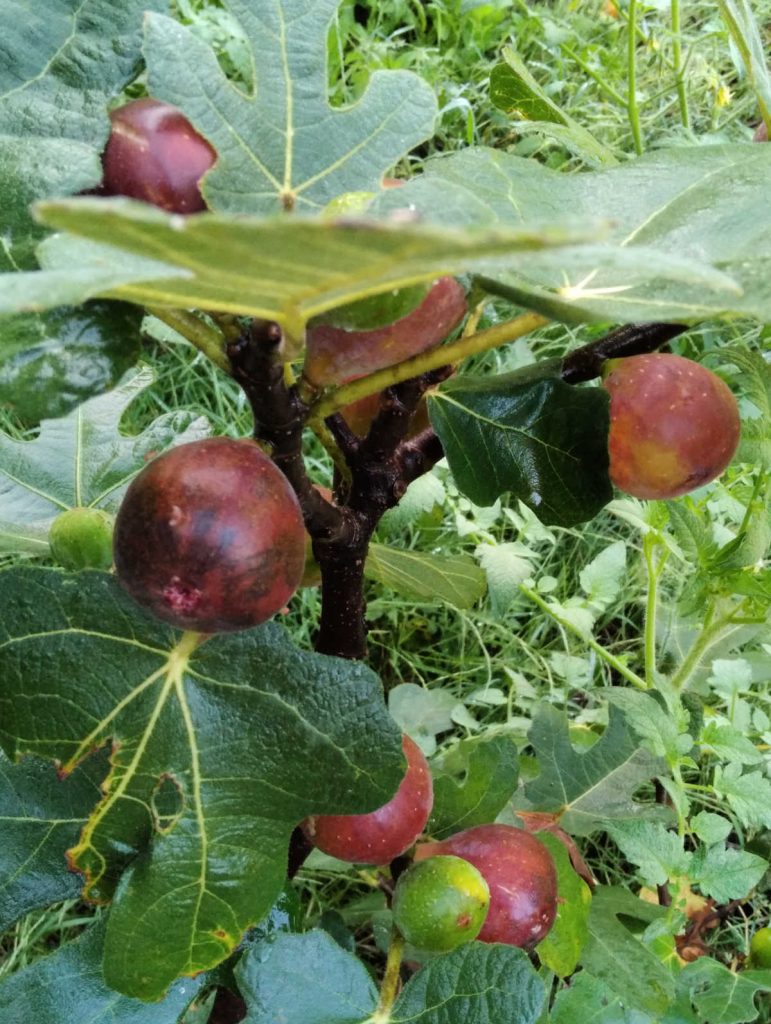
Fig varieties sold throughout the United States are self-pollinating, meaning you don’t need two plants to produce fruit. One will do. Italian and other Mediterranean fig varieties require a pollinator, meaning you need to plant two fig trees of different varieties. These figs are pollinated by a special native wasp. Choosing the right fig tree varieties for your region of the world and your climate means less special care and a better chance of obtaining the sweet, brown fruit.
Fig Tree Varieties for Virginia
Brown Turkey Fig
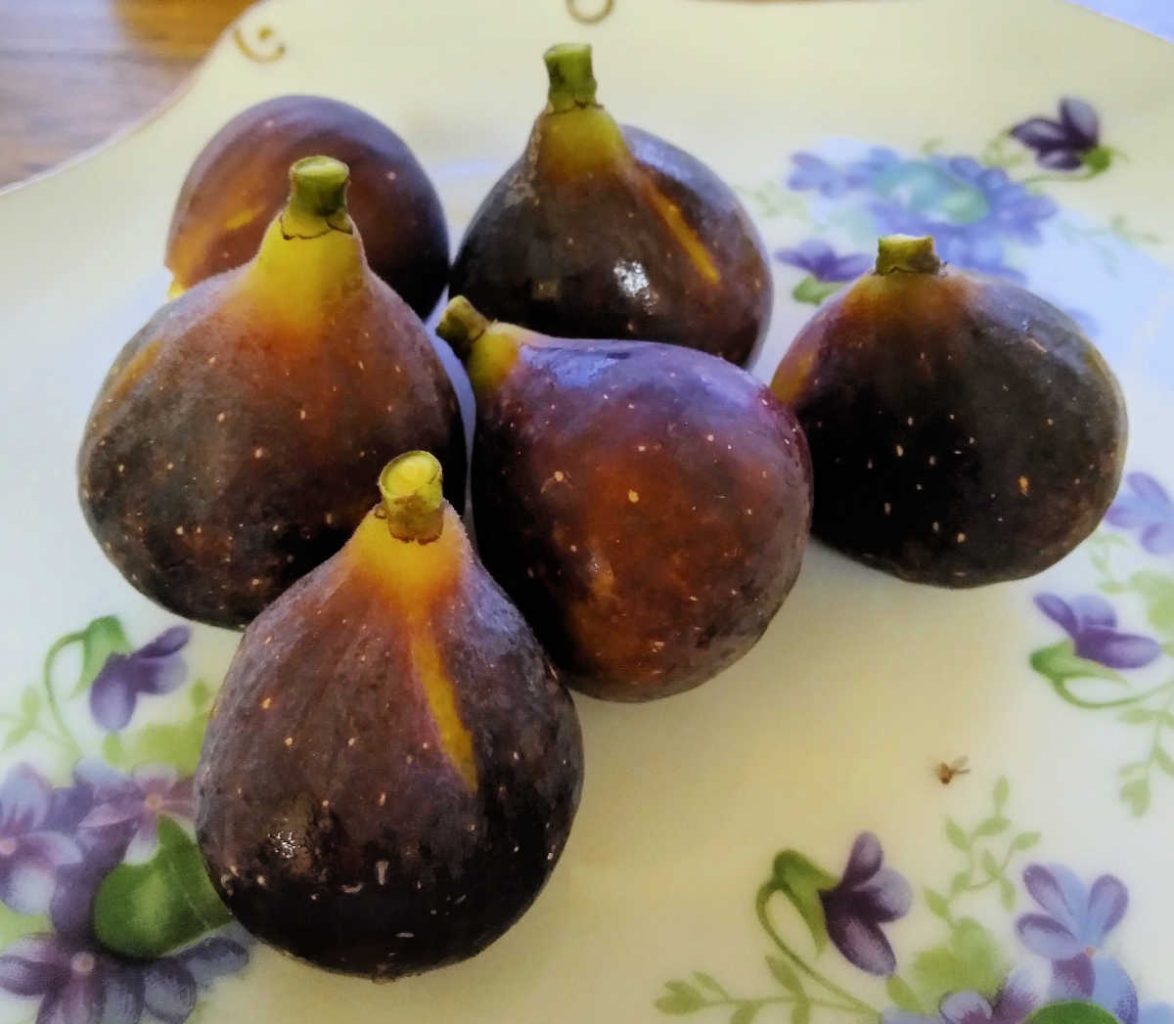
One of the most popular fig tree varieties for Virginia is “Brown Turkey.” It is hard in zones 7 through 10 without any special care and is very low maintenance. Brown Turkey produces two crops of figs per year and is self pollinating. The figs are about 4 inches long and once the trees become established, they produce plentiful fruit.
Chicago Hardy Fig
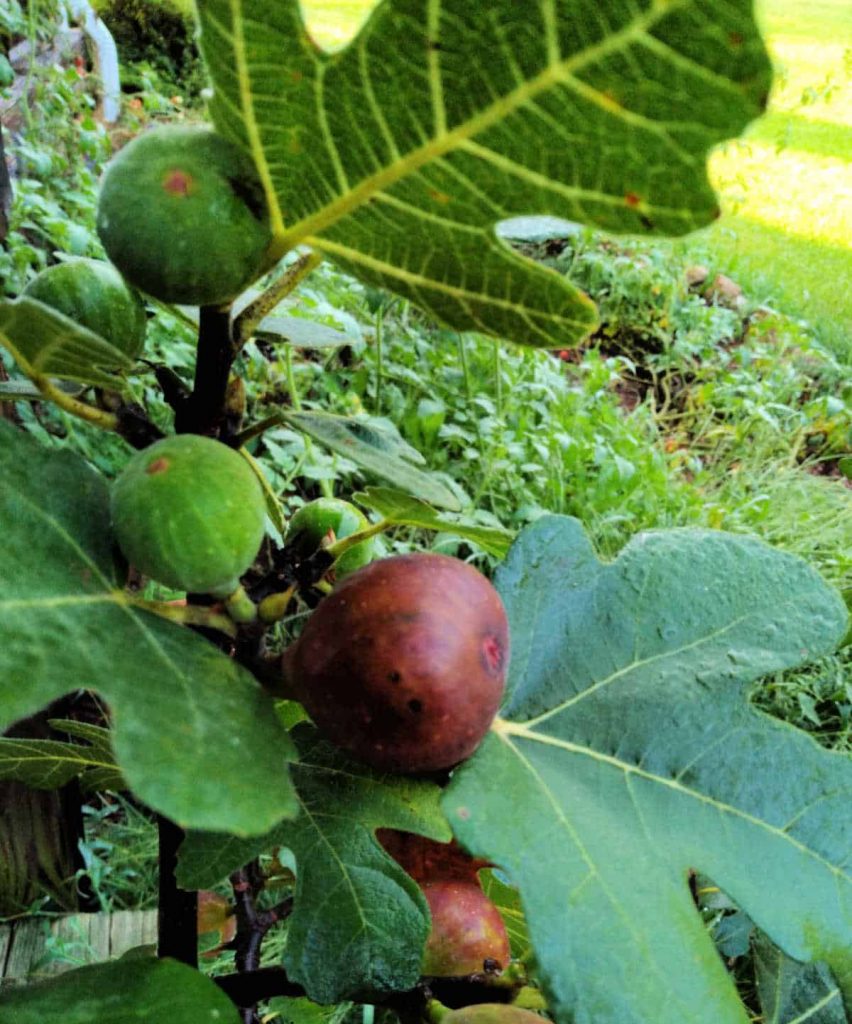
My choice of fig trees for my Virginia garden is “Chicago Hardy.” As the name suggests, it is supposed to be hardy to zone 7. My area is a 6b, so close to 7, and some books list it as hardy to zone 6, so it’s borderline hardy without protection. And, with the word “Chicago” in the name, I figure it is probably very hard. After all, those Chicago winters can be very cold!
Why Did I Add Figs to My Virginia Garden?
I blame a guy named Anthony. Anthony worked with me at a financial services company in New York City in the 1990s. He lived in Queens, New York.
If you’ve ever driven through Queens neighborhoods in the wintertime you’ll notice “mummies” on the small front lawns of the rows of attached houses. These “mummies” are actually Italian fig trees bundled and wrapped in burlap. To protect the delicate trees from the cold New York City winters, homeowners cut off the main branches and wrap the trees in burlap and rope. Burlap — not plastic — acts as a cold shield, and the trees survive the winter. Because they grow fruit on new growth wood, cutting them back so drastically helps them produce more fruit.
Anthony lived in his Italian’s grandfather’s house that he had bought from his grandpa. And, on the front lawn, like so many houses in his neighborhood, was a beautiful fig tree.
But unlike other figs, this one was over 40 years old — and it sure did produce fruit! It was an “Italian Honey” fig tree with large, green skinned figs and the sweetest fruit imaginable. Anthony would bring in large plastic containers of figs fresh from the tree and leave buckets of them around the office. My coworkers and I would gorge on fresh figs. I fell in love with fig trees thanks to Anthony sharing the figs, and I vowed ever since that I would have fig trees once I moved into my own home. Thankfully, that time is now!
Growing fig trees in Virginia is now a dream come true for me.
First written April 2018. Updated May 19, 2021 with fresh text, newly updated information, and new graphics.