Depending on where you live, feeding birds in winter may make a big difference in the lives of the local wild bird populations.
Common sense tells us that, of course, birds have survived for centuries without any human help during cold weather. In times past, people had a hard enough time surviving in the wilderness in sub-zero temperatures, let alone worrying about wild birds and other animals.
But for those of us who love the wild things in the garden – the birds, squirrels, bats, bees, insects, possums, and all living creatures – the freezing temperatures, snow, and ice have us worried about our wild friends. Feeding birds in winter is an expression of compassion for all God’s creatures. And yes, it’s also fun.
Let’s look at some of the best practices for feeding birds in winter.
Please note that this post contains affiliate links. As an Amazon Associate, I earn from qualifying purchases. Thank you for supporting Home Garden Joy.

Feeding Birds in Winter: Best Practices
There’s absolutely nothing wrong with hanging any old feeder from a tree in the yard, pouring in some seed from the grocery store, and enjoying the antics of the birds.
However, if you love seeing birds in the garden and bird watching, these tips will help you support various wild birds throughout the winter months.
Choose the Right Bird Feeder
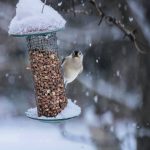
Tube feeders are, in my opinion, the best for feeding wild birds in the winter. The plastic tubes have holes with perches along the side so that birds can nibble seed from any opening they choose. They are filled from the top, so as the birds consume the seed, the level drops. I’ve found that they keep the seed dry the longest and seem to be well-attended by the birds.
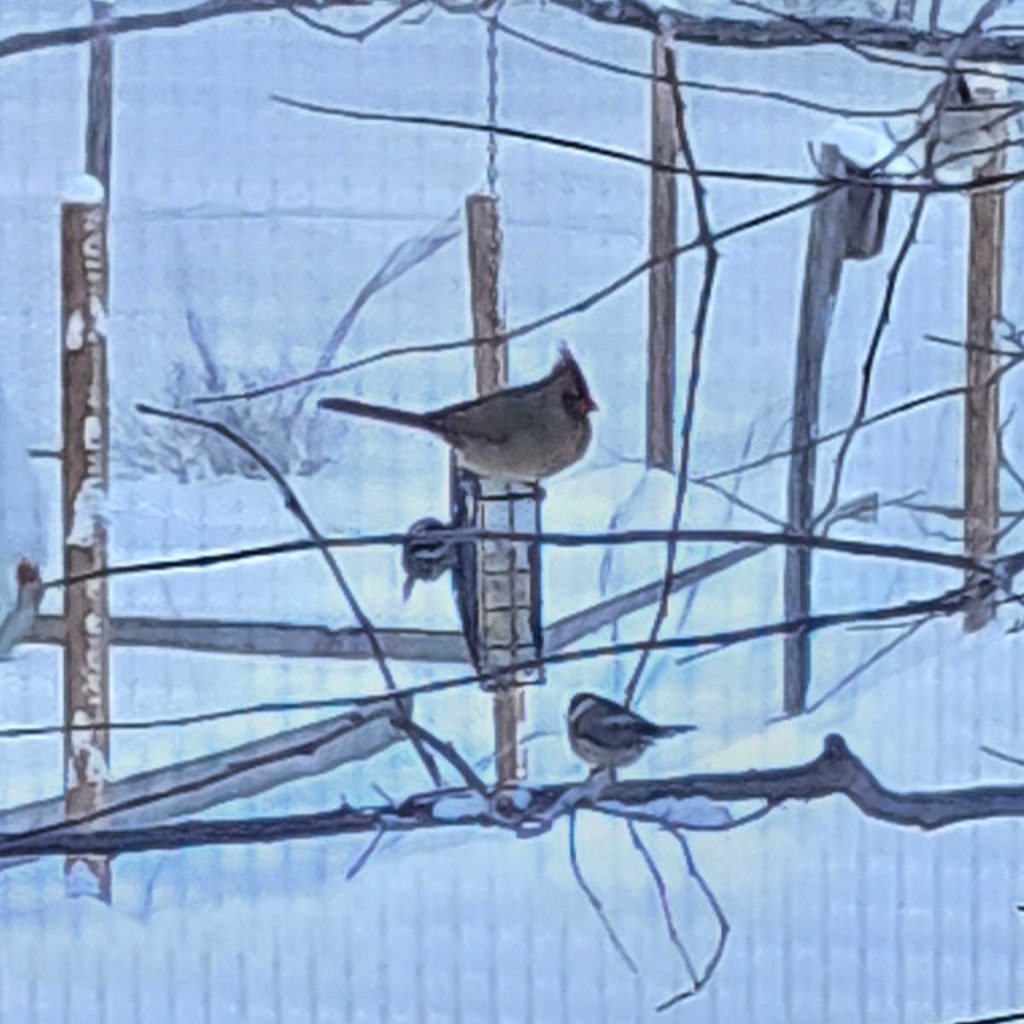
Suet feeders are cages suspended from chains that hold a cake or block of seed-studded suet. Suet is animal fat, often coated with sunflower seeds, raisins, and even mealworms. These high-protein, high-fat foods are important for insect-eating birds such as woodpeckers, bluebirds, and more. I find that the tufted titmouse and nuthatch absolutely love my suet feeders (and I love seeing them too.)
Feed a Variety of Nuts, Seeds, Fruit and Protein Sources
Add a variety of food sources for birds. Birds eat a variety of foods, including different types of plant seeds, worms, fruit, and more. Adding black oil sunflower seeds to store-bought bird seed attracts colorful birds like cardinals and blue jays.
A suet block feeder helps woodpeckers, flickers, and other birds who rely on higher-fat food sources and insects. Mealworms provided on a heavy platter or dish are a lifesaver for birds such as bluebirds, who may be unable to find insects if the ground is frozen.
Orioles love citrus fruit, so half an orange tucked into a dish is appealing to them, too. Be creative and use a good bird book to understand the birds in your region and what will appeal to them.
Plant Shrubs and Trees for the Birds
Plant windscreen shrubs. Evergreen shrubs and hollies can shield birds during winter storms. They will duck under them or nestle in the branches to keep the worst snow and wind away.
Plant Native Tree, Shrubs, and Perennials to Support Wild Birds
Food source shrubs and trees include native plants with berries or fruit that birds love. Dogwoods are one such tree. Others include:
- American Holly (Ilex opaca): Known for its bright red berries, American holly is a favorite among birds like robins, cedar waxwings, and northern cardinals.
- Eastern Red Cedar (Juniperus virginiana): The bluish, berry-like cones of the Eastern Red Cedar are a valuable food source for various bird species, including cedar waxwings and American robins.
- Serviceberry (Amelanchier spp.): Serviceberry produces small, edible berries that attract birds such as thrushes, grosbeaks, and various songbirds.
- Winterberry (Ilex verticillata): Winterberry is well-named as it retains bright red berries throughout the winter, providing food for birds like American goldfinches, eastern bluebirds, and northern flickers.
- Red Chokeberry (Aronia arbutifolia): The red chokeberry’s dark red berries persist into winter and are enjoyed by birds such as woodpeckers, thrushes, and grosbeaks.
- Common Elderberry (Sambucus canadensis): Elderberries are a rich source of food for birds like northern cardinals, robins, and grosbeaks.
- American Beautyberry (Callicarpa americana): This shrub’s bright purple berries attract birds like mockingbirds, catbirds, and thrushes.
- Dogwood (Cornus spp.): Different species of dogwood, such as flowering dogwood (Cornus florida) and red-twig dogwood (Cornus sericea), offer berries that are a winter food source for various birds.
- Black Tupelo (Nyssa sylvatica): The small, dark purple-black fruits of the black tupelo are a favorite among woodpeckers, thrushes, and vireos.
- Eastern White Pine (Pinus strobus): While not a fruit-bearing tree, the seeds in the cones of the Eastern white pine can be a source of food for birds like finches and nuthatches.
Proivde a Mixture of Plant Species
When planting these native trees and shrubs, it’s important to provide a mix of species to ensure a continuous food supply for birds throughout the winter. Additionally, consider the specific soil and light conditions in your garden to choose the plants that will thrive in your local environment.
As an Amazon affiliate, I earn a commission through sales from these links.
The following are three types of bird feeders that will attract different species of birds to your yard:
Kingsyard 2 Pack Tube Feeders with 6 Feeding Ports
Droll Yankees YF-M Yankee Flipper Squirrel-Proof Wild Bird Feeder
Add More Feeders When the Weather Gets Bad
Add more feeders immediately before a storm. I have two tube feeders, one a large, heavy feeder and a smaller feeder. I place the smaller feeder out year-round, and the heavy one is added to the limbs of an oak tree near the vegetable garden during the coldest winter months. Listen to weather reports and make sure you top off your bird feeders before a big snowstorm arrives.
Scatter seed on the ground. Some birds, such as mourning doves, prefer to peck seed from the ground. They will eat seeds from under feeders, but it is helpful to provide a tray with seeds for them on the ground.
Save Money on Feeding Birds in Winter
With prices are the grocery stores soaring, feeding birds may be last on your list of those to feed! Stock up on birdseed during sales and put more out when the weather turns bad.
Make homemade bird feeders using large pinecones gathered in parks or in open areas. Roll them in fat collected from frying bacon or simply in peanut butter. Make sure the peanut butter does not contain any artificial sweeteners. Then, roll it in birdseed and hang it with a string from a tree to make a simple homemade suet feeder.
Other Ways of Helping Birds in Winter
Provide water. Don’t forget that water sources can be hard to come by for your feathered friends in the winter months.
Bird bath water heaters can help by keeping bird baths ice-free. Birdbath heaters keep water from freezing and provide water during the toughest times of the winter. I feel that they can help birds, especially in urban and suburban areas, survive better. Mankind has built up so many areas where birds once found plentiful water sources that they can have a tough time finding water in the urban jungle.