Many years ago, my friend Allie gave me a few summer savory seeds. I think we swapped them for plants. I do remember wondering what summer savory is, as I had never seen it in the grocery store. So why grow it? What’s the big deal?
Summer savory is now a staple of my summer garden. I tuck plants along the edges of the raised beds. It grows prolifically in zone 7, dries easily, and enhances so many dishes throughout the year that I have to have plenty dried and in the pantry, or I use it up. If you’ve never grown or used summer savory, this friendly little guide will help you understand what it is, why it’s a great herb, and how to use and dry it.
Growing your own summer savory is the best way to obtain it. Summer savory seeds are readily available on Amazon. (We are an Amazon affiliate and make a small commission if you purchase using our link.)
What Exactly Is Summer Savory?
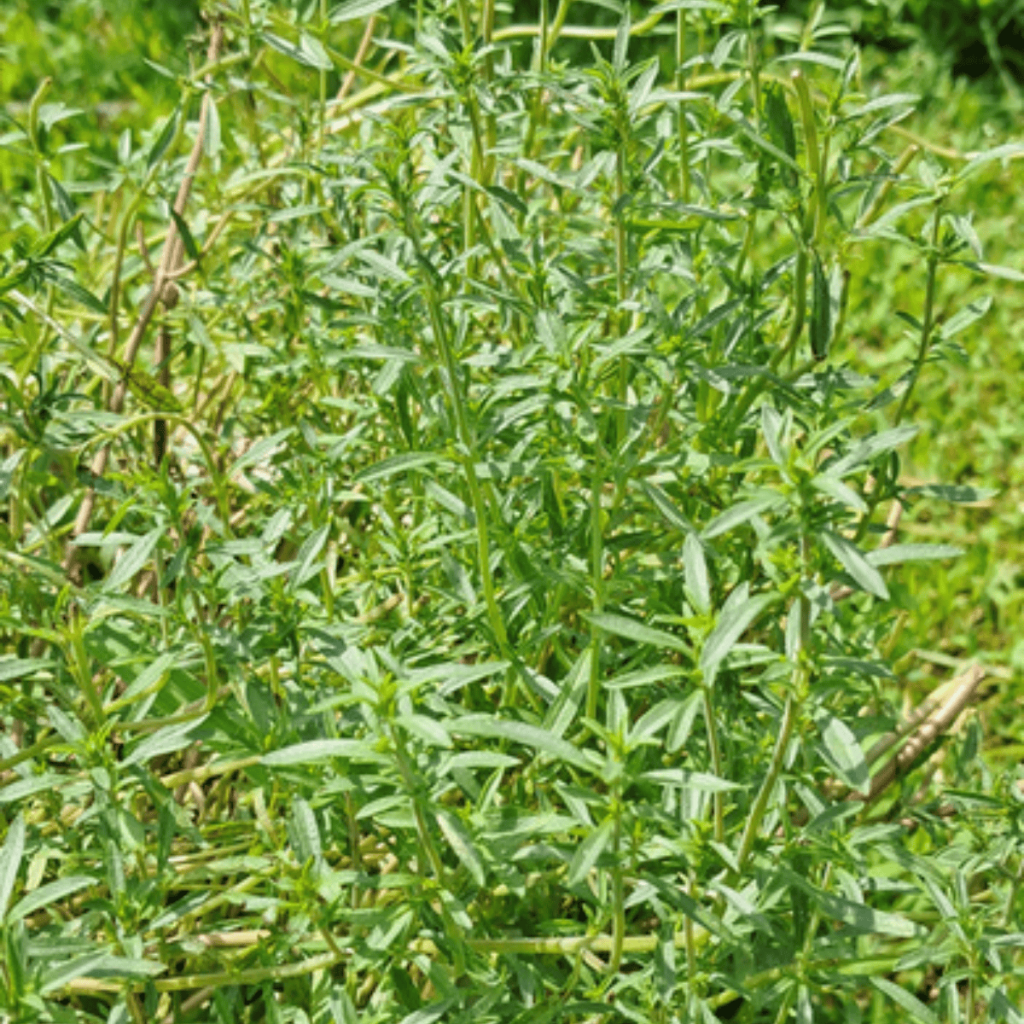
Summer savory (Satureja hortensis) is an annual herb in the mint family, though it behaves nothing like mint in the garden. It grows upright and tidy, with slender stems and narrow leaves. My husband always thinks it’s rosemary when I bring it indoors to dry. Its flavor is often described as peppery with a touch of sweetness, somewhere between thyme and marjoram. I find the fresh savory has a disgusting taste – but dried? A whole different story.
Dried savory adds a depth of flavor to dishes that’s almost salty. It reminds me of the Japanese term “umami”. The Japanese consider sweet, sour, salty, and bitter four of the five flavor essences, with umami the fifth. Roughly, it means meaty or savory. And yes, that’s what this dried herb does when added to many meals, especially those with meat. It adds a salty depth (without salt) that can’t be beat, especially if you’re following a nutritarian or low-salt diet.
Is Summer Savory the Same as Winter Savory?
No, they are different. Winter savory is a perennial cousin with a stronger, sharper flavor. I haven’t grown winter savory yet, but I have heard the flavor is different.
A Little History and Folklore
Summer savory has been part of human kitchens and gardens for thousands of years. The ancient Greeks and Romans used it in cooking and medicine, believing it had uplifting qualities. Medieval beekeepers planted it near hives to encourage bees and improve honey flavor. Herbalists valued it for its digestive comfort and general wellness benefits. Later, when black pepper found its way to Europe, summer savory use declined.
How Summer Savory Tastes—and How to Use It
Summer savory’s flavor is warm, peppery, and bright without being overwhelming. It’s famous for pairing beautifully with beans, helping to balance their richness and reduce heaviness. But it’s far more versatile than that.
Try it in:
- Roasted chicken or turkey
- Vegetable sautés
- Stuffings
- Soups and stews
- Herb butters
- Marinades
- Homemade salad dressings
I love it in stews, and I use it sprinkled on roasting potatoes along with rosemary and parlsey.
Growing Summer Savory in Your Garden
Summer savory is a joy to grow—simple, forgiving, and happy in most sunny spots.
Here’s what it likes:
- Sunlight: Full sun
- Soil: Well‑drained, average fertility
- Water: Moderate moisture, not soggy
- Spacing: Enough room for airflow
- Harvesting: Snip stems regularly to encourage a bushy form; otherwise, it will get lanky
It grows beautifully in containers, too. A pot near your kitchen door makes harvesting easy and keeps the plant close at hand for cooking.
Storing and Preserving Summer Savory
Fresh summer savory can be stored in the refrigerator wrapped in a damp paper towel, but it doesn’t last long. Fortunately, this herb dries beautifully, and drying actually concentrates its flavor.
How to Dry Summer Savory
Drying summer savory is easy. I’ve dried it in trays in the sun, hanging in bunches, and using my dehydrator. Of all three methods, the dehydrator made short work of drying an enormous amount of savory. If you do hang it to dry, make sure you place a paper (not plastic) bag over the herbs to prevent dust from settling on them.
Air‑Drying (the traditional way)
- Harvest stems in the morning after the dew has dried.
- Gather small bundles and tie them with kitchen twine.
- Hang them upside down in a warm, dry place with good air circulation.
- Avoid humid rooms, which slow drying and can cause mold.
- In one to two weeks, the leaves should feel crisp and dry.
Strip the leaves from the stems and store them in an airtight jar.
Drying on a Tray
A good option if you don’t have space to hang bundles. I’ve used an old baking sheet as a drying tray, and it works fine. Just remember to bring it indoors each night. Dew settling on the leaves will re-hydrate them and cause mold or mildew.
- Spread stems or leaves in a single layer on a clean screen or baking sheet.
- Place the tray somewhere warm and dry, out of direct sunlight.
- Turn the stems every day or two.
- They’ll dry in about a week.
Using a Dehydrator
Perfect for larger harvests or quick results. This is how I spent the weekend, canning diced tomatoes and drying savory. I love my Presto dehydrator, and it does a good job drying herbs. It took just about two hours for a very large amount of savory to dry.
- Set the dehydrator to 95–110°F.
- Lay stems or leaves in a single layer.
- Check every hour—herbs dry quickly.
- They’re ready when the leaves crumble easily.
Storing Your Dried Savory
Once fully dry, store your dried herbs in glass containers. I use recycled jars. Clean old spaghetti sauce or jam jars with soap and water. Remove the labels and rinse thoroughly. Allow to dry. Place a label on the jar and write the herb’s name and date of harvest on it. You may think you’ll remember it, but you’d be surprised at how many dried herbs look the same!
- Crumble the leaves or keep them whole (whole leaves retain flavor longer).
- Store in a glass jar or an airtight container.
- Keep it in a cool, dark place.
Properly dried summer savory will store for about a year
Try Summer Savory in the Garden
Summer savory may not be the most dramatic herb in the garden, but it’s one of the most rewarding. I couldn’t live without it. I love how it brightens my food without salt. It’s easy to grow, prolific, and a great little herb to add to the raised bed garden.